
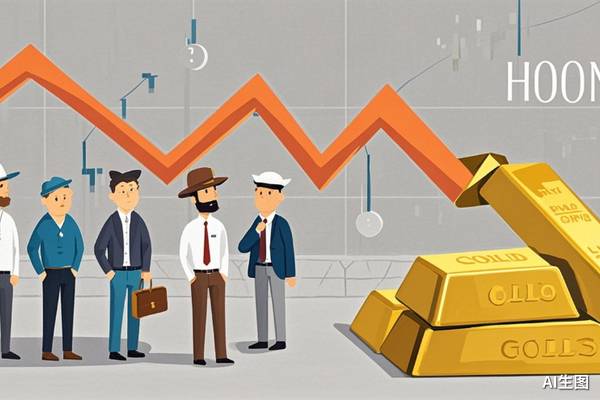
In the past three months, the international gold price has cumulatively declined by more than 13%, directly erasing most of the gains since the beginning of 2026 and giving back all the early-stage soaring dividends.
Different from the continuously rising gold market in the past year, this year’s gold market has been as exciting as a roller coaster ride. The sharply fluctuating gold price has been jokingly referred to by the market as a “monkey market” – the price goes up and down, fluctuates violently, and the direction is hard to tell.
The latest data on New York gold futures shows that on June 1st, the price of spot gold in London dropped by 1.18%, breaking below the $4,500 per ounce mark. Looking at a longer time frame, the international gold price has cumulatively declined by more than 13% in the past three months, directly erasing most of the gains since the beginning of 2026 and giving back all the early-stage soaring dividends.
With the significant retracement of the market, the sentiment of domestic investors has been completely torn. Topics such as “Should we bottom-fish in the gold market?” and “Don’t buy gold even if it keeps falling” have sparked extensive discussions.
Some investors are extremely pessimistic about the subsequent trend, bluntly saying that “the gold price will continue to decline slowly” and “Investing heavily in gold this year has been the biggest failure.” On the other hand, some investors firmly believe that the price will rise. They think that opportunities emerge after a deep correction, and now is the golden window period to bottom-fish in batches.
Under the alternating rise and fall of the market, how should ordinary investors choose?
In the gold market, each generation has its own “aunties”
At the beginning of this year, when Xiao Yi saw the gold price soar from 1,000 yuan to 1,200 yuan in just one month, he was very optimistic about the gold market. He thought it could not only increase in value through investment but also act as a hedge against risks. Xiao Yi felt that he couldn’t miss such a three – pronged opportunity.
So when the gold price dropped to around 1,100 yuan, he went all – in with 100,000 yuan. He planned that according to the current upward trend of the gold price, if he sold half of it next year, he should be able to make a good profit.
But Xiao Yi’s sweet dream only lasted for half a month.
In March, the gold price dropped below 1,000 yuan. Since then, Xiao Yi’s gold investment has been in the red and has never turned positive.
“I’m reluctant to cut my losses, but I’m also afraid of further drops if I add more positions.”
On domestic social platforms, there are many other gold buyers who have had the same experience as Xiao Yi.
At the beginning of the year, a netizen posted, “Buying gold has been the biggest mistake I’ve made this year,” which attracted more than 1,200 gold buyers to discuss. A netizen commented that he was reluctant to sell when he made a profit of 40,000 yuan, then was unwilling to sell when he lost 20,000 yuan, and finally had to cut his losses and leave the market with a loss of 86,000 yuan.
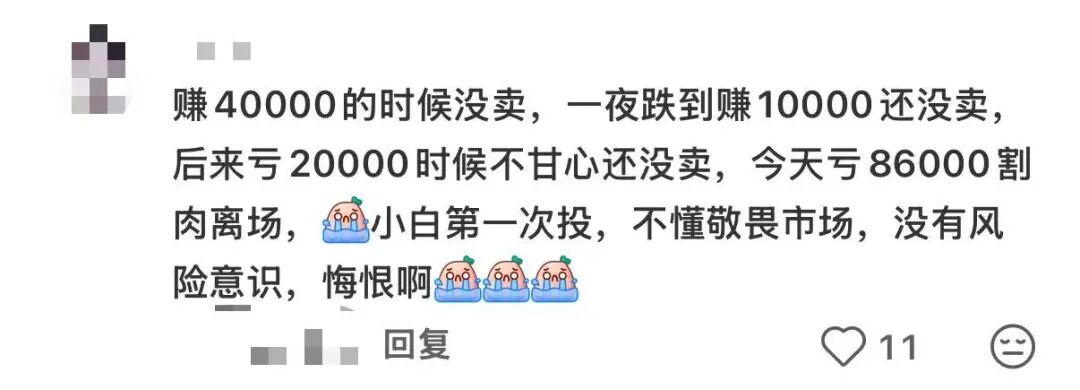
A netizen revealed that after losing tens of thousands of yuan, he regretted entering the market. “Ordinary people can’t bear such fluctuations. It affects work, life, and mood.”
The ups and downs of the gold price have also affected Xiao Wu, who entered the market early.
Xiao Wu first bought gold in September last year. Last year, when she saw the gold price soar from just over 700 yuan to 800 yuan in just half a year, she didn’t hesitate much and quickly entered the market to build a position.
After that, the gold price kept soaring, and Xiao Wu kept chasing the rising price until it exceeded 1,000 yuan. Xiao Wu was worried that the gold price would fall, so she stopped investing, planning to buy more when the price dropped.
However, the continuous rise of the gold price in January dispelled Xiao Wu’s concerns. On the day when the gold price reached 1,250 yuan, Xiao Wu successively bought a total of 100 grams of gold during the short – term fluctuations of the day’s price.
“I was like a crazy person, losing my mind. I thought this was the last chance to enter the market, so I blindly bought at the peak.”
But two days later, the gold price dropped by 200 yuan, and Xiao Wu was instantly shocked. She suddenly realized that the current gold was no longer the hedging asset that was once known as “When cannons roar, gold is worth ten thousand taels.”
Since then, Xiao Wu has watched the gold price fall below her cost price. Her account has changed from a profit of tens of thousands of yuan at the beginning to a loss of tens of thousands, and she has been in anxiety and regret.
“At the end of March, when the gold price dropped to 920 yuan, I was completely numb. I couldn’t eat or sleep well. Every day I regretted why I bought gold and added these troubles to myself.”
Afterward, Xiao Wu reflected that gold investment is no longer a sure – win business just by buying. Moreover, against the background of the current chaotic situation, gold is not suitable for “speculation.”
In order to recover her losses, Xiao Wu has been closely watching the trend of the gold market. Once the gold price drops below 1,000 yuan, she will buy a small amount to try to lower her average cost.
“I grew up listening to the story of ‘Chinese aunties being trapped in the gold market.’ I always thought I would learn from their experience and invest cautiously. Unexpectedly, each generation has its own ‘gold – buying aunties.'”
Under the “monkey market” of gold, the market is in a two – tiered situation
Since this year, the gold price has fluctuated sharply, but the investment market has shown a polarization. Gold jewelry stores are deserted, while gold bars and coins are selling like hotcakes.
In April, a reporter visited several gold stores and found that they were deserted. Sales staff said helplessly that April is usually the off – season for sales throughout the year. In a market where the gold price trend is unclear, consumers are taking a wait – and – see attitude, and sales staff may not make a single sale in a day.
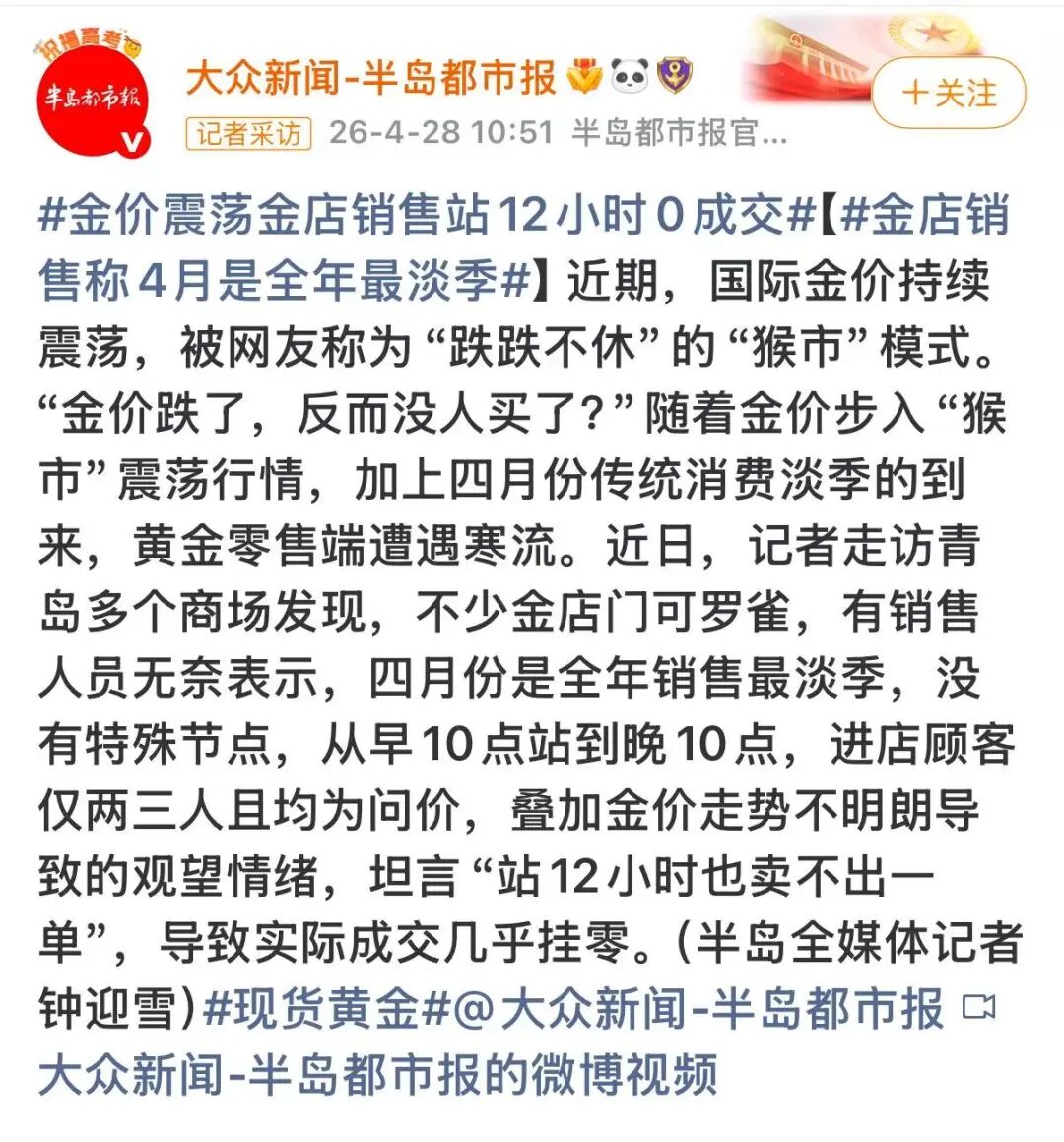
This phenomenon is supported by official data.
According to the latest data from the China Gold Association, in the first quarter of 2026, the consumption of gold jewelry was 84,620 tons, a year – on – year drop of 37.1%, while the decline for the whole of last year was 31.61%.
The data of listed companies in the jewelry industry is more intuitive:
Net profit has declined, and many stores have been closed.
Laofengxiang’s first – quarter report shows that its operating income was 13.742 billion yuan, a year – on – year decrease of 21.57%, and its net profit attributable to shareholders was 547 million yuan, a year – on – year decrease of 10.76%. As of the end of March 2026, the number of Laofengxiang stores decreased by more than 200 compared with 2025.
Chow Tai Seng achieved an operating income of 1.954 billion yuan in the first quarter, a year – on – year decrease of 26.90%, mainly dragged down by the decline in franchise channel revenue. As of the end of the first quarter, the total number of Chow Tai Seng stores was 4,193, a net decrease of 286 compared with the beginning of the year.
Chow Tai Fook’s operating data for the first quarter of this year shows that the group’s overall retail value decreased slightly by 1.5% year – on – year. The Chinese mainland market was significantly under pressure, with 128 retail points closed, and the retail value decreased by 8.2%. The same – store sales volume on the mainland decreased significantly by 30.9%.
It’s difficult for large companies, and it’s even more difficult for small and medium – sized gold store owners. Gold stores rely on processing fees and inventory turnover for profit. The rising gold price actually suppresses consumer demand, and store revenues shrink. If the fixed costs remain the same, they will have to close their stores in the long run.
Different from the cold market for gold jewelry consumption, gold bars and coins have become popular investment categories in the market. In the first quarter, the consumption of gold coins and bars reached 202,062 tons, a year – on – year increase of 46.4%.
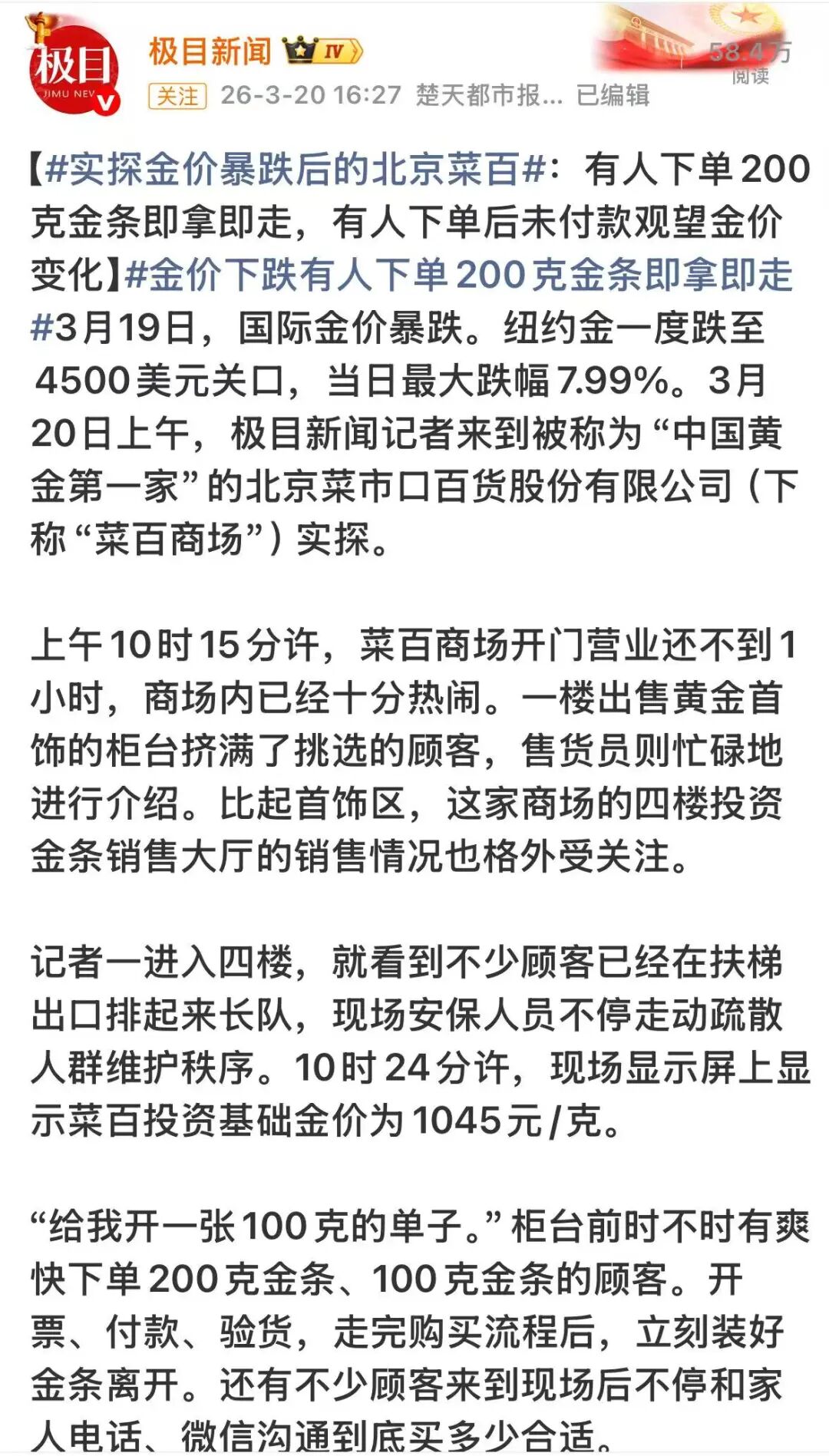
In March, after the gold price dropped sharply and then rebounded, it didn’t affect consumers’ enthusiasm for buying gold at all. After the gold price dropped, a reporter visited Caibai in Beijing and found that there were still many customers queuing up to buy gold bars.
Qiqi is also one of the consumers who bought gold bars.
Influenced by her parents, most of the gold Qiqi bought are gold bars. She has been used to buying gold bars of different weights for a long time.
“At that time, the gold price was cheap. I would ask someone in Hong Kong to buy some gold bars for me. There was an exchange – rate difference, and it was much cheaper than buying on the mainland. I would keep the large – weight gold bars for myself, and the small – weight ones could be given as gifts. For example, when friends get married or have a baby, giving a gold bar is a blessing and a good omen. Everyone is happy on such a happy occasion.”
In recent years, although the gold price has been fluctuating, Qiqi’s enthusiasm for buying gold has not diminished. Last year, when the gold price exceeded 900 yuan, she bought three 10 – gram gold bars from the bank. This year, with the ups and downs of the gold price, she took advantage of the price drops and bought another five 10 – gram gold bars through gold stores and banks.
In Qiqi’s view, gold bars can not only provide emotional value but also act as a hedging asset, giving a full sense of security. No matter what happens, just thinking about the stored gold bars makes her feel that any difficult situation can be overcome.
When talking about losses, Qiqi said calmly,
“Don’t talk about losses until you’ve held physical gold bars for five years. Short – term price fluctuations are not important.”
Under the volatile “monkey market”, is it still worth investing in gold?
In April 2013, the international gold price experienced an “epic plunge,” dropping from $1,700 per ounce to $1,200 per ounce. Wall Street went all out to short – sell gold, but Chinese aunties flocked to the market, sweeping up all the gold jewelry and bars in major domestic shopping malls. Eventually, the aunties were no match for the capital and were trapped for more than six years.
However, the “Chinese aunties” became famous overnight and became a synonym in the investment market. Once, everyone used these four words to remind themselves to stay sober in the investment market. Now, everyone wants to be a “Chinese auntie.”
There is a rumor that a “Chinese auntie” who was once trapped in the gold market sold some of her gold bars during the peak gold price in the past two years and made hundreds of thousands of yuan.
Now, young people who are flocking to the market can only look on enviously and say, “Gold is really great,” going from doubting the aunties to understanding them and finally wanting to be like them.
On the way to “becoming an auntie,” many young people buy a small gold bean every month and store it in a jar as a little reward for themselves. They don’t look at the K – line chart, don’t study the bull or monkey market of gold, and don’t care about the political situation that may affect the gold price. They only care about when the jar of gold beans will be full.
Xiaomi in Beijing started buying a 1 – gram gold bean for herself on the day she received her salary every month since June 2024. Now she has saved nearly 30 gold beans of various styles.
The gold price has soared from more than 500 yuan to 1,000 yuan. Although Xiaomi feels that the cost of buying gold is increasing, and it may be more difficult to buy gold beans in the future, her attitude towards buying gold is quite laid – back:
“If it goes up, it’s like making a profit. If it goes down, it’s like getting a discount.”
She saw the recent news about the gold price fluctuations and heard the concept of the “monkey market” for the first time. She thought it was very interesting and vivid.
When asked whether she would continue to buy gold in the future, Xiaomi thought for a while and said she probably would, but now that the gold price has soared, she can only do it within her means.
“On the one hand, I’ve heard about the long – term investment in gold. I’ve calculated that the average cost of the gold beans in my hand is less than 800 yuan. I think no matter how much the gold price drops, it should not fall below my cost price. Moreover, I often see news about the central bank increasing its gold holdings. I think as long as the central bank is still buying, the market should be relatively safe.”
Under the “monkey market,” some people enter the market blindly and are “played like monkeys,” some chase the rising price and sell on the decline in anxiety, and some treat gold like coins and save it.
In the “gold – buying wave” in the past two years, we often see people asking on different platforms, “When should I buy gold?” and “Can I buy gold now?”
However, in fact, the rise and fall of the gold price are affected by many factors such as geopolitical conflicts, the US dollar exchange rate, inflation, and supply – demand relationships. From soaring to plummeting and now to frequent fluctuations, no one can give an accurate signal for “buying gold.”
Moreover, the core of the problem is not “Should I buy gold?” or “When should I buy gold?” but “What kind of logic should I use to buy and what kind of attitude should I have when buying?”
The “Chinese aunties” have told the story of long – term investment in gold through their experience of entering the market crazily, being trapped embarrassedly, waiting patiently to get out of the trap, and finally making a profit. They have become the aunties that everyone envies.
However, behind their “investment myth,” they also experienced a six – year trapping period due to impulse.
After all, whether gold can act as a hedge against risks does not depend on the short – term rise or fall of the gold price but on how patient the gold buyers are.