
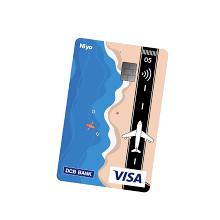
International spending looks simple on the surface, yet the real cost usually sits in the exchange rate and ATM rules. This Niyo Forex Card review looks at how the card works, what it charges, and whether it is a better fit than a traditional forex card for people in India heading overseas.
Understanding the Niyo Global Forex Card
Niyo has become a familiar name among travellers and students who want to avoid the foreign transaction fee that many banks add on top of overseas card payments. The product is usually referred to as the Niyo Forex Card or Niyo Zero Forex Card, and its main pitch is straightforward – the issuing bank waives the usual forex markup fee that often lands between 1% and 3% on a standard debit card or credit card.
That headline claim needs a little unpacking. Zero forex markup here refers to the bank fee, not a guarantee of the pure interbank network rate used in the foreign exchange market. Payments are generally settled using the Visa Inc. network rate, and that rate can include a small spread versus the interbank rate shown on Google. In practice, that means some conversion cost can still be built into the exchange rate even when the visible forex fee is shown as zero.
From our experience reviewing payment products and crypto fee models since 2013, hidden spread matters more than marketing labels. A small gap in rate looks harmless on one payment, yet repeated debits and credits during a trip can quietly add up.
Niyo currently offers this card through DCB Bank and SBM Bank, with different versions depending on how you want to spend abroad.
| Card Variant | Type | Issuing Bank | Annual Fee | Main Notes |
|---|---|---|---|---|
| DCB Niyo Debit Card | Debit card | DCB Bank | 499 INR plus GST | INR-linked spending and lounge access after qualifying spend |
| Niyo SBM Credit Card | Credit card | SBM Bank | No annual fee in the cited source | Bank-set credit limit and fixed deposit link mentioned by the source |
| Niyo SBM Debit Card | Debit card | SBM Bank | 423 INR plus GST | INR-linked spending and lounge access after qualifying spend |
DCB Niyo Debit Card
This version works like a regular debit card linked to a savings account. You fund it in Indian rupee and use it for international payment activity where Visa is accepted. It also advertises airport lounge access after qualifying quarterly spend, and the linked account may earn interest on balances.
Niyo SBM Credit Card
This option is structured as a credit card for overseas spending. Your limit is based on the bank assessment tied to your credit profile. It carries no annual maintenance fee according to the source material, and linked fixed deposits with SBM Bank may earn interest.
Niyo SBM Debit Card
This is another INR-linked debit card, this time issued by SBM Bank. Its travel use is broadly similar to the DCB version, with zero markup positioning on international swipes and the same general airport lounge condition based on quarterly spending.
How the Forex Card Works Abroad
The setup is fairly simple. You add money in Indian rupee, and conversion happens at the moment you pay in a foreign currency. That makes Niyo Global different from a classic prepaid forex card that asks you to preload a specific balance in USD or EUR before you leave.
- You fund the linked account in INR through the app using bank transfer methods or Unified Payments Interface.
- You spend anywhere Visa is accepted across more than 180 countries, or withdraw cash from an ATM overseas.
This answers a common question directly – is the Niyo forex card accepted everywhere internationally? It is widely accepted anywhere that supports Visa, though real world acceptance still depends on the merchant terminal or local ATM network. In our analysis of travel cards, that is normal for any bank card and not unique to Niyo Global Card.
On currency support, the card is not limited to a short list of preload currencies because spending is converted from Indian rupee at the time of use. That means it can generally be used for card payments or ATM access in any local currency that the Visa network and the local bank terminal support. The practical exceptions are merchant or ATM restrictions, rather than a fixed wallet of supported balances.
Safety and Regulatory Backing
Niyo cards are issued by partner banks rather than by Niyo itself, which matters from a regulatory angle. Deposits are held with the issuing bank, and the source states that balances are covered by Deposit Insurance and Credit Guarantee Corporation protection up to 500,000 INR. Foreign exchange activity also sits within the framework overseen by the Reserve Bank of India.
There is a practical layer to safety as well. The app-based controls can reduce risk during travel because card locking and account monitoring are faster than older branch-led systems. We usually treat that as a useful usability advantage, especially when a card is being used across time zones.
Niyo Forex Card Review Against Wise Travel Card Features
The core comparison is fairly clear. Niyo keeps the card anchored to INR, while Wise takes a multi-currency approach. That difference affects how you load funds, how you manage exchange rate risk, and how much control you have before you travel.
For supported balances, the debit versions of Niyo and the Niyo SBM credit option are INR-based. The Wise Travel card supports more than 40 currencies, including the United States dollar and EUR, which lets users convert money before spending rather than only at the point of sale.
On funding, Niyo uses app-based top ups tied to its linked bank structure, with Unified Payments Interface and bank transfers as the practical route for debit variants. The credit card version works off the approved limit instead. Wise supports transfers through RTGS, NEFT and IMPS.
Exchange rate treatment is where the models diverge. Niyo uses the Visa rate at the time of each payment. Wise states that it uses the interbank rate at the time of conversion when you load or exchange into a held currency. That can matter if you want budget certainty before a trip.
Travel perks also differ. Niyo leans on lounge access after meeting a spend threshold. Wise places more emphasis on ATM flexibility, with free withdrawals each month up to a capped amount.
Fees and Charges You Should Expect
A common search intent here is simple – is the Niyo forex card free, or does it have fees? The short answer is that some fees are waived, yet the card is not universally free across every variant and every use case.
| Fee Type | DCB Niyo Debit Card | Niyo SBM Debit Card | Niyo SBM Credit Card |
|---|---|---|---|
| Annual fee | 499 INR plus GST | 423 INR plus GST | No annual fee in the cited source |
| Issuance | Free | Free | Free |
| Loading fee | Nil | Nil | Not framed as a loading product |
| Foreign transaction fee | Marketed as zero | Marketed as zero | Marketed as zero |
| ATM use after the first free overseas withdrawal | Fixed rupee fee plus GST | Fixed rupee fee plus GST | Fixed fee or 2.5% of transaction value, whichever is higher |
| Replacement fee | 249 INR plus GST | 249 INR plus GST | 249 INR plus GST |
The DCB Niyo Debit Card has an annual fee of 499 INR plus GST, though this can be waived if you maintain the stated quarterly balance. The Niyo SBM Credit Card has no annual fee in the cited source. The Niyo SBM Debit Card carries a 423 INR annual fee plus GST, with a waiver tied to a minimum balance condition.
Issuance is listed as free, and loading fees are also listed as nil. Foreign transaction fees are marketed as zero. Still, the real conversion cost may remain inside the exchange rate rather than appearing as a separate fee line.
ATM use deserves more attention because this is where the product becomes less attractive for some travellers. You get one free local-currency withdrawal abroad, after which fees apply. The source reviewed here does not publish the exact fixed rupee amount for the later debit card ATM fee, only that both debit variants charge a rupee fee plus GST. For the credit card, the stated charge is a fixed amount or 2.5% of the transaction value, whichever is higher.
Replacement also has a cost. The card replacement fee is listed at 249 INR plus GST.
From a user-cost angle, this means Niyo can work well for card-heavy spending, yet it is weaker for frequent cash use. We see the same pattern in many payment products where the attractive headline sits on POS spending, while ATM pricing does more of the heavy lifting on revenue.
The Exchange Rate Question
A big part of any Niyo Forex Card review is the exchange rate itself. The bank may remove its explicit forex markup fee, but that does not automatically mean you are receiving the exact interbank rate.
According to the source comparison, Niyo transactions use the Visa network rate, which can sit slightly below the interbank benchmark. Wise presents pricing differently by separating the fee and using the interbank rate for conversion. That makes the total cost easier to inspect before spending.
The source gave sample rate differences dated 19 November 2025, and the point was consistent across pairs. INR to USD through Niyo was shown slightly below the interbank level. The same pattern appeared on INR to EUR and INR to SGD. The gap was small, yet it still meant fewer units of foreign currency for the same amount of Indian rupee.
In practical terms, the source supports a small spread rather than a fixed markup. We checked the wording closely, and it does not give one universal percentage because the gap can shift by currency pair and timing. The examples suggest a narrow difference on card payments, but they do not claim the same result for every transaction.
This leads to another practical question – which is better, Niyo card or a traditional forex card? For shorter trips and mostly digital payment behaviour, Niyo may feel easier because you load in INR and spend directly. A traditional forex card can be better if you want to lock in a rate before departure, especially when the rupee is moving quickly and you expect longer time abroad.
Applying for the Card and Getting Started
The application flow is app-led and relatively straightforward. Based on the source steps, most of the path begins inside the Niyo Forex app, with the website acting as a starting point rather than the full onboarding environment.
Eligibility is tied to the issuing bank and the card type. The source flow makes clear that applicants need the standard Know your customer documents used in India, including PAN and Aadhaar. Debit variants also require opening the linked bank account, while the credit card version depends on bank approval tied to your credit profile. The article source does not set out a full public checklist for age or residency, but the onboarding is framed for users in India completing domestic bank KYC.
- Step 1 – Download the app from Google Play or the App Store, then choose the relevant variant such as the SBM or DCB option.
- Step 2 – Complete Know your customer checks using PAN and Aadhaar. SBM uses video KYC, while DCB follows a physical verification route.
- Step 3 – Open the linked savings account with the issuing bank and request the card for delivery.
- Step 4 – Add money in INR using UPI, NEFT or IMPS by funding the linked account.
The source says physical card delivery usually takes 3 to 5 days, with faster service in some cities. That is broadly in line with what we tend to see from digital-first financial products in India, where the app journey is quick but the physical card still depends on logistics and local verification.
Which Niyo Forex Card Is Best for Travel
This depends on how you spend. If your overseas costs will mostly sit in card payments and you want the simplicity of an INR-linked debit card, either debit variant can do the job. Between them, the deciding factor is more about bank preference and the exact fee waiver rules than a dramatic feature gap.
If you want revolving credit rather than prefunded balances, the Niyo SBM Credit Card stands apart. That said, cash withdrawals on a credit card are usually the least appealing part of any travel setup because the fee structure is heavier and can become expensive quickly.
For many travellers, the debit versions will be the cleaner choice. For many students or long-stay users, a traditional forex card may still win because it can hold foreign currency in advance and reduce exchange rate uncertainty.
Is It Better Than a Traditional Forex Card
Niyo Global has a strong convenience case against older forex cards. You can load Indian rupee quickly, use the card in a wide international network, and keep using it in India after the trip because it functions through a regular bank account structure. Traditional forex cards are often less flexible once the journey ends.
The tradeoff sits in currency control. A traditional forex card can help if you want to preload a destination currency and lock a budget before you fly. Niyo converts at the time of spending, so you stay exposed to daily moves in the exchange rate. If the foreign exchange market moves against the rupee, that will show up on each purchase.
So the better choice depends on travel style. Niyo is usually stronger for short trips and card payments. Traditional forex cards can make more sense for longer stays or regular ATM use.
Verdict on Travelling With Niyo Global
- Easy INR loading
- Broad Visa acceptance
- Potential exchange rate spread
- ATM fees after the first free use
Niyo is a solid travel option if you want easy INR loading, broad Visa acceptance, and a more modern app flow than many legacy bank products. It is also useful if you like the idea of one card that remains practical after you return to India.
Its weak point is transparency around the full conversion cost. The visible forex fee may be zero, yet the exchange rate can still carry a built-in spread. ATM pricing after the first withdrawal is another drawback, especially if you expect to rely on cash.
Overall, the card looks best for travellers who mainly pay by card and want an INR-based setup. If locking in a foreign currency matters more, or if you need frequent cash access, a traditional forex card or a multi-currency alternative may be the better fit.