
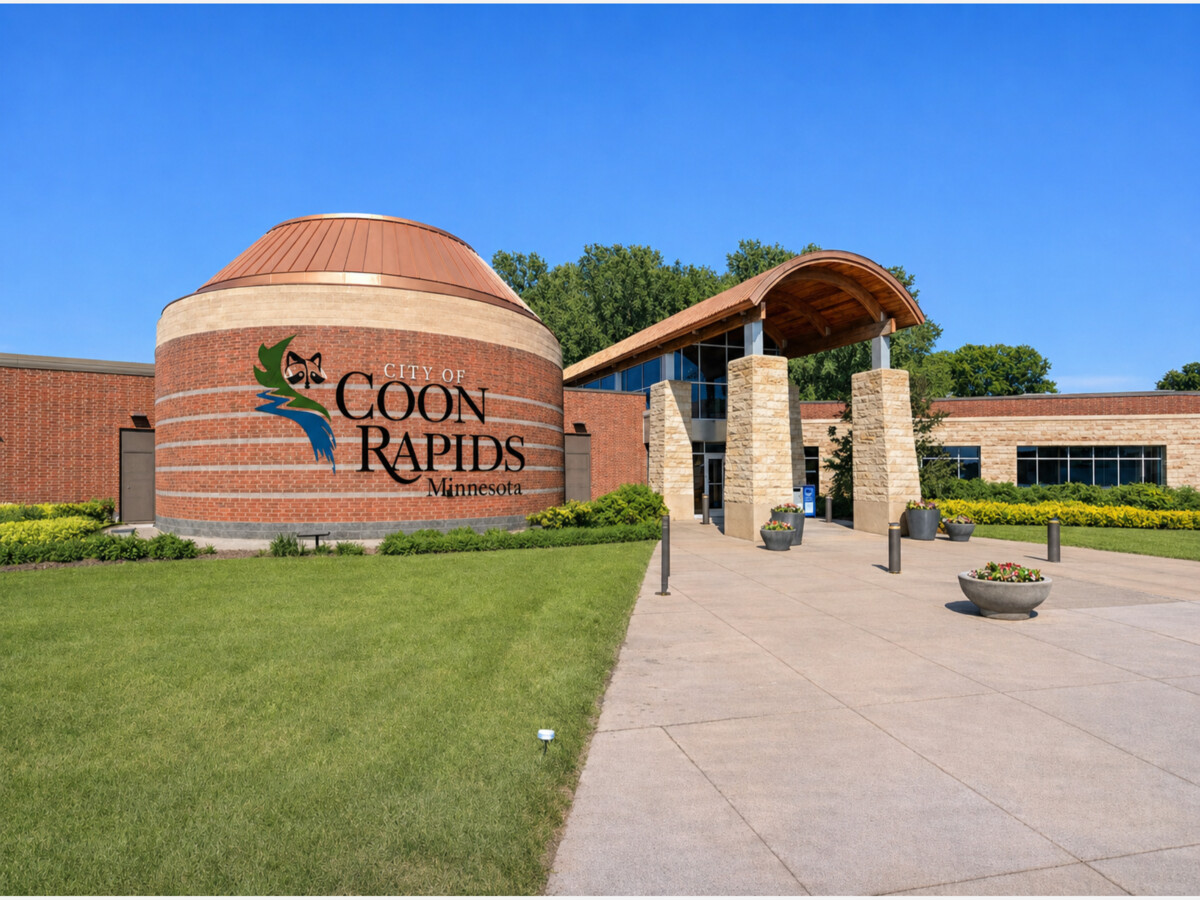
Coon Rapids, MN (May 24, 2026) In council chambers where municipal language often arrives wrapped in resolutions, financing schedules, and procedural votes, the deeper story unfolding in Coon Rapids this week was one of a mature Minnesota suburb confronting the increasingly expensive realities of maintaining itself.
Roads built decades ago now require reconstruction beneath the pavement line. Public facilities strain against modern demands. Emergency response systems evolve faster than local budgets. Community celebrations grow more ambitious even as funding narrows. And across the country, local governments find themselves navigating not only infrastructure and public safety, but also the emotional terrain of civic identity itself.
All of those tensions surfaced, quietly but unmistakably, during the May 19 meeting of the Coon Rapids City Council.
At the center of the evening stood the formal passage of Resolution 26-65, authorizing the sale of $9,990,000 in General Obligation Improvement and Water Revenue Bonds, Series 2026A, a financing package city officials say will anchor one of the municipality’s most substantial near-term infrastructure initiatives. The bond sale is scheduled for June 16, with public finance advisory firm Ehlers overseeing structuring and market placement for the city.
While municipal bond approvals rarely attract public spectacle, the decision represents a consequential investment in the physical durability of one of Anoka County’s largest communities.
The capital will fund Coon Rapids’ 2026 Street Reconstruction Project, a wide-ranging infrastructure effort combining roadway reconstruction, pavement rehabilitation, sidewalk improvements, and underground water utility modernization. For local governments throughout Minnesota, these projects increasingly define the difficult arithmetic of suburban governance: maintain aging systems now, or confront significantly larger costs later.
In communities like Coon Rapids, much of the foundational infrastructure dates back to periods of explosive postwar suburban expansion. What once symbolized growth and accessibility has now entered the expensive cycle of replacement and modernization.
City officials have repeatedly emphasized the importance of addressing infrastructure proactively rather than relying on deferred maintenance strategies that can compound long-term liabilities.
But the evening’s discussions stretched well beyond asphalt and financing.
Under the consent agenda, council members also adopted Resolution 26-67 approving the city’s 2026 Member City Grant Agreement with Twin Cities Gateway, the regional tourism and destination marketing organization serving the northern metro corridor.
The agreement allocates $23,300 to Coon Rapids, divided into two funding categories: $17,000 dedicated to the city’s Fourth of July celebration and related community programming, and an additional $6,300 reserved for municipal marketing and regional tourism promotion.
The annual Independence Day celebration, held at the Coon Rapids Ice Center grounds and coordinated alongside local civic organizations including the Coon Rapids North Star Lions and the Fire Social Group, carries additional historical symbolism this year as communities nationwide prepare for the United States Semiquincentennial, the 250th anniversary of the nation’s founding in 2026.
Council members acknowledged that the grant allocation arrived at a lower level than in previous years, creating new pressure points for event planning and programming decisions. To facilitate festival operations, the council additionally authorized temporary liquor licensing connected to the celebration.
Elsewhere in the meeting, the council approved the acceptance of two publicly accessible Automated External Defibrillator Save Stations valued at approximately $15,000, expanding the city’s emergency preparedness infrastructure in recreational spaces heavily used by families and youth athletic programs.
The climate-controlled AED stations will be installed at Riverwind Park and the Sand Creek Athletic Complex, providing round-the-clock public access to lifesaving cardiac response equipment.
The initiative forms part of Coon Rapids’ broader effort to strengthen its standing as a designated Heart Safe Community, a public health framework encouraging rapid emergency response accessibility in high-traffic public areas.
Funding for the equipment and installation emerged through a collaborative philanthropic effort involving the Coon Rapids Fire Department Community Fund and the Coon Rapids North Star Lions Club, underscoring the degree to which local civic partnerships increasingly supplement municipal public health investments.
Yet amid discussions of infrastructure financing and emergency preparedness, one of the evening’s most pointed moments came not from elected officials, but from a resident speaking during the public comment session.
Connor Olsen addressed the council regarding the absence of Minnesota’s redesigned state flag on certain city properties, raising questions about whether a formal municipal policy or council directive existed governing banner display practices.
Olsen stated that publicly accessible documentation regarding the city’s flag display policies appeared unclear and requested that the matter be formally reviewed during a future council session, including a public discussion and recorded vote.
The issue reflects continuing debate in parts of Minnesota following the state’s adoption of a redesigned flag and seal in 2024, changes that prompted both praise and backlash across political and civic lines. What may appear, at first glance, to be a symbolic disagreement has increasingly become intertwined with broader conversations about identity, representation, public trust, and governmental transparency.
The council did not substantively debate the issue Tuesday night, though the request added another layer to a meeting already balancing infrastructure, legislation, technology, and community expectations.
Public safety technology also occupied a substantial portion of the evening’s agenda.
The Coon Rapids Police Department delivered an operational update regarding the city’s use of Automated License Plate Readers, commonly known as ALPRs, as well as unmanned aerial drone systems now integrated into portions of modern law enforcement response operations.
According to the department’s presentation, a recent state data practices audit confirmed that the city’s ALPR program remains compliant with Minnesota privacy regulations governing surveillance technologies and data retention.
Officials explained that the system captures rear-vehicle imagery and compares license plate information against a Bureau of Criminal Apprehension “Hotlist” database tied to active investigations or alerts. Non-investigative data is automatically purged after 30 days in accordance with state requirements.
Police officials cited a recent incident in which ALPR technology reportedly assisted officers in identifying and tracking a shooting suspect’s vehicle within minutes of a 911 call.
The department also discussed its continued use of drones under existing municipal operational policies while monitoring a broader regional proposal under consideration by the Anoka County Board involving Drone as a First Responder, or DFR, deployment systems.
The proposed framework would utilize autonomous rooftop docking stations capable of dispatching drones directly to emergency scenes, potentially arriving within approximately 90 seconds of a 911 call, significantly faster than many traditional response models.
Supporters of the technology argue such systems can improve officer safety, expand situational awareness, and accelerate emergency assessments. Critics nationally, however, have continued raising concerns regarding privacy, aerial surveillance expansion, and the long-term normalization of persistent law enforcement monitoring technologies.
As the meeting moved toward adjournment, City Manager Matt Stemwedel briefed council members on the outcomes of the recent legislative session in St. Paul and the resulting implications for Coon Rapids’ pending capital priorities.
The update reflected a mixed outcome for the city.
The legislature declined to authorize the city’s proposed local option sales tax request intended to support major renovations and expansion work tied to the police department and civic center facilities, leaving uncertainty around financing strategies for those projects moving forward.
At the same time, city officials confirmed success in securing infrastructure support for improvements connected to the Coon Rapids regional dam through the state bonding process, preserving momentum on a project viewed as critical to regional water management and long-term structural stability.
Stemwedel also referenced newly passed congregate care legislation establishing revised licensing and reporting requirements between state and local governments. While city officials indicated the final compromise did not fully satisfy all municipal concerns, they acknowledged that lawmakers ultimately reached a workable operational framework.
Taken together, the evening revealed a city navigating the increasingly complicated demands placed on modern local government.
The agenda moved fluidly from underground water infrastructure to drone deployment policy, from public health equipment to symbolic disputes over state identity, from bond markets to community festivals celebrating a nation approaching its 250th year.
And beneath every vote and briefing was the same underlying question confronting municipalities across Minnesota and much of the country:
How does a community maintain itself, physically, financially, technologically, and civically, while the pressures on all four continue to rise at once?
MinneapoliMedia | Community. Culture. Civic Life.