
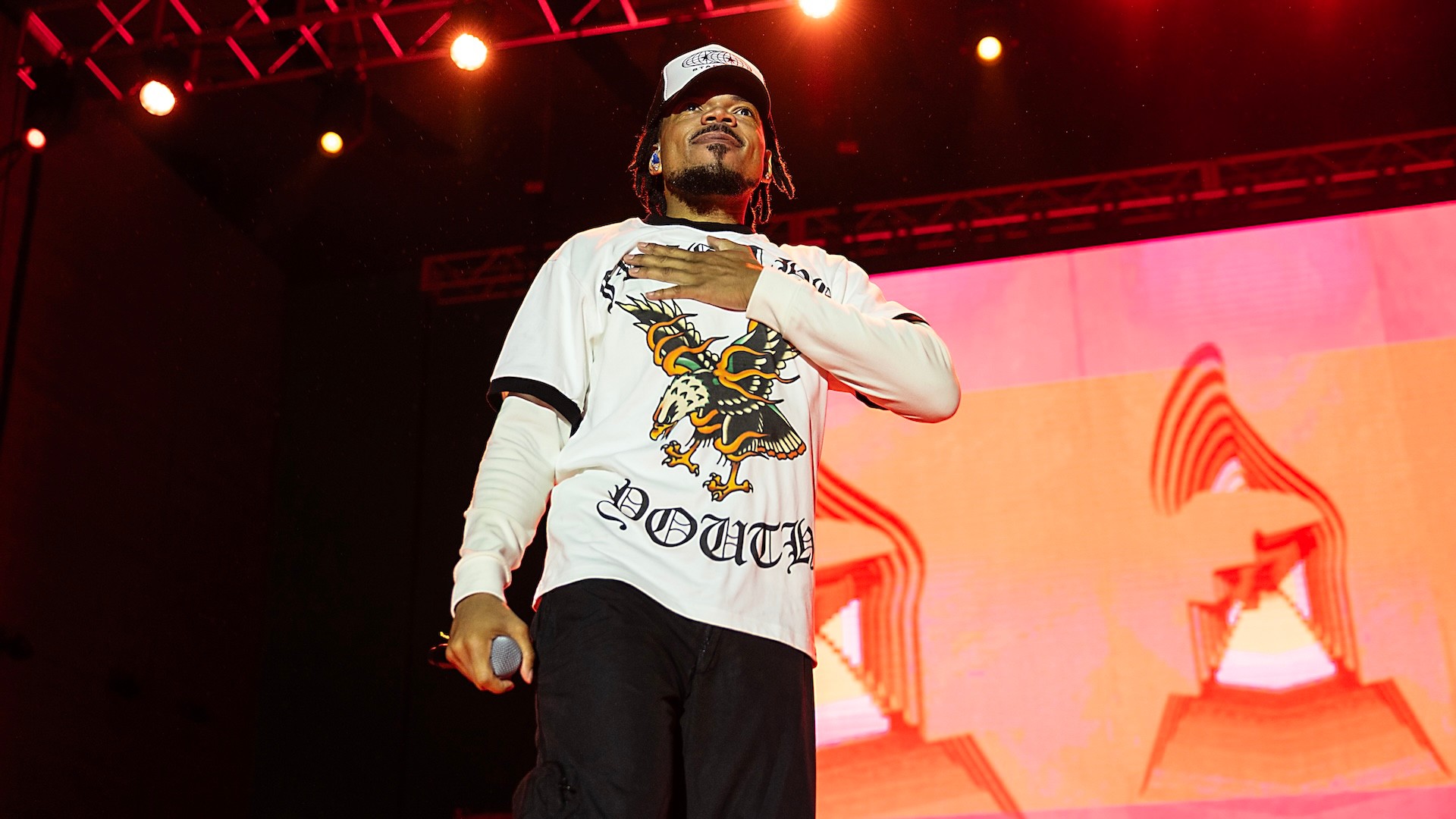
Ten years after the release of Chance the Rapper‘ mixtape Coloring Book, the project has landed an RIAA Platinum certification.
According to the official website for the Recording Industry Association of America, as of June 26, the mixtape, which included singles “No Problem” and “Angels,” has moved one million units. The mixtape debuted at No. 8 on the Billboard 200 upon its May 13, 2016 release and won Best Rap Album at the 59th Annual Grammy Awards, becoming the first streaming-only project to earn a golden gramophone.
The Chicago native, who will embark on The Coloring Book Ten Year Anniversary Tour on August 8, made history when he secured a deal with Apple Music as the mixtape’s first streaming platform for a 2-week run. With the mixtape going on to be downloaded 600,000 times in its first week, Chance’s $500,000 agreement with Apple paid off.
“My start, even before Acid Rap and 10 Day, was passing out free music in Chicago,” Chance told Complex’s Grant Rindner in May. “I think that having the ability to choose the value of my music and the point of sale for myself, that comes strictly out of independence.”
Coloring Book was followed by Chance’s debut album, The Big Day, which received mixed reviews but debuted at No. 2 on the Billboard 200. Chance’s third album, Star Line, dropped last August following his divorce and amid a legal battle with his former manager.