
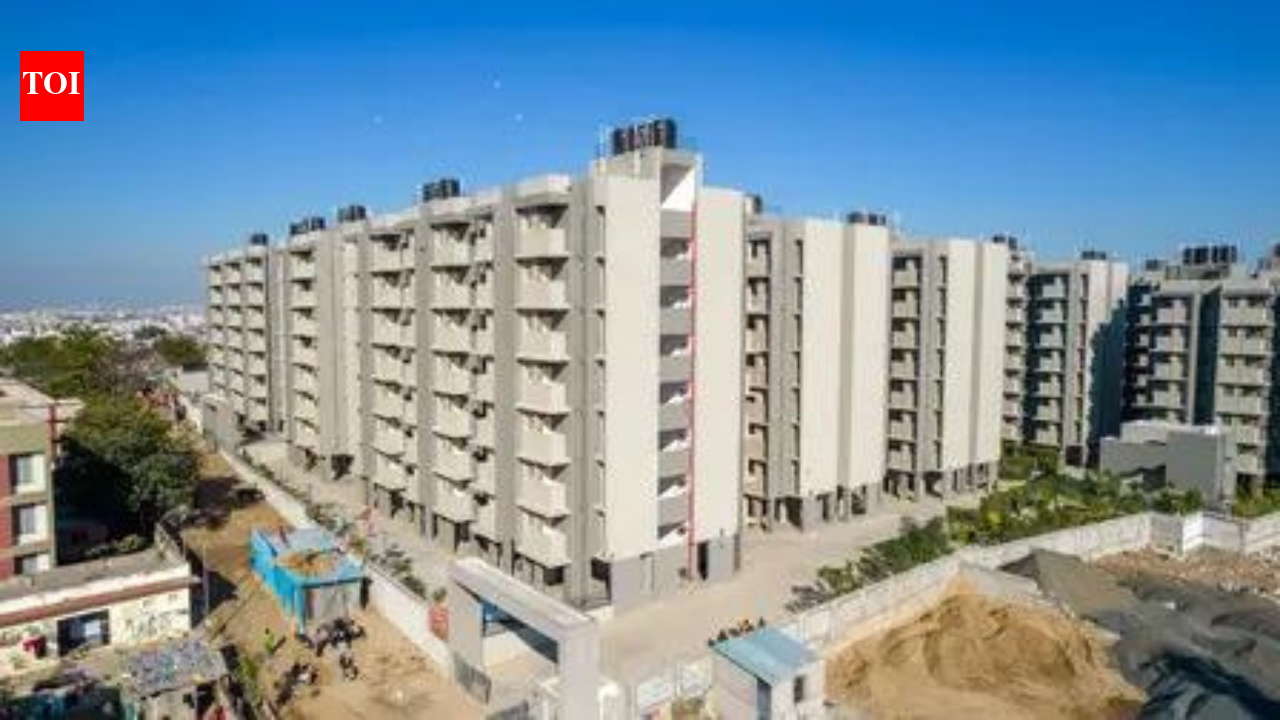

Buying a home is one of the biggest financial decisions most Indian families make. With property prices climbing, borrowing costs remaining high and access to affordable credit still uneven, home ownership continues to be out of reach for many aspiring buyers. To bridge that gap, the Centre has rolled out a series of measures—from subsidised home loans and affordable housing schemes to GST relief and policy reforms—aimed at making housing more affordable across income groups.PMAY-U 2.0At the centre of the government’s strategy is Pradhan Mantri Awas Yojana – Urban (Pmay-U 2.0), launched on September 1, 2024, to support one crore additional urban households over the next five years.The revamped mission works through four components:
- Beneficiary Led Construction,
- Affordable Housing in Partnership,
- Affordable Rental Housing and
- the
Interest Subsidy Scheme ,
Covering everything from self-built homes and partnerships with developers to rental accommodation and subsidised home loans.The government told Parliament that the revamped programme builds on the experience of the original PMAY-U, which has been in operation since 2015 to provide pucca houses with basic civic amenities to eligible urban beneficiaries.Affordable rental housing for migrant workersTo improve access to rental homes, the housing ministry launched affordable rental housing complexes (ARHC) under Pmay-U. The scheme targets urban migrants and economically weaker workers by providing affordable rental accommodation close to workplaces. It operates through two models:
- Converting vacant government-funded housing into rental complexes through public-private partnerships or public agencies, and
- Allowing public or private entities to build, operate and maintain rental housing on their own vacant land.
Cheaper home loans and easier creditFor aspiring homeowners, the biggest financial relief comes through the Interest subsidy scheme.Eligible households with an annual income of up to Rs. 9 lakh can receive a 4% interest subsidy on the first Rs. 8 lakh of a home loan, provided the loan amount is up to Rs. 25 lakh and the property value does not exceed Rs. 35 lakh. Beneficiaries can receive a maximum subsidy of Rs. 1.80 lakh, released in five annual instalments for loans with a tenure of more than five years.According to the MoHUA, Rs. 312.38 crore has already been released as home loan subsidy, benefiting 70,638 borrowers under the scheme.The government has also restructured the credit risk guarantee fund trust for low-income housing to improve access to formal housing finance for economically weaker section and lower income Group households. The guarantee mechanism covers eligible housing loans taken from scheduled commercial banks and housing finance companies, making lenders more willing to extend credit.The ministry said the revamped guarantee scheme, launched in January 2025, has already guaranteed 6,205 housing loans worth Rs. 614.76 crore as of January 31, 2026.Tax rationalisationThe government’s housing affordability strategy goes beyond helping homebuyers. It is also focused on reducing the cost of building homes and increasing the supply of affordable housing.To bring down construction costs, GST rates on several key building materials and construction-related services, including cement, marble and granite blocks, particle boards, and sand-lime bricks, were rationalised in September 2025. GST on cement was cut from 28 per cent to 18 per cent, while marble and granite blocks, particle boards, sand-lime bricks, and job work related to brick manufacturing saw rates reduced from 12 per cent to 5 per cent. The government said these measures would help lower construction costs, particularly for affordable and mid-income housing projects.The Centre has also collaborated with the department of financial services and banks to develop specialised home loan products for workers in the informal sector. In addition, states and Union territories are expected to facilitate access to housing finance for eligible beneficiaries through tripartite agreements involving the government, financial institutions and homebuyers.The policy roadmapAlongside these schemes, Niti Aayog has prepared a policy blueprint titled ‘A Comprehensive Framework to Promote Affordable Housing’, released in December 2025. The report has been shared with stakeholders for further action and outlines long-term reforms to improve housing affordability across the country.