
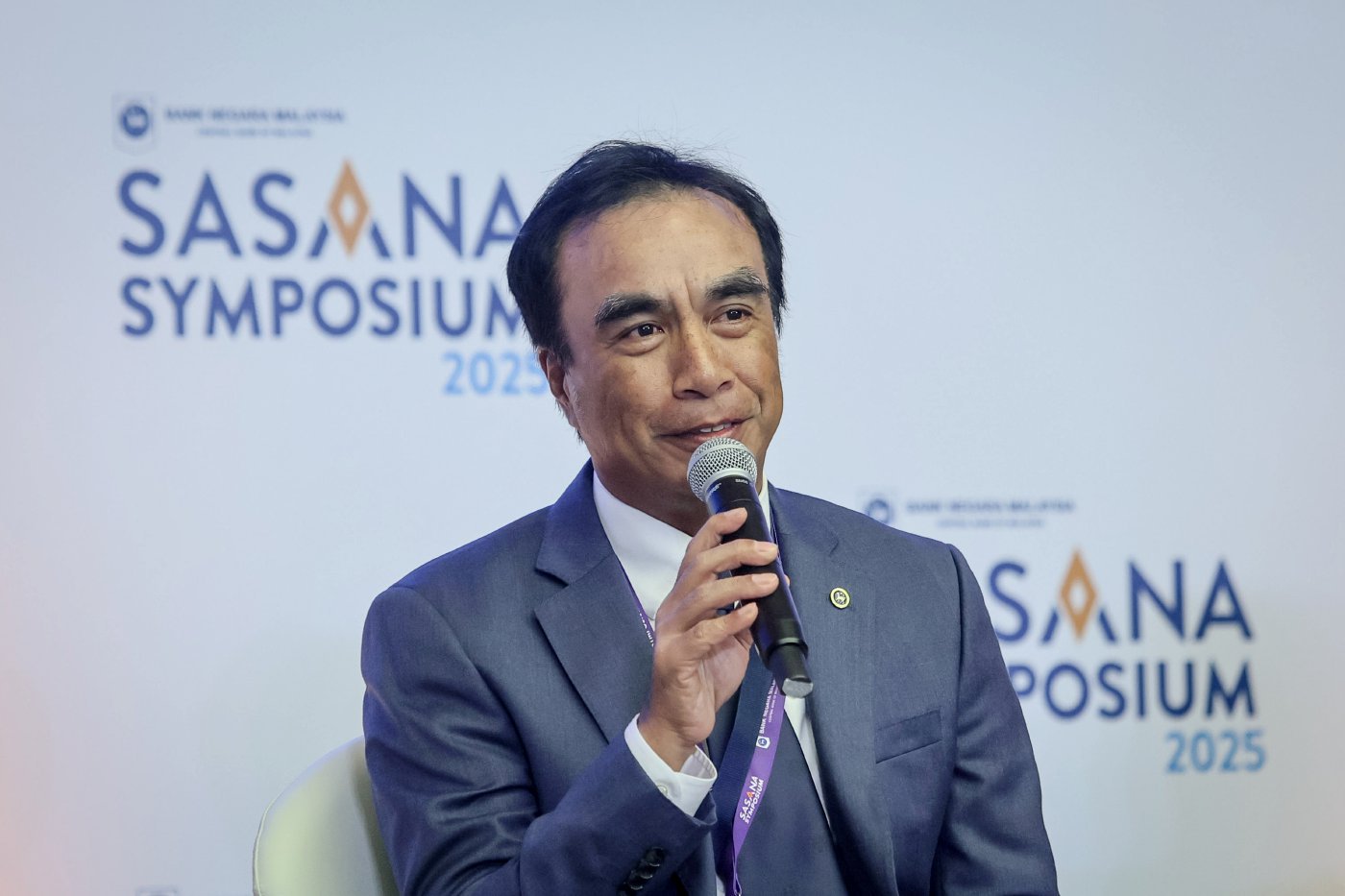
KUALA LUMPUR: Malaysia’s next challenge in Islamic finance is no longer building scale, but strengthening innovation as the industry seeks to expand beyond traditional banking and capital market offerings, the central bank said.
Deputy governor Adnan Zaylani Mohamed Zahid said the country’s comprehensive Islamic finance ecosystem has made it a global leader, but sustaining that position will require continued innovation and collaboration.
“Our domestic strength is very strong and it will only grow because we expect our financial sector to continue to grow,” he said during a panel session at Bank Negara Malaysia’s Sasana Symposium 2026.
Adnan said Islamic banking assets account for close to half of Malaysia’s banking sector, while the Islamic capital market represents more than 60 per cent of the overall capital market.
He said the country’s success was driven not only by its scale, but also by its ability to develop innovative solutions, including social finance initiatives that combine financial services with broader socioeconomic outcomes.
One example is iTekad, a programme that combines social funds, particularly zakat and donations, with financing, training and business support to help microentrepreneurs build sustainable businesses.
“iTekad has garnered international attention for the way we combine social funds, particularly zakat and donations, with financial sector offerings,” he said.
He said the programme demonstrates how Islamic finance can address community needs while creating pathways for businesses to grow.
Adnan also highlighted the government’s recent US$1.5 billion sovereign sukuk issuance based on sukuk manfa’ah as another example of innovation to broaden Islamic capital market offerings and attract international investors.
The issuance attracted demand of about 4.7 times the amount offered and achieved the government’s tightest-ever spread, reflecting strong investor confidence, he said.
He added that the sovereign sukuk would provide a benchmark for Malaysian companies seeking to raise foreign currency funding through sukuk and other financing instruments.
“It helps sukuk issuers and other corporate issuers in Malaysia benchmark their foreign currency fundraising against the sovereign issuance,” he said.
Adnan said maintaining Malaysia’s leadership in Islamic finance would require regulators, financial institutions and industry players to continue developing new products and solutions.
He added that social finance, talent development and international collaboration would remain key priorities as global competition intensifies.