

While it’s “free” to use your credit card in Singapore — unless the merchant imposes a surcharge, which they’re technically not supposed to — using it overseas incurs explicit costs in the form of foreign currency (FCY) transaction fees levied by the banks.
However, many credit cards offer higher earn rates on FCY transactions. For example:
- Citi PremierMiles Card: 1.2 mpd for SGD spending, 2.2 mpd for FCY spending
- DBS Altitude Card: 1.3 mpd for SGD spending, 2.2 mpd for FCY spending
So do the additional miles justify the additional fee? The answer boils down to two things:
- How much you value a mile
- How much you’re paying for miles when using your card overseas
(1) is a subjective measure, which I’ve addressed in this article. (2) is more objective, and what we’ll examine below.
What happens when you swipe your card overseas?
When you make a credit card transaction in a currency other than Singapore Dollars, what typically happens is the amount is first converted to USD, and then into SGD, based on rates provided by American Express, Mastercard or Visa.
“Visa/Mastercard transactions in US Dollar shall be converted to Singapore Dollar on the date of conversion. Transactions in other foreign currencies will be converted to US Dollar before being converted to Singapore Dollar.”
-DBS Bank
There’s some spread involved here (usually <0.5%), but the biggest expense is the FCY transaction fee charged by the bank.
| 💳 FCY Fees by Issuer and Card Network |
||
| Issuer | ↓ MC & Visa | AMEX |
| Standard Chartered | 3.5% | N/A |
| American Express | N/A | 3.25% |
| Citibank | 3.25% | N/A |
| DBS | 3.25% | 3.25% |
| HSBC | 3.25% | N/A |
| Maybank | 3.25% | N/A |
| OCBC | 3.25% | N/A |
| UOB | 3.25% | 3.25% |
| BOC | 3% | N/A |
| CIMB | 3% | N/A |
With all the competition from alternatives like YouTrip and Revolut, you’d think that banks would be moderating their FCY transaction fees.
Fat chance. If anything, these have been trending upwards over the years. When I first started this blog in 2015, fees were in the range of 2.5-2.8%. Now, almost all the banks are at 3.25%, with Standard Chartered the “market leader” at 3.5%.
Summary of FCY Fee Changes, 2018 to Present
- On 1 Apr 2018, Maybank increased its FCY charge on Visa Diamante, Visa Infinite and World Mastercard from 2.5% to 2.75%
- On 4 Oct 2018, Citibank increased its FCY charge from 2.8% to 3%
- On 1 Nov 2018, HSBC increased its FCY charge from 2.5% to 2.8%
- On 1 Jan 2019, CIMB removed the admin fee waiver for FCY transactions on the Visa Signature and Platinum Mastercard, effectively increasing the fee from 1% to 3%
- On 2 Jan 2019, DBS increased its FCY charge from 2.8% to 3%
- On 15 Jan 2019, BOC increased its FCY charge on Mastercard transactions from 2.5% to 3% (Visa fees increased from 2.5% to 3% on 1 Dec 18)
- On 15 Mar 2019, OCBC increased its FCY charge from 2.8% to 3%
- On 4 Sep 2019, UOB increased its FCY charge from 2.8% to 3.1%
- On 1 Nov 2019, DBS increased its FCY charge from 3% to 3.25%
- On 3 Dec 2019, OCBC increased its FCY charge from 3% to 3.25%
- On 15 Dec 2019, Citibank increased its FCY charge from 3% to 3.25%
- On 1 Mar 2020, AMEX increased its FCY charge from 2.5% to 2.95%
- On 9 Mar 2020, UOB increased its FCY charge from 3.1% to 3.25%
- On 1 Nov 2021, Maybank increased its FCY charge from 2.75% to 3.25%
- On 4 Jan 2023, HSBC increased its FCY charge from 2.8% to 3.25%
- On 1 Oct 2023, AMEX increased its FCY charge from 2.95% to 3.25%
- On 10 May 2025, DBS increased its FCY charge for AMEX cards from 3% to 3.25%
Don’t forget that the FCY transaction fees are charged on top of the implicit spread in the Mastercard or Visa exchange rate. For example:
- A US$100 transaction charged to a Mastercard would cost S$128.37, assuming no FCY transaction fees (spot rate: S$127.93)
- Once a 3.25% FCY transaction fee is factored in, the amount becomes S$132.54
| ❓ How much will my overseas transaction cost? |
| If you want to know how much a given FCY transaction will cost, you can use the Mastercard or Visa currency converter calculators. All you need to enter is the bank’s FCY fee, which you can find in the table above. |
| Mastercard Calculator |
| Visa Calculator |
Which cards earn the most miles for FCY spend?
No one likes to pay more than they have to, but do the miles earned for overseas transactions justify the costs?
Generally speaking: yes, although some cards are better options than others.
General Spending
The following cards offer bonuses on all FCY transactions, regardless of MCC (except those on the general exclusions list, such as government services or insurance premiums).
| Card FCY Fee* |
FCY Earn Rate | Cost Per Mile |
 DCS Imperium Card DCS Imperium Card3.25% Apply |
4 mpd1 No cap |
0.81 |
 Maybank XL Rewards Card Maybank XL Rewards Card3.25% Apply |
4 mpd2 | 0.81¢ |
 UOB Preferred Visa UOB Preferred Visa3.25% Apply |
4 mpd3 | 0.81¢ |
 Citi Rewards Citi Rewards3.25% Apply |
4 mpd4 Online Spend |
0.81¢ |
 DBS Woman’s World Card DBS Woman’s World Card3.25% Apply |
4 mpd5 Online Spend |
0.81¢ |
 UOB Visa Signature UOB Visa Signature3.25% Apply |
4 mpd6 | 0.81¢ |
 StanChart Beyond Card StanChart Beyond Card3.5% Apply |
PP: 4 mpd PB: 3.5 mpd Regular: 3 mpd No cap |
PP: 0.88¢ PB: 1¢ Regular: 1.17¢ |
 Maybank World Mastercard Maybank World Mastercard3.25% Apply |
3.2 mpd7 No cap |
1.02¢ |
 Maybank Visa Infinite Maybank Visa Infinite3.25% Apply |
3.2 mpd8 No cap |
1.02¢ |
 BOC Elite Miles Card BOC Elite Miles Card3% Apply |
2.8 mpd No cap |
1.07¢ |
 Maybank Horizon Visa Signature Maybank Horizon Visa Signature3.25% Apply |
2.8 mpd9 No cap |
1.16¢ |
 StanChart Visa Infinite StanChart Visa Infinite3.5% Apply |
3 mpd10 No cap |
1.17¢ |
 HSBC Premier Mastercard HSBC Premier Mastercard3.25% Apply |
2.76 mpd No cap |
1.18¢ |
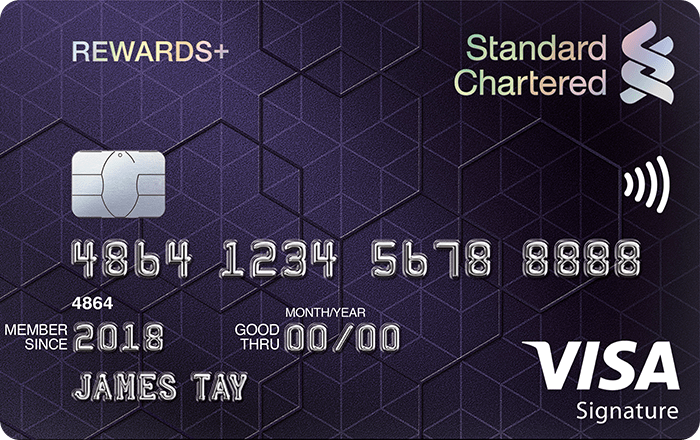 StanChart Rewards+ StanChart Rewards+3.5% Apply |
2.9 mpd11 |
1.21¢ |
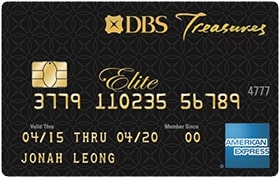 DBS Treasures Black Elite DBS Treasures Black Elite3.25% |
2.4 mpd No cap |
1.35¢ |
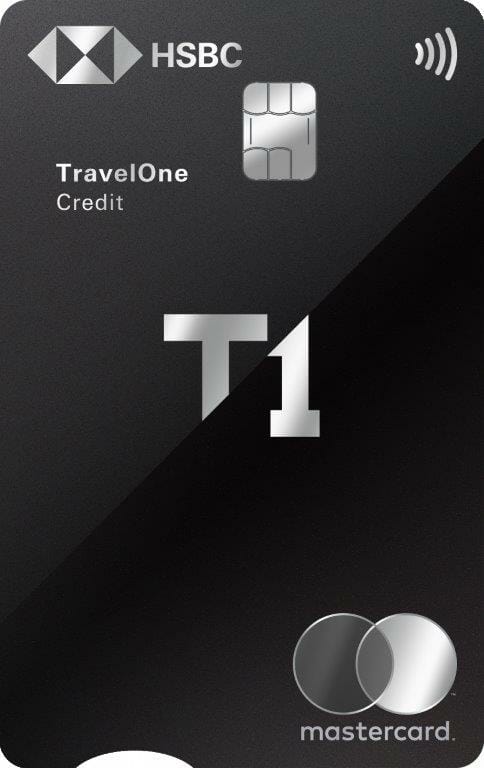 HSBC TravelOne Card HSBC TravelOne Card3.25% Apply |
2.4 mpd No cap |
1.35¢ |
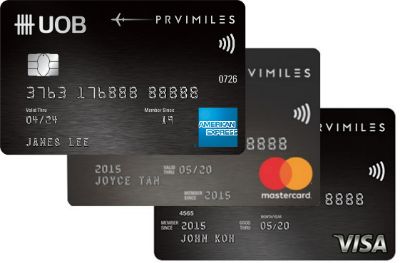 UOB PRVI Miles Card UOB PRVI Miles Card3.25% AMEX Mastercard Visa |
3 mpd (IDR, MYR, THB, VND) 2.4 mpd No cap |
1.08¢ (IDR, MYR, THB, VND) 1.35¢ |
 UOB Visa Infinite Metal Card UOB Visa Infinite Metal Card3.25% Apply |
2.4 mpd No cap |
1.35¢ |
 OCBC VOYAGE (Premier, PPC, BOS) OCBC VOYAGE (Premier, PPC, BOS)3.25% |
2.3 mpd No cap |
1.41¢ |
 OCBC Premier Visa Infinite OCBC Premier Visa Infinite3.25% |
2.24 mpd No cap |
1.45¢ |
 DBS Vantage Card DBS Vantage Card3.25% Apply |
2.2 mpd No cap |
1.48¢ |
 DBS Altitude Card DBS Altitude Card3.25% AMEX Visa |
2.2 mpd No cap |
1.48¢ |
 OCBC VOYAGE OCBC VOYAGE3.25% Apply |
2.2 mpd No cap |
1.48¢ |
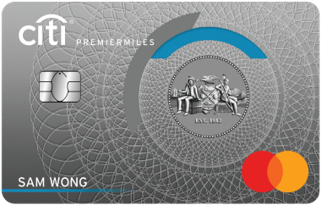 Citi PremierMiles Card Citi PremierMiles Card3.25% Apply |
2.2 mpd No cap |
1.48¢ |
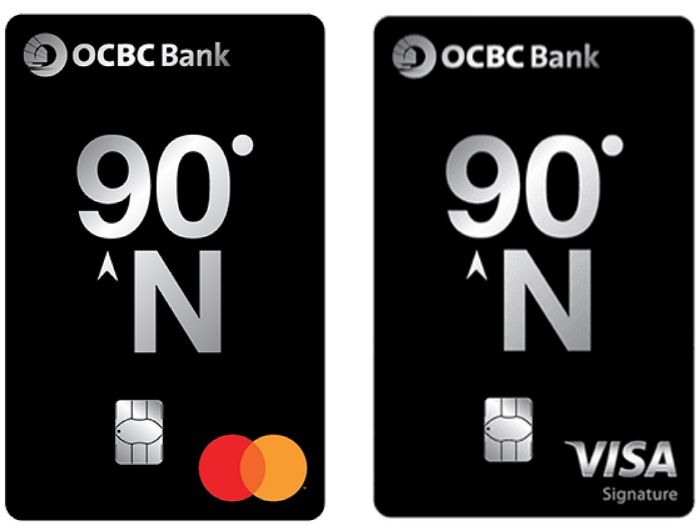 OCBC 90°N Card OCBC 90°N Card3.25% Mastercard Visa |
2.1 mpd No cap |
1.55¢ |
 Citi Prestige Card Citi Prestige Card3.25% Apply |
2 mpd No cap |
1.63¢ |
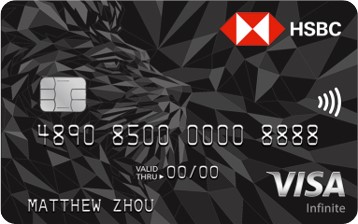 HSBC Visa Infinite HSBC Visa Infinite3.25% Apply |
2 mpd No cap |
1.63¢ |
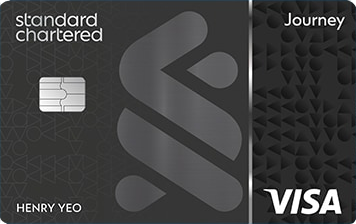 StanChart Journey StanChart Journey3.5% Apply |
2 mpd No cap |
1.75¢ |
| Not showing options earning <2 mpd |
||
| 1. Min. S$4,000 FCY spend per c. month, otherwise 2.4 mpd 2. Min. spend S$500 per c. month, capped at S$1,000 per c. month 3. Must use mobile contactless, capped at S$600 per c. month 4. For online spend, capped at S$1,000 per s. month 5. For online spend, capped at S$1,000 per c. month 6. Min. spend S$1,000 in FCY per statement month, capped at S$1,200 per s. month 7. Min. spend S$4,000 per c. month. 2.8 mpd with min. spend S$800 per c. month. 0.4 mpd otherwise 8. Min. spend S$4,000 per c. month. 2 mpd otherwise 9. Min. spend S$800 per c. month. 1.2 mpd otherwise 10. Min. spend S$2,000 per s. month. 1 mpd otherwise 11. Capped at S$2,222 per membership year |
||
| *Fee refers to the FCY transaction fee imposed by banks, and does not include the spread charged by Mastercard or Visa, which can add an additional 0.3-0.5% depending on currency | ||
Specific Categories
If you’re clocking FCY spend on particular categories, the cards below can also be options.
| Card FCY Fee* |
FCY Earn Rate | Cost Per Mile |
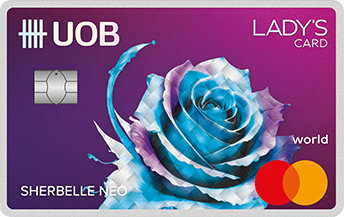 UOB Lady’s Card UOB Lady’s Card3.25% Apply |
4 mpd1 | 0.81¢ |
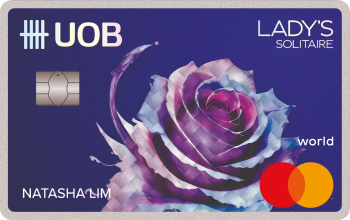 UOB Lady’s Solitaire Card UOB Lady’s Solitaire Card3.25% Apply |
4 mpd2 | 0.81¢ |
 OCBC Rewards Card OCBC Rewards Card3.25% Apply |
4 mpd3 | 0.81¢ |
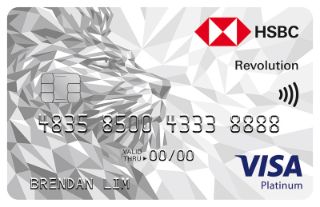 HSBC Revolution HSBC Revolution3.25% Apply |
4 mpd4 |
0.81¢ |
 KrisFlyer UOB Card KrisFlyer UOB Card3.25% Apply |
2.4 mpd5 | 1.35¢ |
| 1. Pick 1: Beauty & Wellness, Dining, Entertainment, Family, Fashion, Transport, Travel. Capped at S$1,000 per c. month (T&Cs) 2. Pick 2: Beauty & Wellness, Dining, Entertainment, Family, Fashion, Transport, Travel. Capped at S$750 per category per c. month (T&Cs) 3. Capped at S$1,110 per c. month (T&Cs) 4. Capped at S$1,000 per c. month (T&Cs) 5. Min. S$1,000 spend on SIA Group in a membership year (T&Cs) |
||
| *Fee refers to the FCY transaction fee imposed by banks, and does not include the spread charged by Mastercard or Visa, which can add an additional 0.3-0.5% depending on currency |
||
Limited-time promotions
In addition to the cards above, I want to spotlight two specific, limited-time promotions that have been added for the mid-year travel peak.
Maybank Horizon Visa Signature: 3.2 mpd on FCY spend in eight currencies
 Maybank Horizon Visa Signature Maybank Horizon Visa SignatureApply |
|
| Earn Rate | 3.2 mpd |
| Eligible Transactions | Selected foreign currencies |
| FCY Fee | 3.25% |
| Cost Per Mile | 1.08 cents |
From 1 April to 30 June 2026, Maybank Horizon Visa Signature cardholders will earn an uncapped 3.2 mpd for in-person and online transactions made in the following currencies:
|
|
|
A minimum spend of S$800 in the same calendar month is required. Transactions made in other foreign currencies will continue to earn an uncapped 2.8 mpd, as before.
For more on this promotion, refer to this post.
UOB PRVI Miles: 5 mpd on overseas shopping and dining
 UOB PRVI Miles Card UOB PRVI Miles CardAMEX Mastercard Visa |
|
| Earn Rate | 5 mpd |
| Eligible Transactions | In-person dining and shopping |
| FCY Fee | 3.25% |
| Cost Per Mile | 0.65 cents |
From 18 May to 30 June 2026, UOB PRVI Miles Cardholders will earn 5 mpd on in-person overseas dining and shopping transactions.
| Regional FCY Spend 🇮🇩 Indonesia, 🇲🇾 Malaysia, 🇹🇭 Thailand, 🇻🇳 Vietnam |
|||
| Base | Bonus | Total | |
| Overseas Dining (in person) |
UNI$7.5 per S$5 (3 mpd) |
UNI$5 per S$5 (2 mpd) |
UNI$12.5 per S$5 (5 mpd) |
| Overseas Shopping (in person) |
UNI$7.5 per S$5 (3 mpd) |
UNI$5 per S$5 (2 mpd) |
UNI$12.5 per S$5 (5 mpd) |
| Non-Regional FCY Spend 🌏 Rest of the world |
|||
| Base | Bonus | Total | |
| Overseas Dining (in person) |
UNI$6 per S$5 (2.4 mpd) |
UNI$6.5 per S$5 (2.6 mpd) |
UNI$12.5 per S$5 (5 mpd) |
| Overseas Shopping (in person) |
UNI$6 per S$5 (2.4 mpd) |
UNI$6.5 per S$5 (2.6 mpd) |
UNI$12.5 per S$5 (5 mpd) |
A minimum spend of S$1,500 is required, and the bonus is capped at:
- S$4,000 of eligible spending in regional FCY
- S$3,080 of eligible spending in non-regional FCY (really S$3,076, but remember UOB rounds down transactions to the nearest S$5)
For the avoidance of doubt, the bonus cap is shared between regional and non-regional FCY, so if you spend in a mix of the two, you’ll hit the cap somewhere between the S$3,080 and S$4,000 mark.
Registration is required, and can be done on the UOB PRVI Miles website, or via the Rewards+ tab in the UOB TMRW app.
For more on this promotion, including the eligible MCCs and crediting timelines, refer to this post.
How do banks define overseas transactions?
For most banks, an “overseas transaction” is simply any transaction processed in a currency other than Singapore Dollars.
But Bank of China and UOB add another condition: the payment gateway must be outside of Singapore. For example, if you were to book through the Hotels.com Singapore website and pay in Euros with your UOB PRVI Miles Card, you’d earn 1.4 mpd instead of 2.4 mpd because the payment is processed in Singapore.
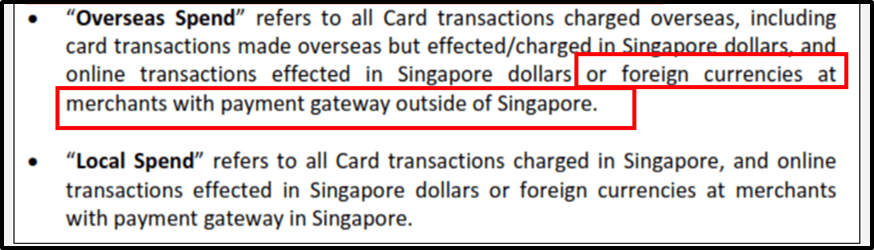
How do you know where the payment gateway is located? You don’t. That’s the worst thing about such a rule: it puts the onus on the customer to find out information that’s not readily available.
If it’s any consolation, this is only an issue for online transactions. If you’re physically overseas when using your card, you generally don’t need to worry about where the payment gateway is located (though you’ll have to be careful of DCC — see below).
Moreover, there is a way of finding out where the payment gateway is located, if you’re willing to put in a little legwork.
What about Amaze?
 |
| Apply |
| Review |
| Use code MILELION for 3,000 bonus InstaPoints |
| 💳 tl;dr: Amaze Card |
|
If you want to strike a balance between cost and rewards, Amaze would be the right option.
With Amaze, you’ll pay a ~2% markup over Mastercard rates, while continuing to earn regular credit card rewards of up to 4 mpd. This makes it a superior option to any traditional credit card, but only within the bonus caps.
The miles earned are limited only by the credit card linked to the Amaze, and the following pairings are recommended.
| 💳 Recommended Amaze Pairings |
||
| Card | Earn Rate | Remarks |
| Citi Rewards Apply |
4 mpd1 | Max S$1K per s. month |
| Maybank XL Rewards Card Apply |
4 mpd2 | Min. S$500, max S$1K per c. month |
| OCBC Rewards Card Apply |
4 mpd3 | Max S$1.1K per c. month |
| 1. All online transactions except travel (airlines, hotels, rental cars, tour agency, cruises etc.) and in-app mobile wallet (T&Cs) 2. Dining, entertainment, shopping, travel (T&Cs) 3. Clothes, bags, shoes and shopping (T&Cs) |
||
A brief reminder of the ground rules for Amaze:
- Amaze transactions code as online
- Amaze transactions will be billed in SGD
- Amaze transactions retain the original MCC of the underlying merchant
- Amaze transaction descriptions are changed to AMAZE*merchant name
- Amaze can be paired with Mastercard cards only
- DBS, POSB and UOB cards no longer award points for Amaze transactions
- Citi excludes certain Amaze transactions related to AXS and transit (i.e. bus/MRT/EZ-Link), but otherwise awards points
It usually doesn’t make sense to pair Amaze with general spending cards, because you could derive a lower cost per mile by using non-Amaze options like the Maybank World Mastercard or DBS Woman’s World Card.
Refer to this article for more details.
Beware of DCC!
Here’s my customary warning about the scam known as Dynamic Currency Conversion (DCC).
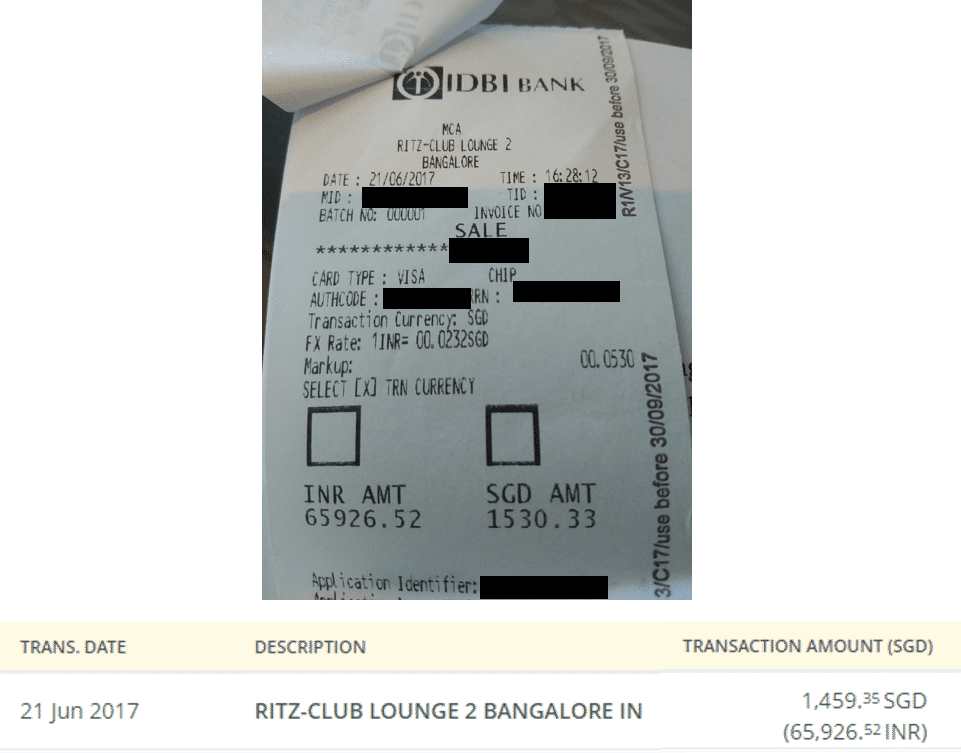
For the uninitiated, DCC is a “service” provided by merchants which converts the transaction into your card’s local currency, at a fee that’s much more than what your bank would charge. The merchant pockets part of the profit, so some unscrupulous places will instruct staff to select it by default, without the consent of the customer.
Be alert, and always, always emphasise that you want to be billed in the local currency. If you want to avoid the scourge of DCC altogether, use an American Express card, since AMEX does not support DCC.
What about zero FCY fee cards?
If your priority is simply minimising costs rather than earning rewards, you can consider “zero FCY fee” cards such as:
- Chocolate Visa Card
- Mari Credit Card
- Revolut
- Trust Cashback Card
- Trust Link Card
- YouTrip
These cards offer cheaper FCY transactions, but the catch is that you either earn no rewards (Revolut/YouTrip), or minimal rewards (Trust Link/Trust Cashback).
That said, in situations where rewards aren’t available even with bank credit cards—such as education fees or charitable donations—it becomes a matter of damage minimisation. In such cases, zero FCY fee cards are the smarter choice, since there’s no reason to pay FX fees when no rewards are offered.
|
Don’t be so quick to conclude that a given category is “unrewardable”! For example:
|
Besides, there are two exceptions to the no/minimal rewards rule.
Chocolate Visa Card
 Chocolate Visa Card Chocolate Visa Card |
|||
| Apply |
The Chocolate Visa Card has no FCY fees, and earns:
- 1 Max Mile per S$1 on the first S$1,000 of spend per calendar month
- 0.4 Max Miles per S$1 on all spend above S$1,000 per calendar month
It’s basically a free 1 mpd, though the relatively low spending cap will be an impediment.
Also, do note that there is a cap of 100 miles per month on so-called bill payments, which include insurance, government services, healthcare,, business services and utilities.
Mari Credit Card
 Mari Credit Card Mari Credit Card |
|||
| Apply | |||
| Ref Code: 7KZX22QY |
The Mari Credit Card has no FCY fees, and earns 1.5% cashback on all spending, capped at a maximum FCY spend of S$1,500 per calendar month.
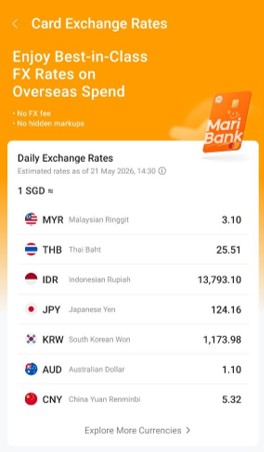
Maribank also promises “best-in-class” FX rates for seven selected foreign currencies, which can be found in its app, updated hourly. All other currencies will use Mastercard’s rates.
Credit cards or multi-currency debit cards?
 |
 |
|
| Pros |
|
|
| Cons |
|
|
If you’ve decided to go with a zero FCY fee card, the next question is whether you should choose a credit card, or a multi-currency debit card like Revolut or YouTrip.
Historically speaking, multi-currency debit cards were at a disadvantage because the MAS-imposed transaction limits restricted customers to keeping S$5,000 in a wallet at any time, and spending S$30,000 per year. These restrictions meant that customers wanting to make big ticket purchases would have to use a credit card instead.
But at the start of 2024, YouTrip became the first e-wallet to increase its stock limit (the amount that can be kept in the wallet) to S$20,000, and the flow limit (the amount that can be spent per 12-month period) to S$100,000. Revolut followed suit in the middle of 2024.
Therefore, multi-currency cards are at less of a disadvantage now, though if you were making a truly massive transaction, then a credit card would obviously be the better choice.
The key advantage of multi-currency debit cards is that you’ll enjoy better rates than Visa or Mastercard, assuming it’s not the weekend or a public holiday (where rates can be worse).
| US$100 | S$127.67 | S$128.13 | 0.36% |
| A$100 | S$91.36 | S$91.73 | 0.40% |
| ¥10,000 | S$80.35 | S$80.66 | 0.39% |
| €100 | S$148.61 | S$148.98 | 0.25% |
| £100 | S$172.09 | S$172.54 | 0.26% |
Moreover, a multi-currency debit card allows you to lock in today’s rates for future spend. For example, if you feel the JPY/SGD rate today is good, you can go ahead and buy JPY for your trip six months down the road (keep in mind there’s still the opportunity cost of funds to consider, since your YouTrip balance earns no interest).
In contrast, credit card users can only take advantage of the prevailing rate at the time the transaction is processed.
So why consider credit cards? Well, if you’re making a very big transaction that would bust even the increased YouTrip limits, then you might not have a choice. Credit cards are limited only by the assigned credit limit.
Then there’s fraud considerations. As a debit card, any transactions charged to your Revolut or YouTrip, whether fraudulent or legitimate, are immediately deducted from your account. There was a feature in CNA about the pitfalls of multi-currency card fraud prevention, including the horror story of a customer who found her YouTrip wallet drained by 31 unauthorised transactions in quick succession and had to wait months to recover her funds.
There are ways of protecting yourself, however, such as locking your multi-currency card whenever it’s not in use. If you’re only taking that trip a few months down the line, there’s no reason to leave your card unlocked in the interim.
In contrast, if your credit card gets hit by a fraudulent transaction, there is no immediate deduction of funds. You can spot the fraudulent transaction on your statement and open a dispute with the bank, and in the majority of cases you should receive a temporary credit to offset the disputed amount while investigations are carried out.
|
While cash-based transactions aren’t really the focus of this article, I should highlight that Trust has the upper hand when it comes to this. Trust allows you to make unlimited fee-free withdrawals from overseas ATMs, while YouTrip only offers S$400 of free withdrawals per month, after which a 2% fee applies. Revolut allows up to S$350 or five withdrawals per month on the Standard plan, after which a 2% fee applies. Do note that the overseas bank operating the ATM may impose a fee of its own, but that’d be the same whether you used Trust or Revolut/YouTrip. Also, when using Trust for ATM withdrawals, be sure to toggle it to debit card mode (on the app, switch the source to “pair with savings account”). You want to make a withdrawal from your Trust savings account (free), not a cash advance from Visa ($$$). |
On a similar note, debit cards do not support so-called “authorisation holds”, the type required when you rent a car or check in to a hotel. This means that the hold amount is automatically deducted from your available funds, leaving you with less money on hand. For instance, if you have a YouTrip balance of US$1,000 and use the card to rent a car, and the rental car company puts a US$400 hold, you only have US$600 left to spend. If you used a credit card, there’d be no deduction of funds.
Finally, credit cards allow you to stretch your cashflow. While multi-currency debit cards involve an immediate deduction from your account, transactions on credit cards are only due later when the statement amount becomes payable.
Conclusion
While using your credit card overseas incurs extra costs because of foreign currency transaction fees, it can still be worthwhile, especially if you prioritise cards that earn 3-4 mpd, or if you can reduce those fees through Amaze.
I personally would be OK with options that keep the cost per mile below 1.5 cents, though the threshold will vary from person to person.
Of course, if your priority is minimising the total cost of the transaction, then a zero FCY card like the Mari Credit Card, Trust or Revolut would be the better option, since these offer superior exchange rates at the expense of smaller rewards.