
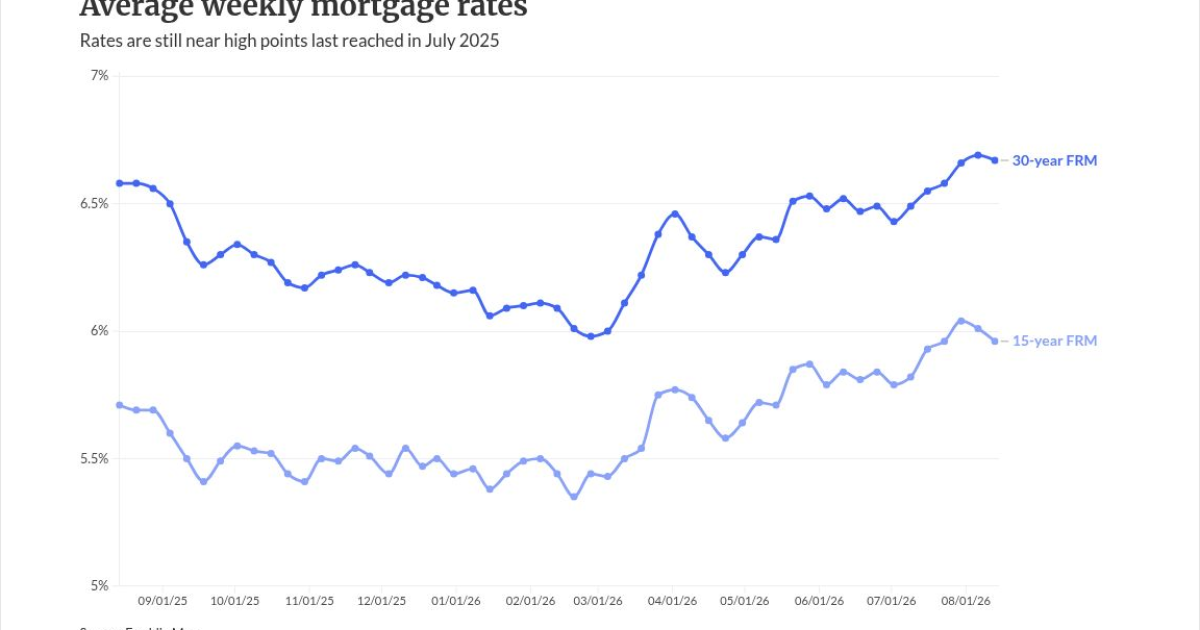
For the first time in six weeks, the 30-year fixed rate mortgage declined, but it is still 9 basis points above one year ago at this time and 69 basis points over February’s low point, the Freddie Mac Primary Mortgage Market Survey reported.
Processing Content
The 30-year FRM averaged 6.67% on Aug. 13,
Meanwhile, the 15-year FRM moved back under 6% this week. It averaged 5.96%, versus 6.01% for the prior week but
“Housing affordability has improved from a year ago, and recent increases in purchase and refinance applications suggest that borrowers continue to respond to even modest changes in mortgage rates,” Sam Khater, Freddie Mac’s chief economist, said in a press release.
The inflation reports’ influence on mortgage rates
Wednesday’s
Williamson joined other economists who believe it provides the Federal Open Market Committee additional room
Rate hike sentiments for the next meeting had been cooling following last Friday’s Bureau of Labor Statistics employment report, although Federal Reserve Bank of Boston President Susan Collins said if the data shows it, she favors an increase, according to published reports.
The FOMC’s decisions do not directly affect mortgage rates, but do influence investor sentiment which impacts the 10-year Treasury yield and mortgage-backed securities pricing.
“For home buyers, that should mean a somewhat steadier mortgage-rate outlook after rates climbed back toward one-year highs over the summer,” Williamson said in Wednesday morning comments. “That could support market activity at the margin by giving buyers more confidence that borrowing costs won’t shift sharply while they’re searching for a home.”
This, along with slower price growth, rising incomes and additional for sale inventory, gives the housing market more room to rebalance gradually, he said.
This week’s inflation reports, which also included the
Lender Price product and pricing engine data posted on the National Mortgage News website for the 30-year fixed had this at a 6.83% rate. This compared with 6.89% one week ago.
Housing activity for the rest of the year
“Sure, inflation’s still a problem, but simply unpleasant is better than an unpleasant surprise,” said Kate Wood, NerdWallet’s lending expert, in a Thursday morning comment.
“We know there are Fed governors who already want to raise the funds rate, and this CPI print won’t change their minds — but it’s also unlikely to sway folks in the wait-and-see crowd,” Wood continued. “Overall, this data points to mortgage rates holding relatively steady, though the Iran war remains a wild card that could come into play at any point.”
Kara Ng, senior economist at Zillow Home Loans, agrees with past statements from the Mortgage Bankers Association in the belief the next FOMC action will be a rate hike. But like others, she believes the data will cause a pause in September.
The rest of 2026 will be an uphill climb for housing. “Zillow expects rates to fall only marginally to 6.5% by the end of 2026, which is higher than the 6.2% at the end of 2025,” Ng said. “Affordability headwinds portend a weaker half of the year for sales growth, with flat to declining transaction volumes for the remainder of the year in some regions.”
The Mortgage Bankers Association’s Weekly Application Survey for the period ended Aug. 7 had the conforming 30-year FRM at 6.77%, a 4 basis point decline.
The inversion with jumbo mortgages remained in place, as those fell to 6.68% from 6.72% for the previous week; these loans normally have higher rates than their conforming counterparts.
Application volume was 3.5% higher from the previous week, with refinancings up 5% and purchases being a seasonally adjusted 3% improvement.
“Mortgage rates edged lower last week after five consecutive weeks of increases, providing some relief for prospective borrowers,” Bob Broeksmit, the MBA’s president and CEO, said in a Thursday morning statement. “While the decline helped boost both purchase and refinance applications, rates remain near their highest level in a year, continuing to challenge affordability and limiting refinance opportunities.”
Keefe, Bruyette & Woods thinks mortgage application activity will remain weak in the near future, Bose George said in a flash note following the Weekly Application Survey release.
Purchase activity in particular is going to slow down because of the higher rates combined with normal seasonality as home purchases wind down with the end of summer and the start of the new school year, George said.
But it isn’t the rate which is keeping first-time home buyers out of the market, said Jason Madiedo, the co-CEO
“For the buyers we work with, a small move in rates was never the thing standing between them and a home,” Madiedo said in a comment. “Most have been told they need 20% down and a perfect file, so they count themselves out before they ever apply, when a lot of them already qualify.”