
Days after releasing its 2026 macroeconomic outlook, the African Development Bank Group has urged African finance ministers to ramp up efforts to unlock hundreds of billions of dollars in domestic revenue in the years ahead.
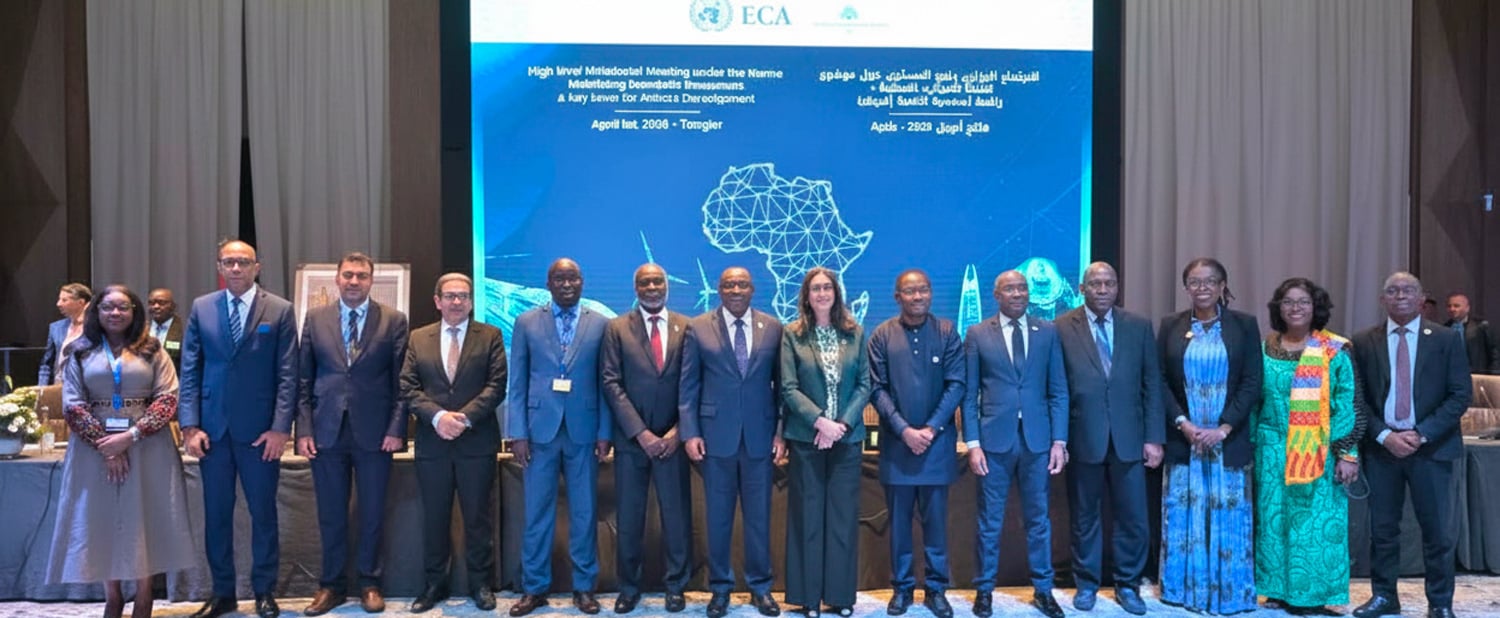
Speaking during a high-level ministerial meeting at the 58th Conference of African Ministers of Finance, Planning and Economic Development (COM58) in Tangier, Morocco, on April 1, Bank Group Chief Economist and Vice-President for Economic Governance and Knowledge Management (ECVP), Prof. Kevin Chika Urama, highlighted the fundamental role of domestic resource mobilisation (DRM) as an enabler of development.
DRM, he noted, is “critical to strengthening resilience, reinforcing sovereignty, and delivering essential public services and infrastructure,” adding that “closing Africa’s DRM gap is both achievable and indispensable for development financing in Africa.”
The ministerial meeting, themed “Domestic Resource Mobilisation: An Important Driver of Africa’s Development,” was organised by Nadia Fettah, Minister of Economy and Finance of the Kingdom of Morocco, as part of COM58, convened annually by the United Nations Economic Commission for Africa (UNECA).
Prof. Urama presented the Bank Group’s approach to DRM, which combines five mutually reinforcing pillars: (i) strengthening tax policy and administration; (ii) simplifying tax regimes and diversifying sources to broaden the base; (iii) accelerating digitisation and data-driven compliance; (iv) reducing leakages, including illicit financial flows (IFFs); and (v) strong emphasis on reform sequencing—delivering quick wins to restore compliance and credibility, while building robust systems and institutions for sustained performance.
He indicated that DRM has been a central pillar of the Bank Group’s support to economic governance for over a decade, with 31 active programmes across 22 Regional Member Countries currently supporting DRM reforms—improving collection efficiency, broadening the base, strengthening regimes, and reducing illicit financial flows.
He outlined key initiatives spearheaded by the Bank to support DRM on the continent:
i. The Debt Management Forum for Africa (DeMFA) and the African Debt Manager’s Initiative Network (ADMIN), which provide the continent with platforms for peer-to-peer learning and knowledge sharing among African ministers and heads of debt management offices on what works—and what does not—in African contexts.
ii. The Public Finance Management Academy for Africa (PFMA) and the Macroeconomic Policy Management Academy for Africa (MEMA), which combine executive training, peer learning, and targeted technical assistance.
iii. The African Financial Stability Mechanism (AFSM), co-developed with the African Union Commission and endorsed by the AU Executive Council in February 2025, to address the continent’s debt refinancing risks.
iv. The Public Service Delivery Index for Africa (PSDI), launched at the Bank Group’s Annual Meetings in May 2025, as a composite and standardised index to measure progress towards delivery of public services across development sectors.
In his closing remarks, Prof. Urama presented short- and medium-to-long-term policy recommendations to strengthen DRM on the continent, as well as practical recommendations for African ministers of finance, planning, and economic development to implement to make DRM a key driver of national development.
The Bank Group’s Ten-Year Strategy (2024–2033) and its new Four Cardinal Points both firmly position DRM as a strategic lever to finance Africa’s structural transformation.
To read VP Urama’s full speech, click here.