
Commodity markets are facing supply pressures even as prices remain below levels needed to incentivize new production.
BNN Bloomberg spoke with Taylor McKenna, analyst at Kopernik, who highlighted opportunities in platinum, potash and iron ore tied to long-term deficits and constrained supply growth.
Key Takeaways
- Platinum markets remain in deficit, with supply expected to decline and prices needing to rise to support new mine development.
- Demand for platinum is holding up better than expected, with investment demand offsetting weaker auto sector consumption.
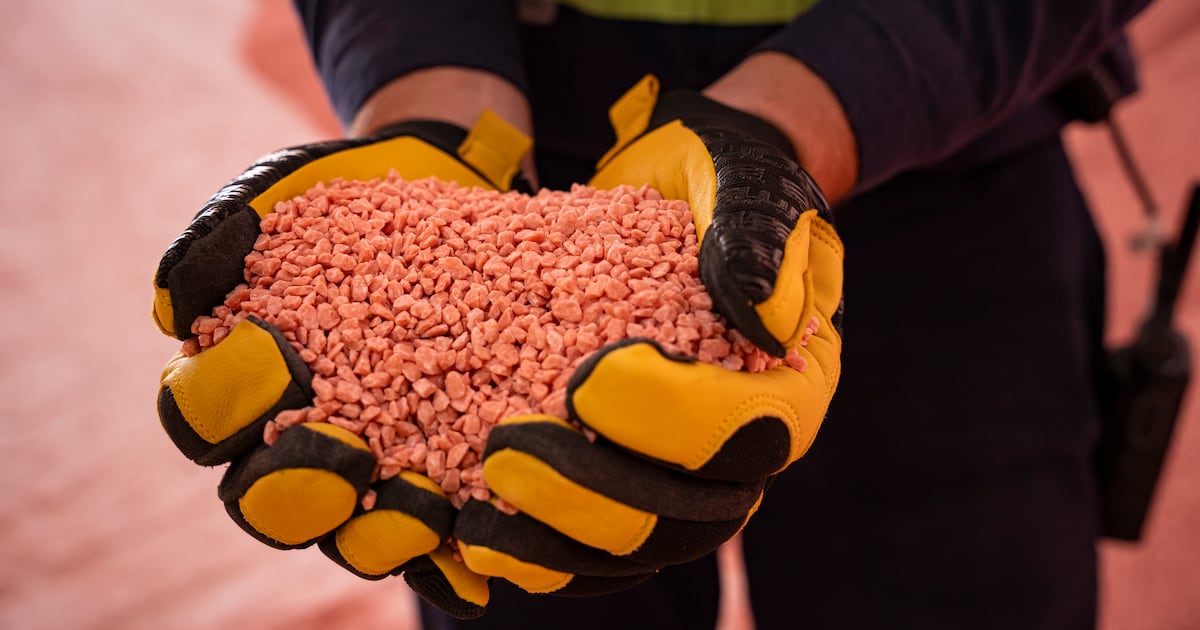
- Potash prices remain below levels required to incentivize new supply, even as global demand grows steadily each year.
- Companies with high-quality, long-life assets and pricing leverage can benefit disproportionately from commodity price increases.
- High-grade iron ore producers may command premium pricing due to efficiency gains for steelmakers and evolving global supply chains.

Read the full transcript below:
ANDREW: Time for Hot Picks. Our guest has Valterra, a South African platinum producer, as his top selection. This company produces almost 40 per cent of the world’s platinum. We’re joined by Taylor McKenna, analyst at Kopernik. Thank you very much for joining us, Taylor. That’s remarkable — one company producing almost 40 per cent of global platinum.
TAYLOR: Yes, it’s a very large company, as you said, based in South Africa. Why we like it so much right now is that platinum is trading well below gold. Historically, it has traded above gold at times, and the long-term average is closer to one to one. Right now, platinum is at about a 60 per cent discount.
As we’ve spoken about before, you really have to pay attention to the supply side when investing in these metals. If you look at platinum five or six years out, supply is expected to continue to fall. It’s already in a deficit, and large miners, including Valterra, are saying much higher prices are needed to incentivize new mine builds.
When you put it all together, Valterra Platinum is trading at a very low price, and we see significant upside and optionality to higher prices in the future.
ANDREW: It’s interesting that the world is so dependent on one company for such a large share of platinum. It’s a fairly important industrial metal.
TAYLOR: It really is. On the industrial side, demand hasn’t fallen as much as many expected. We’ve been in a deficit for two or three years now. Even with some softness in auto demand, investment demand is picking up and more than offsetting that decline. We expect that trend to continue.
ANDREW: Your next idea is German-based company K+S, a potash producer. You argue that potash prices are trading well below the level needed to bring new supply online.
TAYLOR: Exactly. With potash prices around $350 a tonne, the industry is doing fine, but you’re not seeing new mine builds starting anywhere in the world. BHP is finishing a mine that has seen cost overruns and delays.
At the same time, demand continues to grow about two to three per cent annually, and we expect that to continue. Large producers like K+S and Nutrien have suggested prices of $500 to $600 per tonne are needed to incentivize new mines.
That creates meaningful optionality for a company like K+S, with strong operating leverage as prices move higher over time.
ANDREW: Is there a risk that fertilizer stocks could pull back if tensions in the Gulf ease?
TAYLOR: Not really for potash. The current geopolitical concerns in the Gulf are more tied to nitrogen fertilizers. Potash is a larger part of the business for many of these companies, but it’s less directly affected by those dynamics.
ANDREW: Finally, you have Champion Iron Ore, with production in Eastern Canada.
TAYLOR: Yes. Champion Iron Ore is a strong company with a high-quality asset, a solid management team and significant insider ownership, so they’re aligned with shareholders. They’ve built the asset from the ground up and done an excellent job.
They produce high-grade iron ore in Canada and have a long mine life, which positions them well for the future. Recently, they acquired an operating mine in Norway at what we believe is an attractive price, below its intrinsic value.
That makes them a transcontinental producer with assets in both Canada and Europe. As supply chains evolve, we expect Champion to be a reliable source of raw materials for steel production in North America and Europe.
ANDREW: How do they compete with large Australian producers?
TAYLOR: They are smaller than companies like BHP and Rio Tinto, but that allows them to focus on producing higher-grade iron ore with fewer impurities. That helps steelmakers lower costs and improve efficiency, which also allows Champion to command a premium price.
Combined with a long mine life, we think that positions the company well over the long term.
ANDREW: China, of course, consumes a significant portion of global iron ore.
TAYLOR: Yes, China consumes more than 50 per cent of the world’s steel and iron ore. While there are pricing dynamics with major producers, Champion operates somewhat outside that and can serve customers in Europe and North America as well.
ANDREW: Before we let you go, very briefly, your thoughts on oil?
TAYLOR: It’s very difficult to predict. We liked oil when it was around $60 to $70 a barrel, as we thought that was too low. With prices having moved higher, it’s harder to call, but it wouldn’t surprise us if prices remain around current levels even as geopolitical tensions ease.
ANDREW: Taylor, thank you very much. Taylor McKenna, analyst at Kopernik.
| DISCLOSURE | PERSONAL | FAMILY | PORTFOLIO/FUND |
|---|---|---|---|
| VALT LON | N | N | N |
| SDF ETR | N | N | N |
| CIA TSX | N | N | N |
—
This BNN Bloomberg summary and transcript of the April 13, 2026 interview with Taylor McKenna are published with the assistance of AI. Original research, interview questions and added context was created by BNN Bloomberg journalists. An editor also reviewed this material before it was published to ensure its accuracy and adherence with BNN Bloomberg editorial policies and standards.