
8:33 AM, 14th April 2026, 23 minutes ago
With rising buy to let mortgage costs back in focus after more than 1,300 products being pulled since the end of March, one organisation says that isn’t why rents are rising.
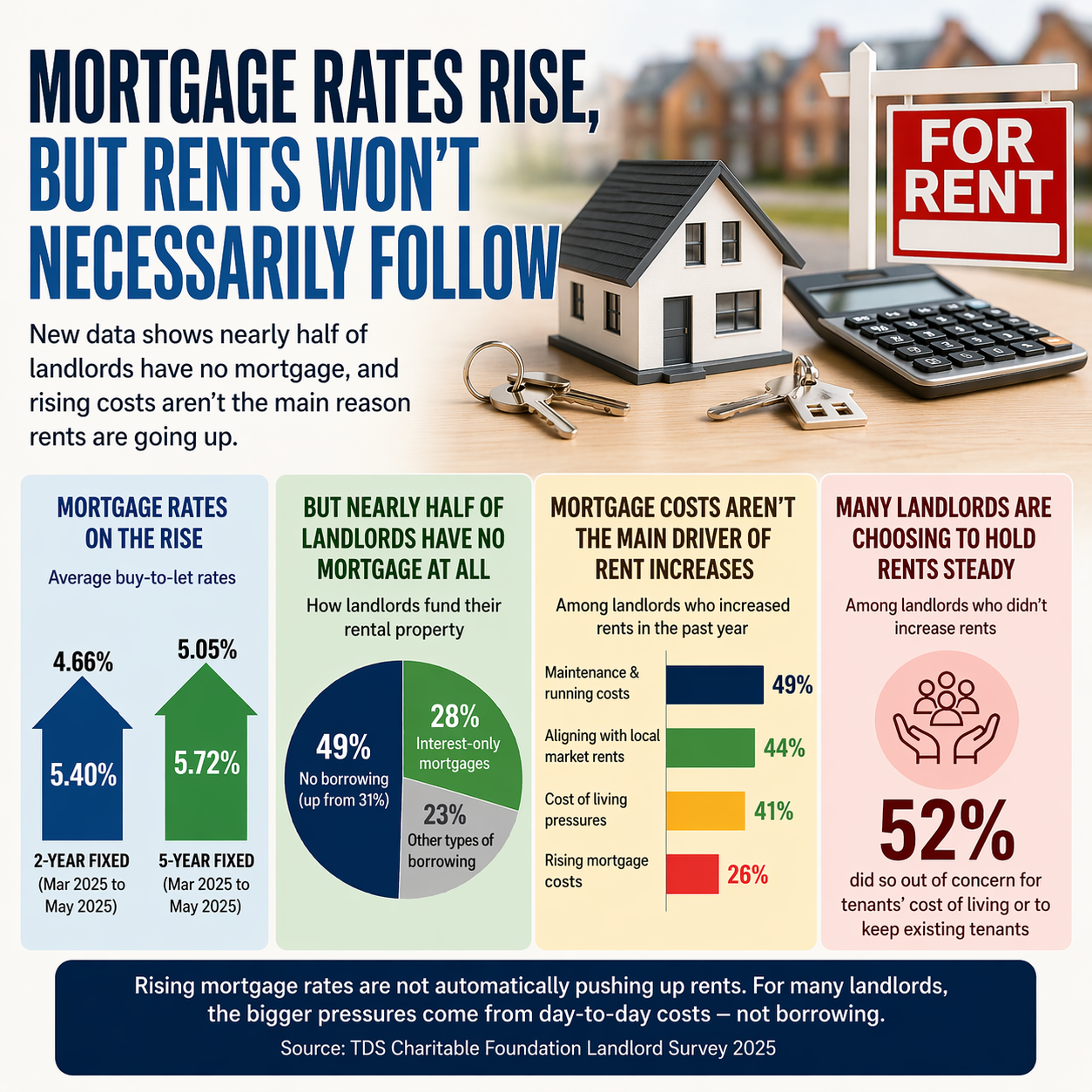
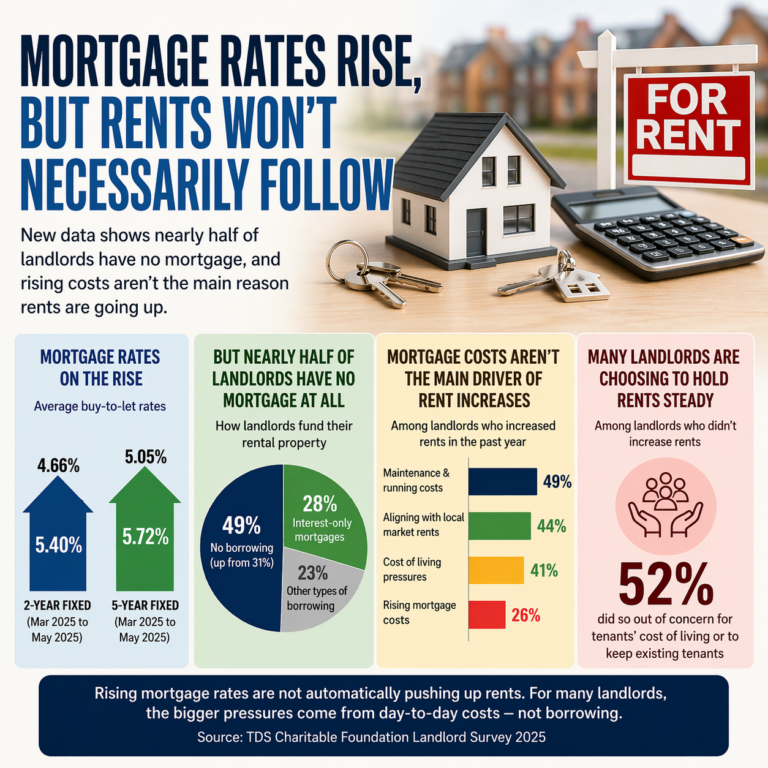
TDS Charitable Foundation points to Moneyfacts data showing that average BTL mortgage rates have climbed with two-year fixed deals jumping from 4.66% to 5.40%.
Five-year fixes have moved from 5.05% to 5.72% which is prompting familiar warnings that higher landlord borrowing costs mean higher rents for tenants.
But the Foundation warns that its research from its Voice of the Landlord Survey tells a less obvious story.
Mortgage costs and rents
The Foundation says: “Last year, mortgage costs were not cited as the primary in determining rent increases.
“Among the 56% of landlords who said they have increased rents over the previous 12 months, just a quarter (26%) cited growing mortgage costs.
“More frequently cited reasons for increasing rents included increased property maintenance and running costs (49%), wanting to align rents with the local market (44%), and increases in the cost of living more generally (41%).”
The survey, which is based on more than 2,000 landlords in England, shows that 49% now own their properties outright.
In other words, nearly half the sector is insulated from mortgage rate movements altogether — a sharp rise from 31% the year before.
Interest only BTL loans
The Foundation adds that even where borrowing is involved, the picture isn’t uniform since 28% of landlords are on interest-only buy to let loans.
That leaves them more exposed as rate increases feed straight through into monthly costs without chipping away at the balance.
The organisation is claiming that rent setting by landlords is being shaped more by day-to-day economics than by financing costs alone.
However, among the 43% who did not increase rents, the most common reason, for 52%, was concern about tenants’ finances.
There was also a desire from landlords to keep existing tenants in place.
The Foundation says that, in reality, landlord behaviour appears more cautious than the headline narrative suggests.
It adds that the 2026 survey will provide a clearer picture of whether that balance begins to shift if borrowing costs remain high.
Landlord sentiment survey
The TDS Foundation’s research has been reflected in Property118’s recent survey of landlords.
It found that most landlords are now operating with relatively modest borrowing levels.
That challenges the long-standing assumption that the sector is heavily leveraged and highly exposed to interest rate shocks.
Data from the Landlord Sentiment Survey Q1 2026, based on 2,380 responses, shows a majority of landlords have loan-to-value ratios at or below 50%.
A significant share own their properties outright, with no mortgage debt.
While landlords with higher borrowing remain sensitive to rate changes and refinancing pressures, they appear to represent a smaller segment of the market than commonly assumed.