


FalconX said derivatives activity in tokenized commodities could be a $5bn market as the digital assets prime broker executed the first tokenized gold derivatives trade referencing the PAX Gold token. Each PAXG token is backed by one fine troy ounce of gold, stored in the London Bullion Market Association’s vaults in London.
The prime broker said in a statement on 14 April 2026 that the transaction marked an early step in the development of a derivatives market for tokenized commodities.

Josh Barkhordar, FalconX
Josh Barkhordar, head of sales at FalconX, said in a statement that tokenized assets are at the center of convergence between traditional finance and digital assets. Onchain markets operate 24/7, allowing institutions to hedge and manage commodity exposure in real time, with faster settlement, greater transparency, and a more efficient use of collateral .
Trace Mayer, chief executive of family office Urim Capital, said in a statement that access to derivatives on assets like PAXG is an important step toward more integrated, continuous global markets that enable efficient management of macro exposure and extend monetary sovereignty. Mayers said: “Tokenized gold brings this ancient store of value and heavyweight of monetary sovereignty into 24/7 programmable markets.”
In March this year FalconX had launched support for tokenized gold products, enabling institutional clients to trade and settle PAXG and Tether Gold (XAUT). The market maker said in a statement that the launch reflected commodities increasingly integrating into blockchain-based market infrastructure, bringing 24/7 access and near real-time onchain settlement to traditional markets.
The market has coalesced around XAUT and PAXG, according to a blog from Martin Gaspar, senior crypto market strategist at FalconX, in March this year. He explained that Tether Gold is issued by the issuer of stablecoin USDT, while PAX Gold is from Paxos Trust Company, a crypto infrastructure provider and the third largest stablecoin issuer.

Martin Gaspar, FalconX
“XAUT has its gold kept in private Swiss vaults, while PAXG uses LBMA-approved vaults in London,” he added. “Liquidity is another consideration. As of Mar 3, 2026, XAUT has a market cap of nearly $2.9bn with daily trading volume of $1.1bn, which compares to PAXG’s market cap of $2.5bn and daily volume of $948m, according to data from CoinGecko.”
During that month the strikes on Iran by the U.S. and Israel led to increased activity in tokenized metals markets on crypto-native venues over the weekends when traditional exchanges were closed. Gaspar said that spot (LBMA) and gold futures (COMEX) only trade Sunday-Friday evening ET for nearly 24 hours each day, meaning that trading cannot respond to potentially market moving geopolitical developments over weekends.
Hyperliquid, a decentralized trading-focused blockchain, has brought traditional markets onchain and a significant portion of its activity has been driven by metals, specifically gold, according to Gaspar.
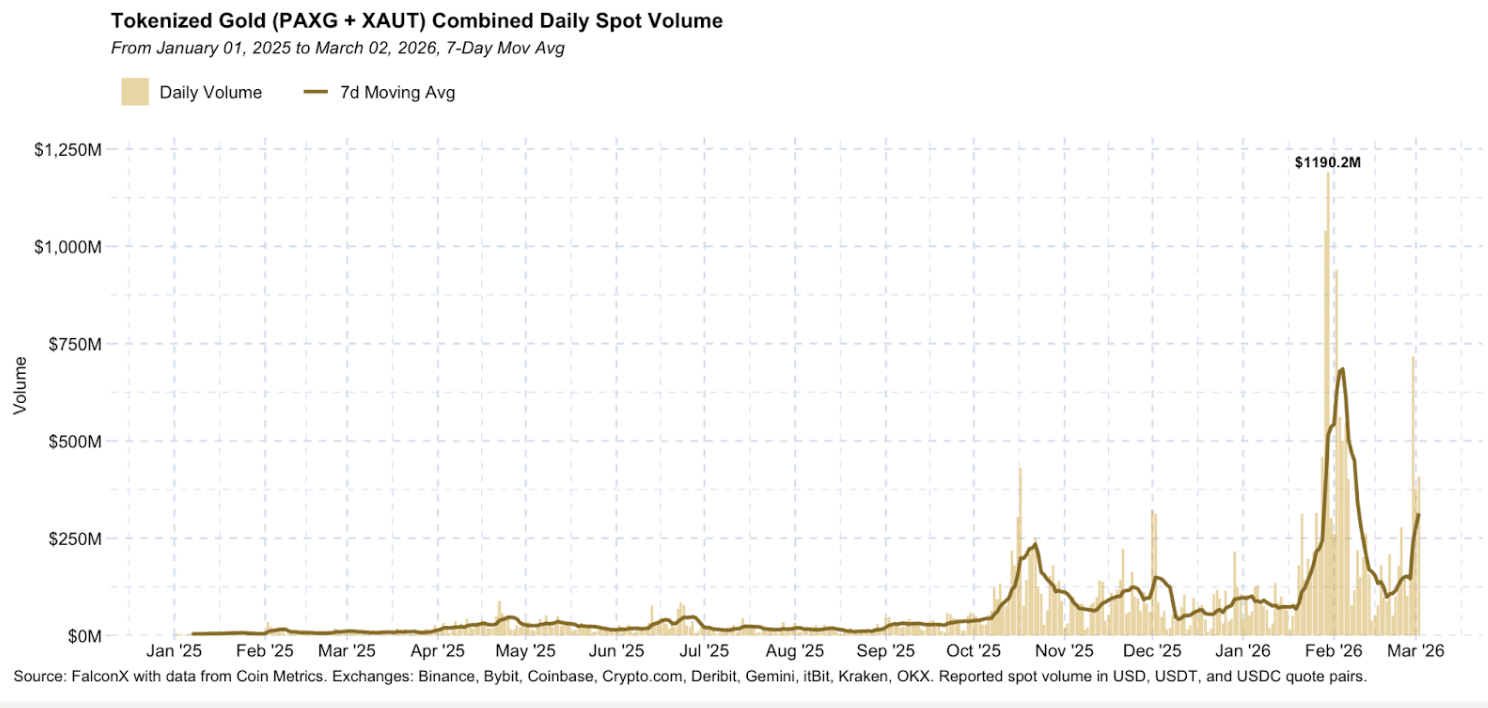
Source: FalconX
As of 3 March 2026, gold market open interest on Hyperliquid was $186m, approximately 3% of its total open interest. In contrast, Gaspar highlighted that traditional gold futures had open interest of $266bn as of 27 February 2026, according to the World Gold Council.
Another digital asset prime broker, Ripple Prime, extended its Hyperliquid integration to give institutional traders onchain perpetuals access to gold, silver and oil for the first time in March this year.
Big news for institutions trading on @Ripple Prime – we’ve extended our @HyperliquidX integration to include HIP-3 symbols, allowing for institutional-grade access to onchain perps on traditional assets like GOLD, SILVER, and OIL.
TradFi exposure. DeFi infrastructure. One…
— Mike Higgins (@mikehiggins) March 30, 2026
Michael Higgins, chef executive of Ripple Prime, said on X that institutions can now trade 24/7 commodity perpetuals through a single margin framework, consolidated risk management, and one counterparty relationship. He described this as traditional finance (TradFi) exposure on decentralized finance (DeFi) rails.
B2C2
On 18 March 2026 B2C2, the digital asset liquidity provider, said in a statement it had launched over-the-counter trading for tokenized gold, offering institutional clients spot and contract for difference (CFD) exposure to PAXG and XAUT, in response to client demand for access to the asset class outside traditional market hours. The two tokens represent approximately 97% of the tokenized gold market, which has grown to nearly $6bn in market capitalization, according to B2C2.
Clients can trade tokenized gold against selected cryptocurrencies, stablecoins and fiat currencies 24/7/365, subject to jurisdiction.
Thomas Restout, group chief executive at B2C2, said in a statement: “Gold has long been one of the most important macro hedges, but for most institutions the infrastructure used to access it still operates on traditional financial rails.”
World Gold Council
The World Gold Council said in a statement on 19 March 2026 that it had launched an initiative to build new market infrastructure for digital gold.
In a white paper, Digital Gold: The Case for a Shared Infrastructure, the World Gold Council and Boston Consulting Group (BCG) proposed Gold as a Service, a new open platform to support the issuance and operation of scalable, interoperable digital gold products. The platform would connect the physical custody of gold with the digital systems used to issue and manage gold-backed products to standardize and grow the market.
The white paper acknowledged that tokenized gold and digital gold accounts have already gained traction as they have clear adoption potential, driven by frictionless access and the prospect of everyday utility.
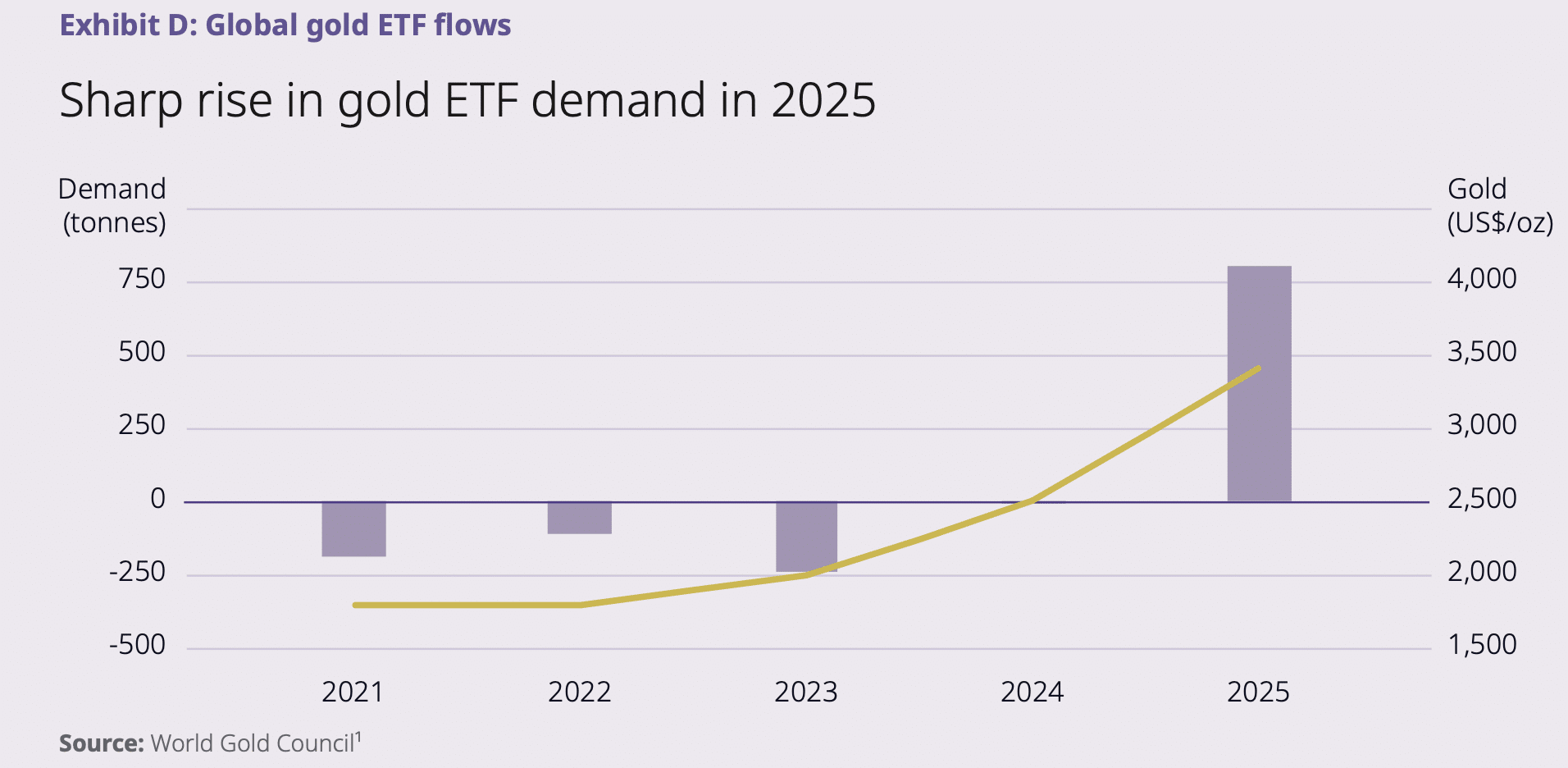
Source: World Gold Council
In addition, the paper highlighted that 2025 was a “breakout” year for gold ETFs and other digital gold products. The paper said; “They contributed 16% of annual gold demand and drew $89bn of inflows, lifting total assets under management to $559bn and holdings to 4,025 tonnes.¹”
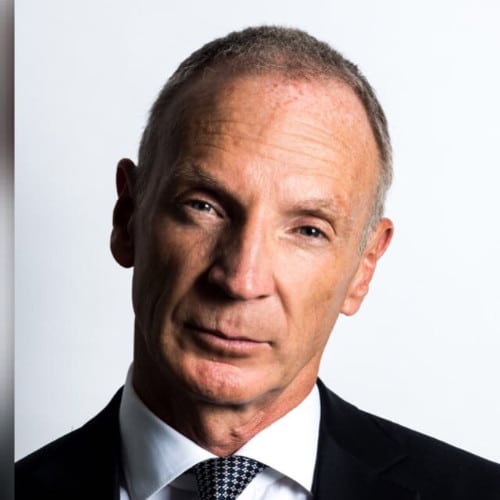
David Tait, World Gold Council
However, the council said that launching and operating digital gold products remains complex, with limited standardization and reduced fungibility, restricting its ability to integrate with modern financial systems.
David Tait, chief executive of the World Gold Council, said in a statement: “Shared infrastructure can help gold become more accessible, more easily traded and fully integrated into modern financial systems – ensuring it remains as relevant tomorrow as it has been for millennia.”

NEWSLETTER SIGN UP
And receive exclusive articles on securities markets