
Digital innovation drives modern waqf into more inclusive & sustainable source of social financing.
JAKARTA — Innovation and digitalisation are seen as key factors in expanding the role of waqf as a source of social financing with broad and sustainable impact.
Through the use of technology, waqf is no longer limited to physical assets, but has evolved into cash waqf and innovative sharia financial products.
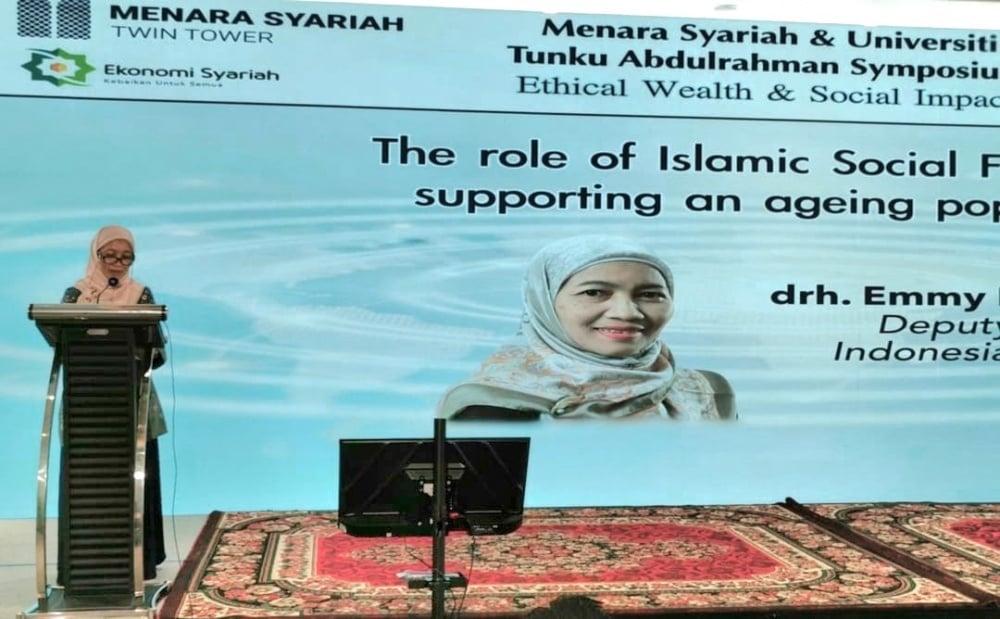
Deputy Secretary of the Indonesian Waqf Board (BWI), Emmy Hamidiyah, said digital platforms enable more inclusive public participation in waqf management.
“Digital waqf platforms now allow individuals around the world to participate through small but regular contributions, thereby encouraging economic growth and social impact,” Emmy said at an international symposium themed Ethical Wealth and Social Impact, a collaboration between Menara Syariah and the Universiti Tunku Abdulrahman (UTAR), held at Menara Syariah, PIK2, Banten, on Wednesday (11/2).
According to Emmy, the revival of modern waqf is marked by the emergence of various innovative schemes, ranging from cash waqf to the integration of waqf with Islamic banking products.
One such example is the Cash Waqf Linked Deposit, which combines the waqf concept with deposits at Islamic banks.
“Cash Waqf Linked Deposit is an example of how waqf can be managed professionally and productively, without losing its social and religious value,” she said.
In Indonesia, the innovation has begun to show tangible impact. Emmy noted that retail waqf instruments have been issued in several cities with a value reaching around IDR 1.4 trillion.
In addition, as of January, 16 companies had issued Cash Waqf Linked Deposit products with total funds of around IDR 14 billion.
“This innovation opens up opportunities for waqf to contribute more significantly to national development and the achievement of the Sustainable Development Goals,” Emmy said.
She added that modern, professionally managed waqf has the potential to become a social financing engine, particularly for education, healthcare services, microfinance and community economic empowerment.
“Waqf is one instrument that is highly aligned with the SDGs, because its impact is not only short term, but also intergenerational,” she said.
Meanwhile, Assistant Professor at Universiti Tunku Abdulrahman, Nurul Afidah Binti Mohamad Yusof, said social finance innovation, including waqf, is important in responding to demographic challenges in Southeast Asia, particularly the rising elderly population.
“As we live longer, we need more inclusive and sustainable social and economic systems,” Nurul said.
According to her, the utilisation of faith-based social instruments managed professionally can form part of a long-term solution to improve quality of life.
“Social innovation must go hand in hand with empathy and a commitment to vulnerable groups,” she concluded. (SF/ZH)