
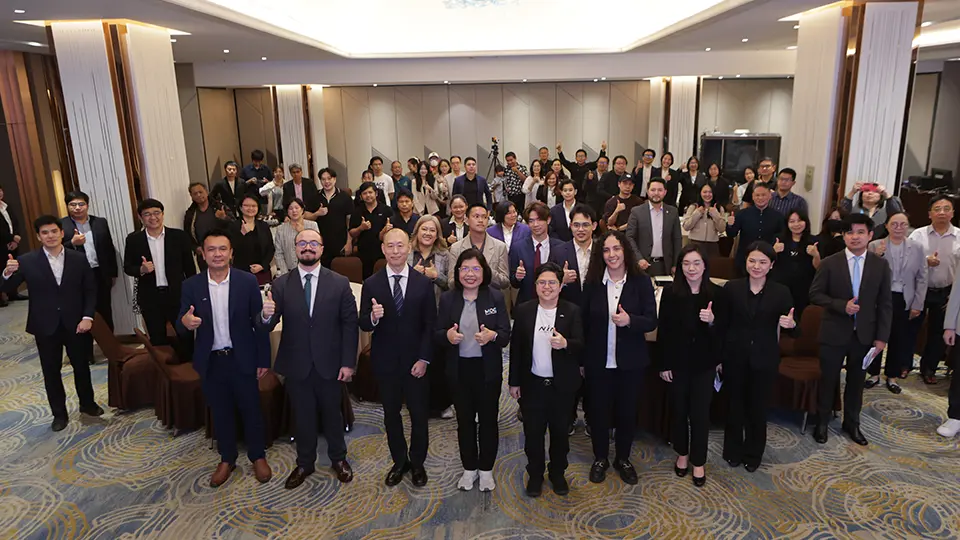
The World Intellectual Property Organization (WIPO), through its IP for Business Division (IPBD), in cooperation with the Department of Intellectual Property (DIP) and the National Innovation Agency (NIA) Thailand, and with the assistance of Funds-In-Trust (FIT) Japan Industrial Property Global through the Japan Patent Office (JPO), successfully organized the WIPO-ASEAN Scaled-Up Intellectual Property Management Clinic (IPMC): Leveraging IP for Business Growth and Globalization from February 24 to 27, 2026 in Chiang Mai, Thailand.
The program brought together small and medium-sized enterprises (SMEs), innovation stakeholders, and intellectual property (IP) experts for a one-day strategic workshop followed by three days of intensive one-on-one mentoring sessions. The initiative forms part of WIPO’s broader IPMC model, launched in 2022, aimed at strengthening SMEs’ ability to manage IP strategically as a lever for competitiveness, resilience, and international expansion.

A Strategic Response to Thailand’s Innovation and Digital Economy Priorities
Thailand’s SME sector plays a central role in national economic development, particularly in high-growth areas such as food and beverages, creative industries, agro-innovation, and digital entrepreneurship. As enterprises increasingly seek to scale beyond domestic markets, many face challenges in identifying, protecting, and commercializing their intangible assets effectively.
The Chiang Mai edition of the IPMC addressed these gaps by equipping participating companies with practical tools to integrate IP into their business models, enhance digital market readiness, and prepare for cross-border expansion. A distinctive feature of the program was the strong inter-agency collaboration between WIPO, DIP, NIA Thailand, and JPO—linking IP policy support, innovation promotion, and hands-on business mentoring.
From IP Awareness to Strategic Integration
The opening session featured remarks from Mrs. Auramon Supthaweethum, Director General of DIP; Dr. Krithpaka Boonfueng, Executive Director of NIA Thailand; Dr. Yasuaki Naito, IP Attaché of JPO for Southeast Asia; and Mr. Guy Pessach, Director of WIPO’s IP for Business Division. Speakers underscored the growing importance of intellectual property as a driver of business growth, risk mitigation, and global competitiveness, particularly in digitally enabled sectors.
Substantive sessions explored intellectual property as a core business asset. International and Thai experts emphasized the need for structured intangible asset mapping, phased protection strategies, and early alignment between IP decisions and commercialization objectives. Through practical case studies and sector-specific examples, participants examined how trademarks, patents, designs, trade secrets, and copyrights can reinforce brand positioning, scalability, and investor readiness.
The workshop featured international and local IP experts sharing practical insights. Ms. Christine Ng (Adastra IP, Malaysia) and Mr. Kal Kalayanamitra (Maejo Agro-Food Park, Chiang Mai University) highlighted how SMEs can map and prioritize their intangible assets strategically.
A panel moderated by Ms. Sarah Nassar (WIPO) included Mr. Therdtum Thaivest (DIP), Ms. Pichamon Chantarapakdee (Intellectual Design Group), and Mr. James Cheah (TikTok Shop, Singapore), who discussed IP challenges and digital opportunities for Thai SMEs.

Thai business leaders Mr. Pas Niratbhand (Plant Origin) and Ms. Naruemon Taksuadom (Hillkoff) shared experiences on integrating IP into growth strategies.
The final session, led by Ms. Pichamon Chantarapakdee and Mr. Sanparwat Vithayasai (Chiang Mai University TLO), focused on using IP for risk management and business expansion.
Putting Knowledge into Practice
An interactive roundtable session concluded the workshop, featuring a game-based IP strategy exercise. Working in small groups, participants simulated real-world business scenarios, identified high-value intangible assets, prioritized protection strategies within budget constraints, and assessed trade-offs between different IP tools. The exercise encouraged peer learning and reinforced the practical application of concepts introduced during the day.

An orientation session, led by Mr. Gonzalo Rovira (WIPO) then prepared 20 selected companies for the mentoring phase by inviting them to reflect on business models, competitive differentiation, newly identified intangible assets, and 12- to 18-month growth objectives.
Deep-Dive Mentoring for Globalization Readiness
From February 25 to 27, participating enterprises engaged in intensive one-on-one mentoring sessions with international and local IP experts. The tailored diagnostic discussions examined business positioning, existing and potential IP assets, gaps in protection, portfolio sequencing strategies, and internationalization readiness.
Common focus areas included asset mapping and prioritization, digital IP protection in online marketplaces, structured licensing models, and cross-border trademark planning. Each enterprise concluded the process with clearer IP priorities and actionable next steps aligned with its commercialization and globalization strategy.
Sustained Engagement and Ecosystem Impact
Online follow-up consultations will continue in the coming months to support implementation and provide iterative guidance as participating SMEs refine their IP strategies, launch new products, and explore regional and global markets.
The Chiang Mai edition demonstrated the value of combining policy-level engagement, private-sector insights, and multi-day deep-dive mentoring within a single program framework. By positioning intellectual property as a strategic business tool rather than a purely legal function, the scaled-up IPMC reinforced Thailand’s innovation ecosystem and strengthened the capacity of SMEs to compete in an increasingly intangible and digital global economy.