
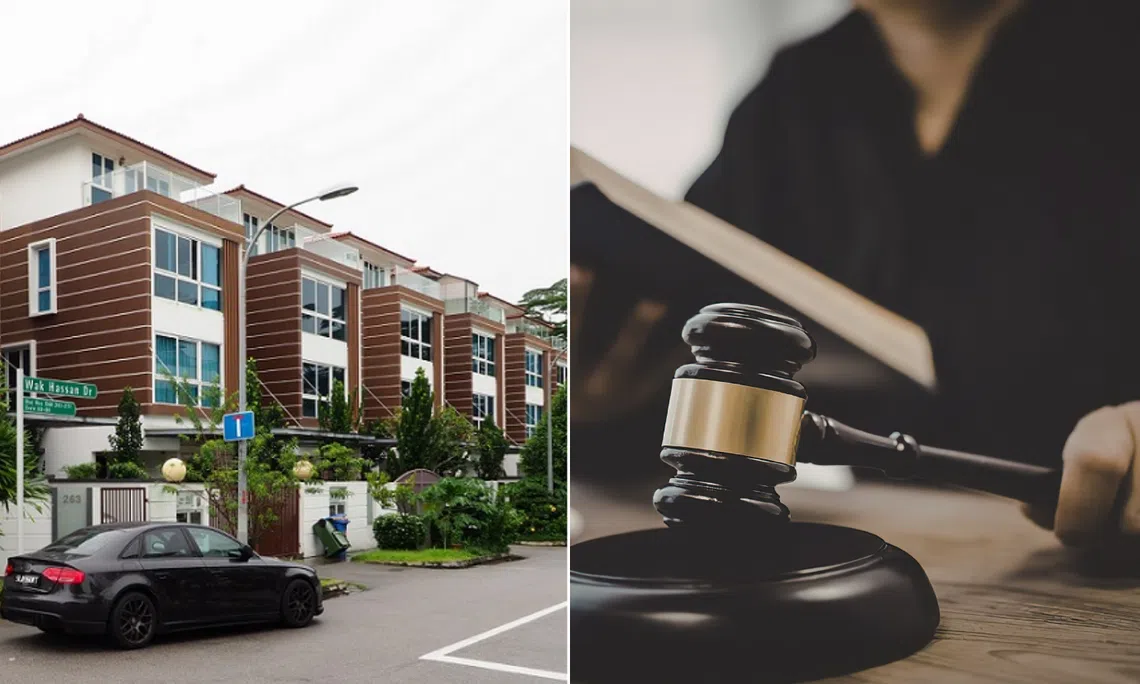
A woman’s mother sued her for a share of her $2.4 million private property after she filed for divorce — but a High Court judge ruled that the mother’s $1 million contribution was a loan, not an ownership stake.
According to the High Court judgement, the plaintiff is businesswoman Hajjah Noor Jehan Mohamed Ghouse, while the defendant, Nur Fairuz Magnus, is her daughter.
Shin Min Daily News reported that between late 2018 and January 2019, the daughter purchased a landed private property along Wak Hassan Drive in Sembawang for $2.4 million.
After marrying on Feb 9, 2019 and completing the purchase, she moved into the house with her husband, parents and grandmother.
Mother requested a share of the profits
On Sept 12, 2024, the daughter filed for divorce proceedings in the Syariah Court. The following month, the mother applied to the High Court, seeking a beneficial interest in the property and a share of the profits if it is sold.
The mother claimed her daughter lacked sufficient funds to purchase the private property at the time, so she agreed to help by lending her $1,020,378.
To support her case, the mother presented a handwritten note in court, which stated that both parties had agreed to divide the proceeds based on their respective cash contributions when the property is sold.
Judge rules it as a loan
However, the judge pointed out that both parties had also signed a formal loan agreement at a law firm in August 2024.
The agreement made no mention of the mother having any equity or ownership rights in the property, and instead listed the terms for repayment.
The judge concluded that the money provided by the mother was a loan. He ruled that if the house was sold, the profits would be distributed according to their respective cash contributions.
However, if the judge presiding over the divorce case deemed the house as a matrimonial asset, the daughter would be obligated to repay her mother’s loan from her allocated share of the matrimonial assets.
The mother has filed an appeal.
Mother not listed as an owner
The mother said she was not listed as an owner because she already owned a Housing and Development Board (HDB) flat.
She explained that she owned a flat in Bedok at the time and did not sell it as another daughter had purchased a flat nearby and was eligible for an additional HDB subsidy. Therefore, to ensure she remained eligible for the grant, the mother needed to continue living in the Bedok flat for at least five years.
She also said stated she did not want to pay the Additional Buyer’s Stamp Duty (ABSD), which is required when an individual is buying their second or subsequent property.
Son–in-law alleges tax evasion
The son-in-law, who is involved in the divorce proceedings, submitted arguments against the mother as a “non-party”.
He alleged that the mother was attempting to evade ABSD and urged the judge to rule against her based on the “illegality” of her actions.
The mother said she had not considered the ABSD factor when she decided not to list herself as an owner of the private house. She also stated that she had no intention of defrauding the Inland Revenue Authority of Singapore (IRAS) or engaging in any illegal acts.
If convicted of tax evasion, an individual could be fined up to $10,000, or imprisoned for a term not exceeding 3 years, or both.

Have something to say? Join in!
See something interesting? Contribute your story to us.
Explore more on these topics