

Also in the letter:
■ How to train your robot?
■ Nasscom’s new chair
■ Flipkart’s Minutes app plan
Gold loan fintech startups build own loan books as RBI tightens norms
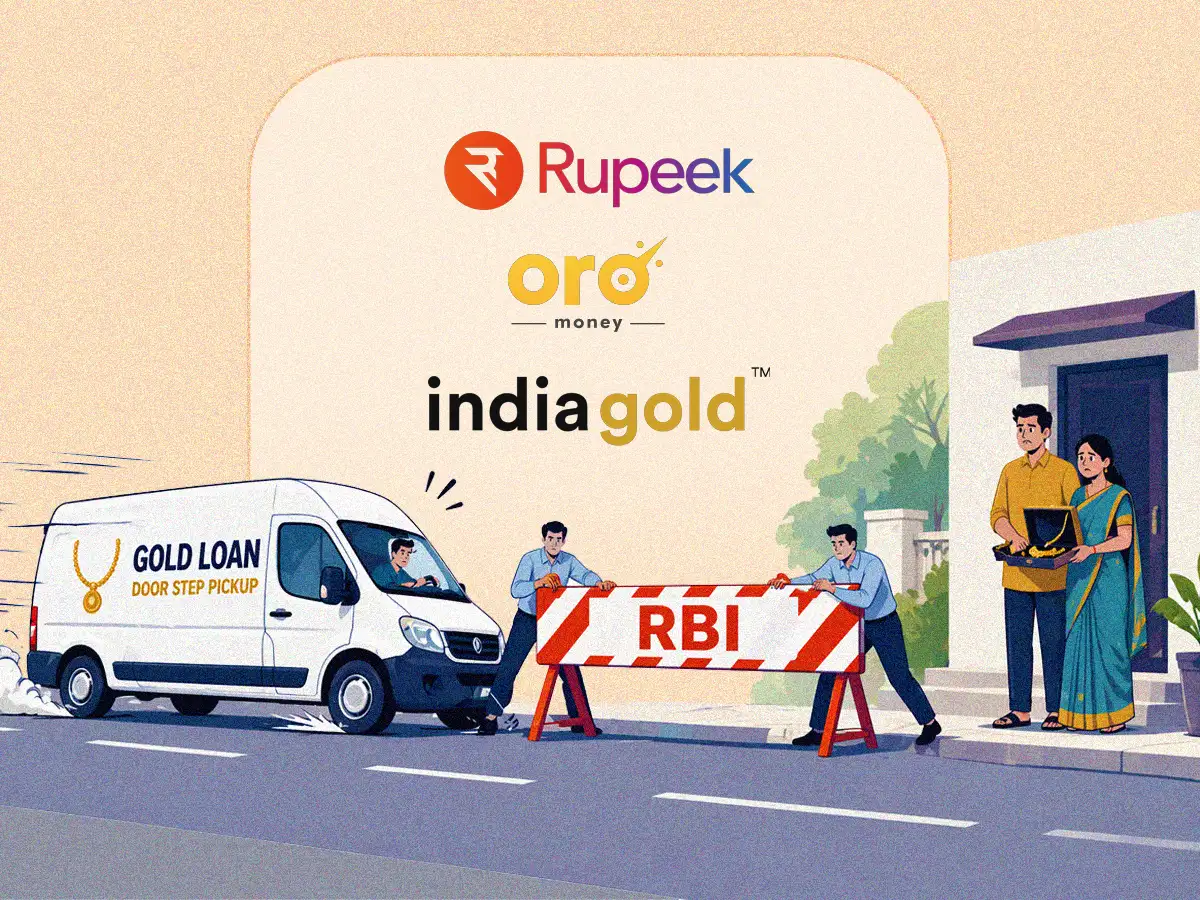
Gold-loan fintech startups are shifting from pure sourcing and distribution to building their own loan books as the RBI tightens rules for the sector.
Driving the news: Players such as Indiagold and Oro, both of which now hold NBFC licences, are scaling their own lending businesses and exploring co-lending partnerships.
Until now, these startups largely operated as service providers or business correspondents to banks, using technology to streamline distribution rather than lending off their own balance sheets.
For instance: Indiagold and Oro have raised between Rs 50 crore and Rs 100 crore in debt recently for onward lending, a senior executive at a digital lending startup told us. Rupeek, the largest gold loan startup in India, has had an in-house NBFC for a few years now.
Also Read: Gold loan startup Rupeek eyes $50 million as core biz shines
Why the shift: These startups set out to make gold loans faster and easier through app-based approvals, bank integrations and doorstep gold pickup. New RBI rules, however, require that gold handling be done only by employees of regulated entities, weakening the doorstep service model and forcing fintechs to rethink their position in the value chain.
Competition: Early-stage startups will enter the ring against entrenched NBFCs such as Muthoot Finance, Muthoot Fincorp, and Manappuram Finance.
Given their scale, these incumbents can raise funds at significantly lower cost, an advantage that fintech startups currently lack, industry insiders said.
Also Read: Gold-loan fintech firms spot a glimmer in RBI’s draft rules
Infosys logs 21% jump in Q4 profit
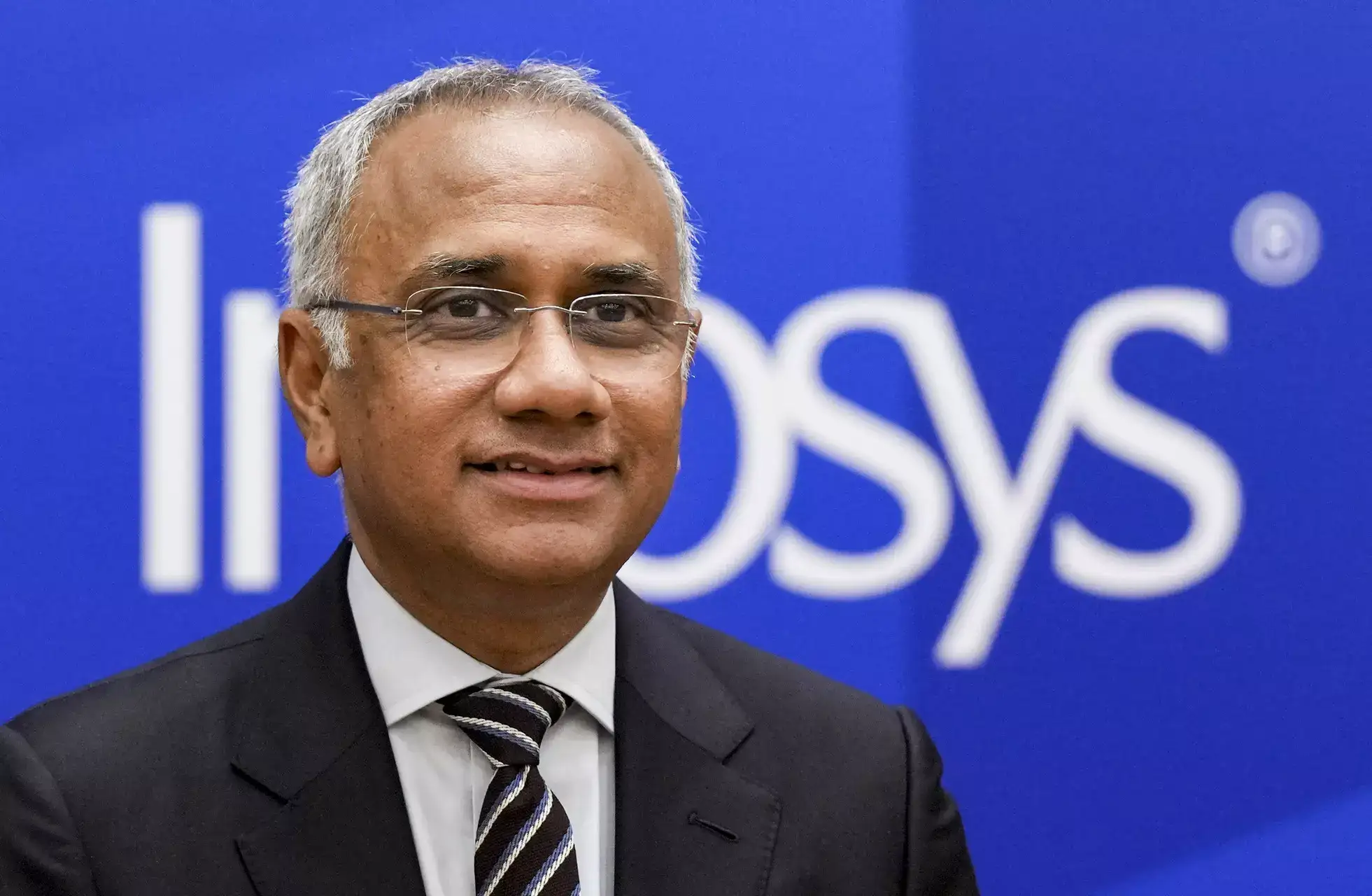
Salil Parekh, CEO, Infosys
Infosys, India’s second-largest IT services firm, reported a sharp rise in profit for the March quarter, even as global tech spending remains under pressure.
Financials:
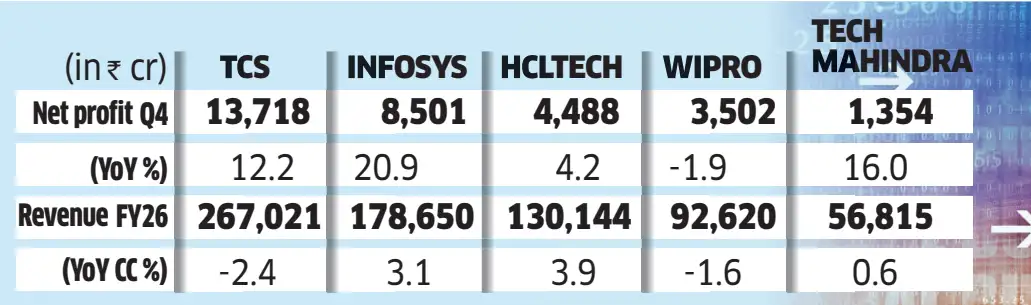
- Net profit: Up 21% at Rs 8,501 crore versus Rs 7,033 crore in the year-ago period.
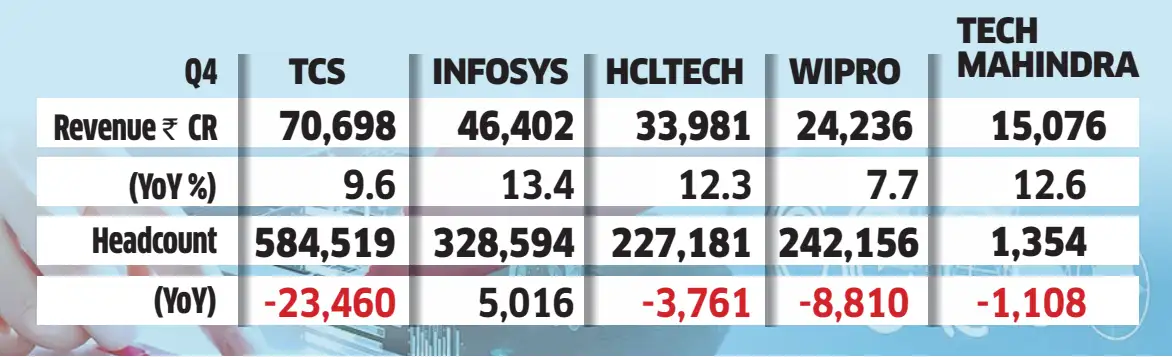
- Revenue from operations: Up 13.4% at Rs 46,402 crore compared with Rs 40,925 crore a year ago.
- Operating margin: 20.9%.
- Dividend: Rs 25 per equity share.
- Deal wins: Large order bookings, defined as deals worth more than $30 million, totalled $3.2 billion.
Outlook: On Thursday, Infosys guided for revenue growth of 1.5%-3.5% for FY27, slightly below street expectations, and said the demand environment is stable but still not robust.
Also Read: Infosys to hire 20,000 freshers in FY27, says CFO
Quote, unquote: “As we look ahead to the financial year 2027, we also see large opportunities in AI services,” CEO Salil Parekh said. “We also see continued competitive intensity, and we see an AI productivity impact.”
Parekh did not comment on ongoing board-level discussions on succession planning at the company. His current term ends in March 2027.
Also Read: Infosys board approves Esops for CEO Salil Parekh, employees
Bluestone Q4 revenues up 48%, swings to full-year profit

Gaurav Singh Kushwaha, CEO, Bluestone
Omnichannel jewellery retailer Bluestone reported strong growth in operating revenue and swung to a full-year profit in the fourth quarter of FY26.
Financials:
For Q4:
- Net profit: Rs 31 crore, against a Rs 51.2 crore net loss a year ago.
- Operating revenue: Rs 681 crore, up 48% from Rs 461 crore.
For FY26:
- Revenue from operations: Rose 38% to Rs 2,436 crore from Rs 1,770 crore in FY25.
- Net profit: Rs 13 crore compared to Rs 222 crore net loss a year ago.
Egocentric data collection fuels AI robotics growth in India

Indian startups are building new businesses around egocentric data collection for robotics, with firms such as Humyn AI, FPV Labs, Neo Cambrian and Objectways rapidly expanding into the space.
Why it matters:
- Robotics labs need vast volumes of training data, much of which cannot be scraped from the internet and must be created manually.
- Investors and founders say leading labs may require anywhere from 100 million to 1 billion hours of egocentric (first-person) data over the next few years, making data pipelines a critical bottleneck in physical AI.
How the data is collected: Companies use wearable cameras, proprietary apps and custom hardware to record factory work, household chores and other human activities.
- Humyn AI operates across multiple countries.
- Objectways is collecting egocentric and depth data from facilities in Tamil Nadu.
- FPV Labs is focused on building infrastructure for high-quality data capture and validation.
Other Top Stories By Our Reporters
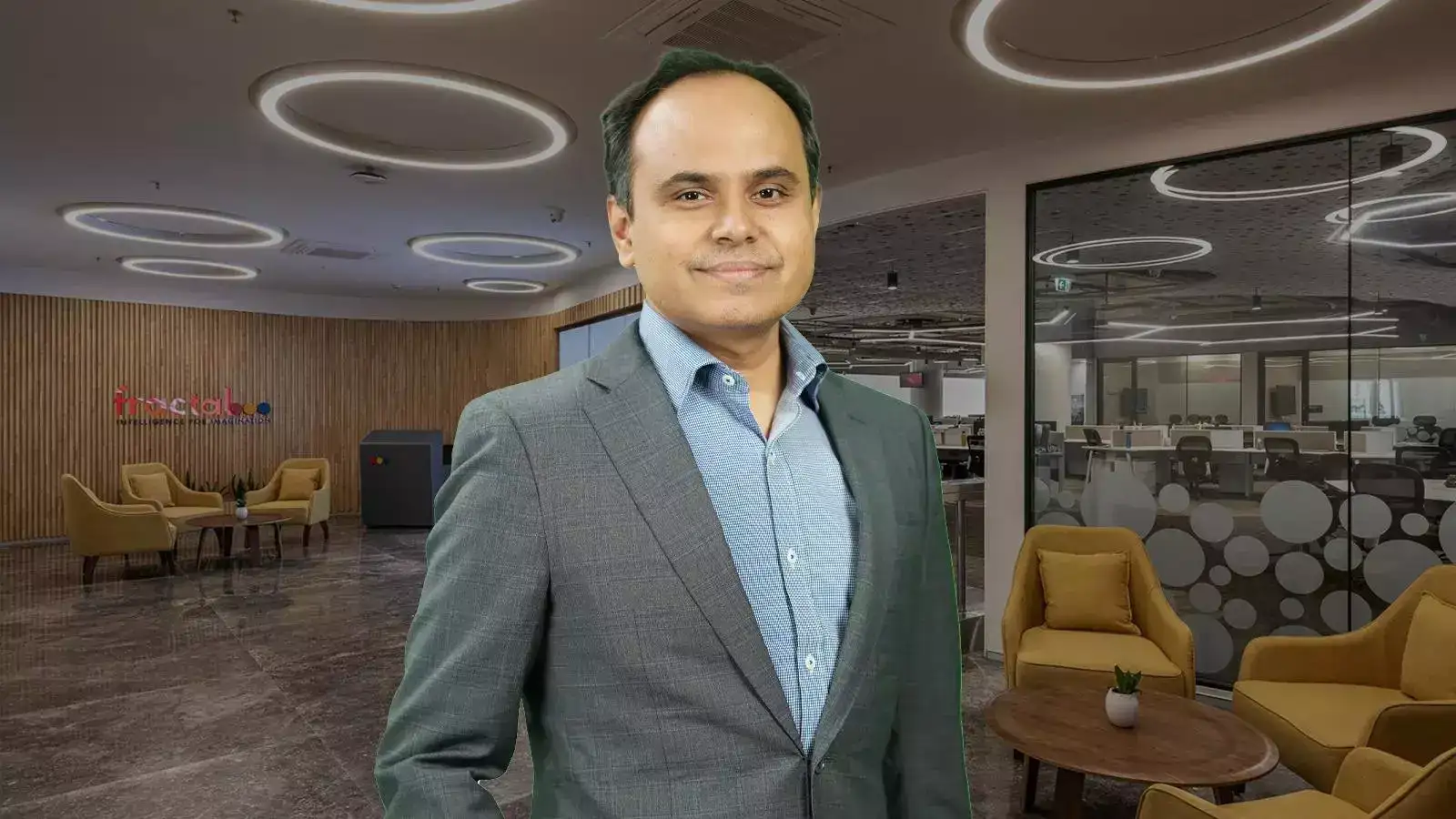
Srikanth Velamakanni, CEO, Fractal Analytics
Nasscom ropes in new chair: The technology sector is navigating a fundamental shift with AI and will see structural changes in hiring, training and decision making, as well as greater uncertainty and elongated deal cycles, said Srikanth Velamakanni, group CEO of Fractal. On Thursday, he was named chairperson of industry body Nasscom.
Flipkart weighs standalone app for Minutes: Flipkart plans to launch a dedicated app for its quick commerce vertical, Flipkart Minutes, before its annual Big Billion Days sale later this year. The service currently sits under a tab in the main app.
Karnataka may write policy to legalise bike taxis: The Karnataka government is considering a policy to legalise bike taxi services even as it has approached the Supreme Court to challenge a High Court verdict allowing such services to resume.
Global Picks We Are Reading
■ A startup says it grew human sperm in a lab—and used it to make embryos (Wired)
■ The AI digital divide (FT)
■ The global edtech boom is fading as investors look elsewhere (Rest of World)