
The Supreme Court has held that lands granted as service inam for religious purposes partake the character of Wakf property, and cannot be treated as personal inam or subjected to partition and subsequent alienation to confer a valid title upon private individuals.
The Court was hearing a civil appeal challenging the judgment of the Andhra Pradesh High Court, which had decreed a suit for declaration and injunction in favour of private parties claiming title over the suit property.
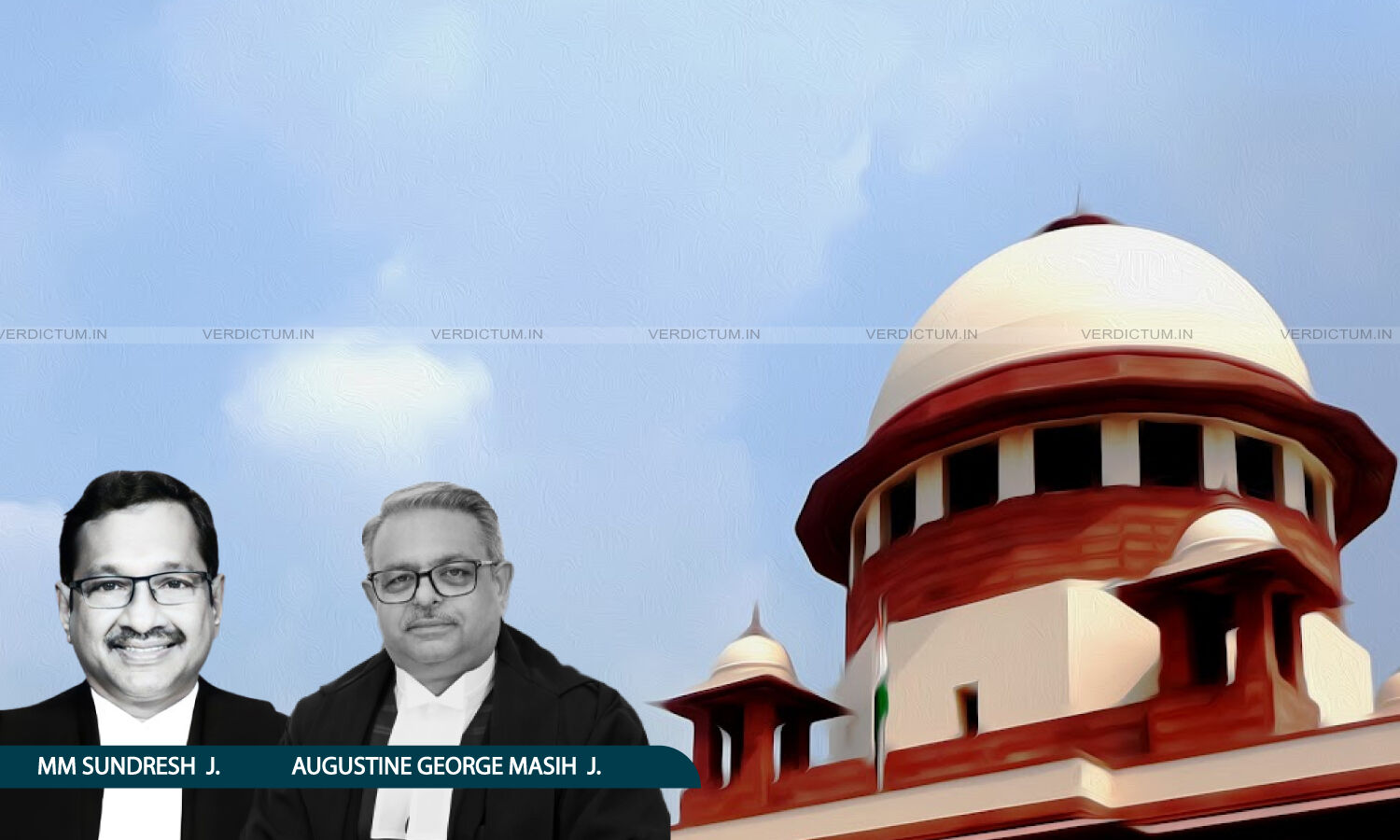
A Bench comprising Justice M.M. Sundresh and Justice Augustine George Masih while referring to its previous decision in Sayyed Ali v. A.P. Wakf Board (1998), reiterated that “a grant of land for rendering religious or charitable services does not vest absolute title in the individual, and such grants, being for purposes recognised under Muslim law as pious, religious or charitable, would clothe the property with the character of Wakf”.
Accordingly, the Court held that “the said principle squarely applies in the present case, where the recital in the partition deed itself establishes the land as service inam attached to a mosque”, while further adding that “ lands granted as service inam for religious or charitable purposes partake the character of endowed property and are impressed with a public or religious trust, thereby restricting their alienability”.
Senior Advocate Shoeb Alam appeared for the Appellant; Senior Advocate Guru Krishnakumar appeared for the Respondents.
Background
The plaintiffs instituted a suit before the Wakf Tribunal seeking a declaration of title and permanent injunction over land in Survey No. 914/B, asserting ownership based on registered sale deeds and tracing title to a partition deed dated 01.06.1945.
The Wakf Board contested the claim, asserting that the land constituted service inam attached to Budda Buddi Mosque and formed part of Wakf property, and that the partition deed and subsequent sale deeds were void.
The Tribunal dismissed the suit, holding that the plaintiffs failed to establish title, whereas the High Court, in revision, reversed the findings and decreed the suit in favour of the plaintiffs, leading to the present appeal.
Court’s Observation
The Court framed the central issue as whether the suit property was Wakf property, and proceeded to examine the nature and character of the land primarily through the documents relied upon by the plaintiffs themselves.
At the outset, the Court placed reliance on the partition deed dated 01.06.1945, which formed the foundation of the plaintiffs’ claim. Upon examining its recitals, the Court found that the property was expressly described as “service inam” land assigned for rendering services to mosques. It held that once such a recital emerges from the very document relied upon by the plaintiffs, the claim that the property is “personal inam” is untenable.
It further observed that lands granted for religious or charitable purposes are impressed with the character of endowed property and carry restrictions on alienability.
The Court then considered the legal effect of such classification and held that service inam lands attached to religious institutions partakes the character of Wakf property. Referring to Sayyed Ali v. A.P. Wakf Board (1998), it reiterated that grants made for religious or charitable purposes do not vest absolute ownership in individuals, but instead create a dedication recognised under Muslim law, thereby clothing the property with the character of Wakf.
On this basis, the Court held that the suit property could not have been validly partitioned or subsequently alienated to confer title upon the predecessors of the plaintiffs.
The Court further examined the evidentiary material and found that the admissions of PW-1 clearly acknowledged that the land had been assigned for rendering services to the mosque and that no document existed to establish it as personal inam. It held that such admissions, when read alongside the recitals in the partition deed, constituted substantive evidence and could not be brushed aside.
The approach of the High Court in discarding these admissions on the ground of lack of personal knowledge was held to be unsustainable.
The Court also addressed the contention that the partition deed was loosely drafted and therefore unreliable. Rejecting this argument, it held that the recitals in the document were unambiguous in describing the nature of the land, and no material had been produced to discredit them.
In addition, the Court considered the material produced by the Wakf Board, including the Survey Commissioner’s report and Gazette notification issued under the Wakf Act, which indicated that the property formed part of Wakf land attached to the mosque.
While noting certain deficiencies such as non-production of the original title deed, the Court held that such deficiencies could not outweigh the cumulative evidentiary value of the material on record, which consistently pointed towards the Wakf character of the property.
The Court also clarified that reliance on earlier decisions relating to neighbouring lands or similar survey numbers would be of limited assistance, as each case must be decided on its own evidence. Similarly, the reliance placed on judgments concerning limitation or recovery of Wakf property was held to be misplaced, as the present case involved the determination of the nature of the property itself.
On the issue of burden of proof, the Court reiterated the settled principle that a plaintiff seeking a declaration of title must succeed on the strength of his own case and cannot rely on weaknesses in the defence.
It held that the High Court had erred in shifting the burden onto the Wakf Board, despite the plaintiffs’ failure to establish a valid title. Referring to precedents and Section 101 of the Evidence Act, the Court emphasised that the burden lies on the party asserting title, and failure to discharge this burden is fatal to the claim.
The Court also examined the aspect of possession and held that mere physical possession, even if established, would not entitle a party to a declaration or injunction in the absence of lawful title. It noted that the material on record, including a report indicating the existence of structures associated with an Edgah, supported the case of the Wakf Board that the property was being used for religious purposes.
Upon a cumulative consideration of all material, the Court concluded that the suit property was service inam land attached to a mosque and partook the character of Wakf property. It held that the plaintiffs had failed to establish lawful title or possession, and that the findings of the Tribunal were based on correct appreciation of evidence, whereas the High Court had erred in reappreciating the evidence and reversing those findings.
Conclusion
The Supreme Court allowed the appeal, set aside the judgment of the High Court, and restored the judgment of the Wakf Tribunal dismissing the suit filed by the plaintiffs.
Cause Title: A.P. State Wakf Board v. Janaki Busappa & Ors. (Neutral Citation: 2026 INSC 413)
Appearances
Appellant: Senior Advocate Shoeb Alam; D. Bharathi Reddy, AOR; Advocates Nishant Sharma, D. Tejaswi Reddy, Adviteeya, Dev Sareen, and Others
Respondents: Senior Advocate Guru Krishnakumar; Advocates Rama Subba Raju, Gopinathan E.P.; Balaji Srinivasan, AOR and Others