
Last fall, a 76-year-old Minnesota woman withdrew $35,000 in cash from her bank account and drove to a gas station.
There she found a cryptocurrency kiosk, an ATM-like machine she believed would allow her to pay the “Inspector General of Social Security” who had contacted her on her iPad. The woman had deposited $2,000 before gas station employees intervened, warning it could be a scam.
Local police department officials from across Minnesota pointed to examples like that one, relayed in a letter to a House committee, when advocating for a ban on cryptocurrency kiosks, saying current state regulations aren’t enough.
Related: Legislature should act now to stop scams tied to crypto kiosks
Lawmakers agreed, this week passing bills in the House and Senate that would make the technology illegal in the state. Pending Gov. Tim Walz’s signature, Minnesota would be the third state after Indiana and Tennessee to pass a statewide ban.
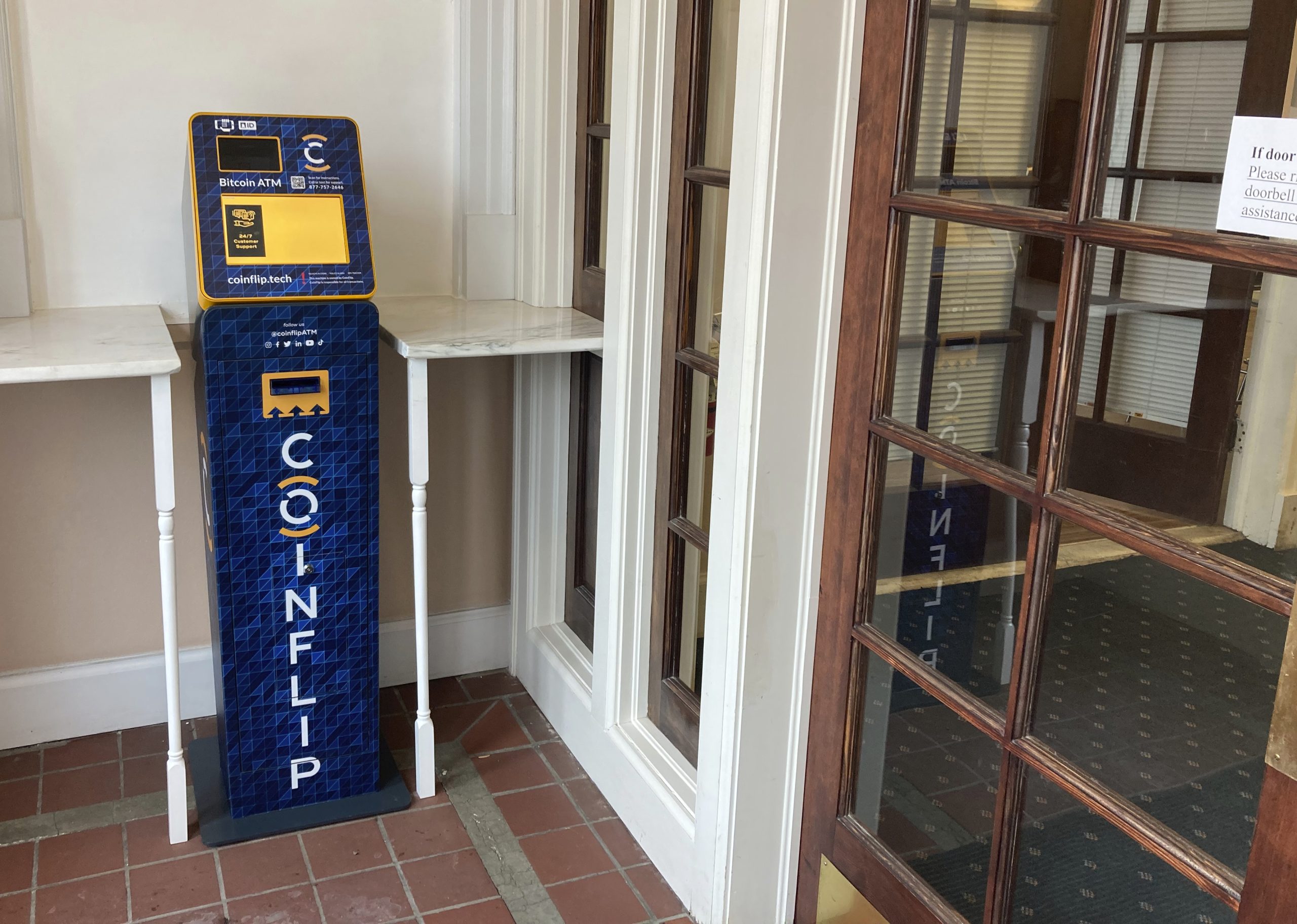
Minnesota has about 400 cryptocurrency kiosk locations, which accept cash and convert it into Bitcoin and other digital currency. They are found in places like gas stations, laundromats and grocery stores.
Scams using those kiosks often target older adults and leave victims with thousands of dollars in losses they largely can’t recover.
The examples are statewide.
In Faribault, local police have investigated over $500,000 in cryptocurrency ATM losses since 2022; in Apple Valley, over $248,000 has been lost in the past two years, among several other figures presented to the Legislature this spring.
Jake Lanz, a sergeant with the St. Cloud Police Department, told lawmakers during a legislative hearing in March about a victim who reported being too embarrassed to share his story publicly, and hadn’t even told his family about being scammed.
“It’s typically our vulnerable communities that are living on fixed incomes that just can’t absorb a loss like that,” he said.
Average loss in Minnesota: $6,700
Crypto kiosks are a tool used in scams, not the scam itself. A fraudster tricks someone into believing they owe money — to a bank, to the government, or in a “love scam,” to a romantic partner — and that it must be deposited in cash to a crypto ATM.
It can be difficult to figure out where the money goes next, and to get it back.
When Minnesota enacted regulations in 2024 in response, it set a $2,000 limit on deposits for new customers, among other things.
However, testifiers this spring said those regulations haven’t deterred scammers.
The Minneapolis Police Department, for example, investigated $82,000 in losses to Bitcoin kiosk scams just in 2025.
In one example, an 80-year-old victim sent over $9,200 via a Bitcoin kiosk. The scammer, who claimed to be from the Hennepin County Sheriff’s Office, told the man he had not appeared for jury duty and could avoid jail time if he paid a fee.
“It is already challenging to investigate these crimes to the point of a successful prosecution, so it makes sense to eliminate the physical mechanisms often used to facilitate the fraud,” MPD case investigator Jennifer Johanna wrote to lawmakers.
The average loss per reported crypto kiosk scam in Minnesota is $6,700, according to Minnesota Department of Commerce Government Affairs Director Sam Smith. Only 48% of victims get any lost money back, he said — and if they do, refunds average only 16% of the loss.
“We are part of a growing movement of states, red and blue, that are alarmed by the trajectory of this industry,” Smith said at the March committee hearing.
Ban crypto kiosks or more regulations: Which approach is best?
According to the AARP, 30 states introduced bills related to crypto kiosks in 2026, and 29 states have passed some legislation on the topic.
But most states have chosen regulations, not bans.
Larry Lipka, general counsel for crypto kiosk operator CoinFlip, testified in March that scams are a problem everywhere — not just across kiosks, but a variety of mediums.
“Nobody is here today saying that we should ban exchanges or gift cards or wire transfers because scammers use them,” he said. “And all of the stories today have been that the scammers are the problem.”
Lipka advocated for Minnesota to pass tighter regulations. He said that although online crypto markets exist, kiosks are the only way to use cash to buy online currency, and his company has safeguards that refund money in certain cases.
Rep. Drew Roach, R-Farmington, is among the handful of lawmakers who voted against the legislation.
Related: States could see a crypto policy blitz in 2025 in spite of the risks
“I think there was a way we could have fixed this, the fraud that goes on with those kiosk machines, without totally getting rid of those in the state,” Roach said during an April 23 floor session.
Final votes passed 127-7 in the House and 53-13 in the Senate.
On the Senate floor, bill author Sen. Amanda Hemmingsen-Jaeger, DFL-Woodbury, called kiosks the “center of fraud” and argued the crypto market itself will remain intact under the proposed legislation.
The bill sets an “unplug” date of Aug. 1, she said Wednesday, and a removal date of Dec. 31.