

By Richard Searles, Special to the Journal
BATON ROUGE — A nearly two-decade-old Louisiana law designed to protect private property rights is now at the center of a widening legislative and legal battle over carbon capture and sequestration projects across the state — a conflict that has split Republicans, drawn rural landowners into court, and produced two consecutive years of contentious legislative activity.
Background: A Post-Kelo Property Rights Law
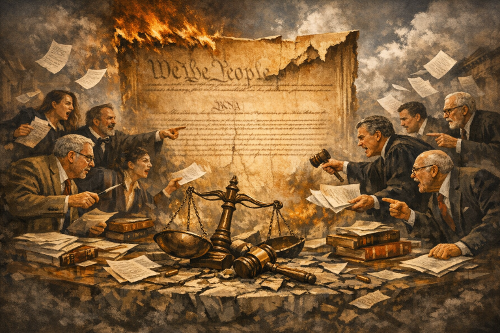
At issue is Louisiana Act 851 of the 2006 Regular Session, which significantly narrowed the state’s authority to take private property through eminent domain. The law was passed in the wake of the U.S. Supreme Court’s ruling in Kelo v. City of New London, which allowed local governments to take private property and transfer it to private developers for economic development purposes.
Louisiana lawmakers responded by tightening the definition of “public use” under state law. Key provisions prohibit taking property for the benefit of private individuals or companies, restrict takings to clearly defined public purposes such as roads, bridges, public buildings, levees, and flood control, and require that expropriated property not used for its intended public purpose within a specified timeframe be offered back to the original owner or heirs.
The intent was to ensure that eminent domain could not be used as a tool for private economic development projects.
A 2020 Law Changed the Equation
The current conflict traces more directly to a 2020 state law that granted carbon capture and pipeline companies the authority to use eminent domain to acquire private land for CO₂ infrastructure — authority similar to that long held by oil and gas pipeline operators. Several legislators who voted for that measure have since publicly expressed regret.
Rep. Mike Johnson, R-Pineville — the second-highest ranking member of the Louisiana House — acknowledged during the 2026 session that he voted for the 2020 law without asking sufficient questions. “I didn’t ask enough questions. I didn’t ask any questions,” he said. “Now that’s a contradiction against our U.S. and Louisiana constitutions we have to correct.”
The 2025 Session: Partial Reform
In June 2025, the Louisiana Legislature passed Senate Bill 244, which limited eminent domain for CO₂ pipelines to projects classified as “common carriers” — meaning they must transport carbon dioxide for multiple companies and demonstrate a reasonable probability of serving the broader public, not just a single private entity. Gov. Jeff Landry signed the bill into law on June 24, 2025.
The new law also raised the threshold for unitization — the process by which a swath of land can be consolidated into a CO₂ storage site — from 75 percent landowner consent to 85 percent.
Effective Oct. 1, 2025, the Louisiana Department of Natural Resources was restructured and renamed the Louisiana Department of Conservation and Energy, consolidating administrative authority over CCS development under Secretary Tyler Gray.
Despite those reforms, dozens of proposed projects continued advancing. As of November 2025, at least 65 carbon capture and storage projects had been proposed in Louisiana, including 30 projects proposing to capture at least 33 million metric tons of CO₂, 35 projects to inject CO₂ into underground reservoirs, and 12 proposed carbon pipelines.
Facing growing constituent pressure, Gov. Landry imposed a moratorium on new applications for carbon capture projects, though that hold did not block the 31 projects whose developers had already submitted applications.
The 2026 Session: Landowner Bills Hit a Wall
The property rights fight has intensified in the 2026 legislative session, with more than 20 bills filed addressing CCS development. The first major test came when Rep. Johnson sponsored House Bill 7, the Louisiana Landowners Protection Act, which sought to reverse the 2020 eminent domain authorization entirely.
The House Committee on Natural Resources and Energy rejected HB 7 on a 12-7 vote following nearly five hours of testimony from landowners, industry lobbyists, lawyers, and state officials.
Industry proponents warned that passing the bill would jeopardize Louisiana’s standing in the global economy, with the Louisiana Chemical Association noting that industrial projects in the state tied to carbon capture are valued at more than $100 billion. Defenders of the existing law argued that eminent domain is a necessary last resort to ensure project viability and that CO₂ infrastructure is inextricably linked to the future of oil and gas production
The failure of HB 7 is widely seen as signaling dim prospects for other property-rights-oriented CCS bills still pending, including measures that would grant local parishes the authority to approve or reject CCS projects within their boundaries.
Landowners Take the Fight to Court
The legislative setbacks have pushed some landowners into the courts. A group called Save My Louisiana filed suit in state court arguing that some of its members were threatened with eminent domain if they did not sign leases for CO₂ pipelines or storage with Denbury, a CO₂ transport and storage subsidiary of ExxonMobil, and that the state’s laws give private carbon capture companies unconstitutional authority to force property sales.
The lawsuit reflects a broader argument that has animated both legislative and legal challenges: that carbon capture infrastructure serves private commercial interests rather than the public, and therefore falls outside the bounds of constitutionally permissible eminent domain.
The Industry’s Position
Oil and gas industry representatives and state officials maintain that carbon capture serves a legitimate public purpose by preserving Louisiana’s industrial base in a low-carbon global economy and by reducing emissions from petrochemical facilities along the Gulf Coast corridor. They argue that CO₂ pipelines should be treated no differently than natural gas or crude oil pipelines, which have long carried eminent domain authority on the theory that moving energy products to market constitutes a public benefit.
Nationally, the federal Section 45Q tax credit for carbon capture and storage was preserved and in some cases strengthened under the One Big Beautiful Bill Act signed by President Trump on July 4, 2025, reaffirming federal support for CCS investment.
The Road Ahead
The intersection of Louisiana’s property rights framework and the rapid expansion of carbon capture infrastructure is now playing out simultaneously in the Legislature, in state court, and in communities across rural Louisiana. Possible outcomes include further court rulings clarifying whether CCS qualifies as a constitutionally permissible public use, additional legislative action in the current or future sessions, negotiated agreements between companies and landowners, or expanded local control measures giving individual parishes a vote on whether to allow projects within their boundaries.
Whether carbon capture infrastructure is ultimately classified as a public good or a private commercial enterprise will determine how — and whether — these projects can move forward across privately owned land.
Sources
Louisiana Secretary of State — Act 851 (2006 Regular Session); Louisiana Act No. 620 (2024); Louisiana Senate Bill 244, signed June 24, 2025; Louisiana Legislature — House Bill 7 (2026 Regular Session); U.S. One Big Beautiful Bill Act (2025); primary government sources and public records
Editor’s Notes:
Act 851 of 2006 did not eliminate “public use” as a basis for eminent domain. It did the opposite — it restricted eminent domain to genuine public use and prohibited takings for private commercial benefit. The law was a direct response to Kelo, which had expanded what could qualify as “public use.” Louisiana lawmakers were essentially saying: we’re going back to basics — eminent domain is only for true public purposes, not economic development schemes that primarily benefit private parties.
So the law left the core framework intact. What it changed was the definition of who qualifies.
Why oil and gas pipelines still pass muster under Act 851 is a separate body of law entirely. Louisiana has long recognized pipeline common carriers as quasi-public utilities. The legal theory is that pipelines moving energy products to market serve a sufficiently broad public interest — they don’t just benefit one company, they serve commerce statewide. That classification predates Act 851 and survived it.
Where the carbon capture conflict lives is precisely in whether CO₂ pipelines fit that same mold. The 2020 law extended eminent domain to CCS without requiring that common carrier standard. SB 244 in 2025 added that requirement — pipelines must now demonstrate they’ll transport CO₂ for multiple parties to qualify. HB 7’s defeat this week keeps that 2025 framework in place rather than rolling back eminent domain authority entirely.
The unresolved legal question — and what the Save My Louisiana lawsuit is really testing — is whether even the common carrier framework for CO₂ pipelines survives scrutiny under Act 851 and the Louisiana Constitution. If a court finds that permanently injecting CO₂ underground for private profit doesn’t constitute a genuine public use regardless of how the pipeline is classified, the entire statutory framework could be vulnerable.
The traditional public use rationale for pipeline eminent domain rests on movement and commerce. Natural gas or crude oil goes into a pipeline, travels to a refinery or distribution point, gets sold and consumed, and the public benefits from the energy supply and the economic activity. The product moves through private land to serve a broader market. The land is a corridor, not a destination.
Carbon dioxide injected underground is fundamentally different in every one of those respects:
- The CO₂ doesn’t move through the land — it stays there permanently
- There is no product being delivered to the public
- The land isn’t a corridor — it becomes the storage vessel itself
- The benefit flows primarily to the industrial emitter who needed to dispose of the CO₂, and to the company being paid to store it
- The pore space under a landowner’s property is being consumed as a commodity for someone else’s profit
The industry’s counterargument — that CO₂ pipelines are just like gas pipelines — only holds for the transport segment of the pipeline. Once the CO₂ reaches the injection point, the analogy completely breaks down. You’re no longer talking about a right-of-way. You’re talking about permanent industrial use of private subsurface property.
That’s precisely why the pore space ownership question is so explosive in Louisiana right now. The state claimed ownership of deep pore space, which is its own separate constitutional fight.