
- Landlords to be taxed at 2% above normal income tax rates on rental income
Nearly half of landlords will increase rents over the next 12 months as a result of Labour tax rises, according to a new poll.
The National Residential Landlords Association found that 46 per cent of its members planned to charge their tenants more in the next year, because they would be taxed more heavily on that income.
Chancellor Rachel Reeves announced in November’s Budget that the tax property investors pay on their rental income will be levied at higher rates from April 2027.
The change will see landlords taxed at 2 percentage points above normal income tax rates. Basic rate tax paying landlords will see their rental income taxed at 22 per cent, up from 20 per cent.
Higher rate tax-paying landlords will see their rental income taxed at 42 per cent, up from 40 per cent today, and additional-rate taxpayers will be taxed at 47 per cent, up from 45 per cent.
The Office for Budget Responsibility (OBR) says this is estimated to bring in £500million a year for the Treasury from 2028-29.

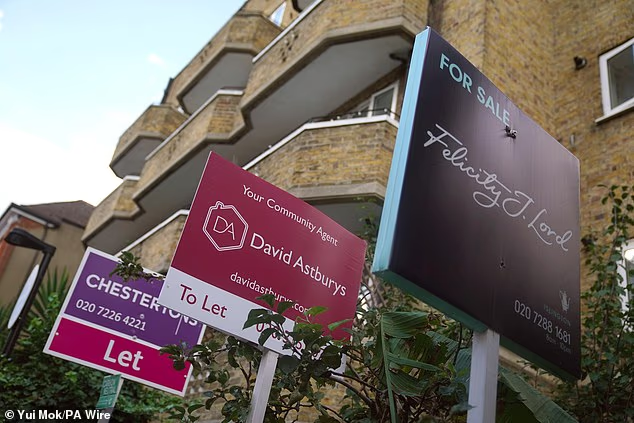
Going up: Landlords are expected to pass on planned tax increases to renters
More than a third of landlords said they would increase rents by more than they had previously planned because of the changes, while a similar proportion said they planned to sell one or more of their properties as a result.
Despite bringing in tax revenue, the OBR has previously warned that the policy would lead to higher rents, though it said this would only cause ‘a small negative impact.’
Ben Beadle, chief executive of the National Residential Landlords Association, said: ‘Renters will be left picking up the bill for the Chancellor’s tax hikes. The Government needs to scrap plans that risk pushing rents higher and making it harder for people to find a home.’
Landlords also face increased costs as a result of the Renters’ Rights Act, which came into force on 1 May.
Fixed-term assured tenancies and assured shorthold tenancies will be abolished and replaced with rolling periodic tenancies, meaning renters will no longer be tied into long contracts.
Landlords must also give an acceptable reason for ending tenancies, with Section 21 ‘no-fault’ evictions barred.
The law gives renters the right to end tenancies with two months’ notice and enables them to better challenge poor conditions and unreasonable rent increases without fear of retaliatory eviction.
Landlords and agents face potential big fines for breaches of the rules.
Tenant groups have called for rent controls to protect renters from excessive increases.
Ben Twomey, chief executive of campaign group Generation Rent, said: ‘It’s not right that over four months of our income every year is being swallowed up by landlords.
‘While it was encouraging to see the Government recognise this through its recent consideration of a rent freeze, we need to see longer-term action.
‘Renters in some of our biggest cities are facing the most back-breaking costs. The government must urgently give metro mayors the power to slam the brakes on soaring rents through limiting rent increases.’
Ben Beadle of the NRLA disagrees that rent controls are the answer, however.
He warned: ‘For those proposing rent controls as the answer, they do nothing to address the root cause of higher rents – rising costs and a chronic shortage of homes to meet demand.’