

South Korea’s National Pension Service (NPS) is set to finalize its asset-allocation strategy for the next five years on May 28, as investors closely watch whether the pension giant will begin reducing its oversized domestic equity holdings following a sharp rally in the local stock market.
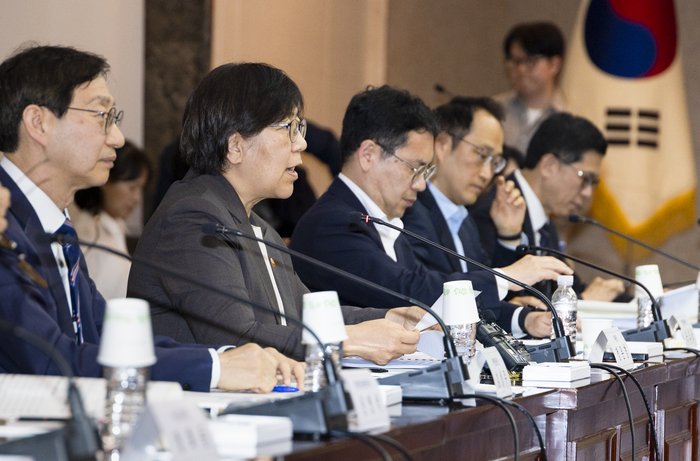
The National Pension Fund Management Committee held its fourth meeting of 2026 at the Government Complex Seoul last Friday and received an interim report on the midterm asset-allocation plan covering 2027 through 2031.
The plan determines target allocations and investment strategies across asset classes including stocks, bonds and alternative investments in order to improve the pension fund’s long-term profitability and stability.
Under the previous plan approved in May last year, the fund set its 2030 target allocation at 55 percent equities, 30 percent bonds and 15 percent alternative investments. The strategy called for a gradual reduction in domestic stock exposure while expanding alternative investments.
According to government ministries and the investment banking industry, domestic equities recently accounted for more than 27 percent of the pension fund’s portfolio, far above this year’s target of 14.9 percent.
Even after accounting for the allowable ranges under tactical and strategic asset-allocation rules, the ceiling stands at 19.9 percent.
The gap widened after the fund management committee decided earlier this year to temporarily delay portfolio rebalancing until June.
The committee reportedly reviewed four different scenarios during Friday’s meeting but postponed a final decision until the May 28 session. Industry observers said it is unusual for the committee to convene twice within a single month, underscoring the sensitivity of the issue.
Debate has intensified as the benchmark KOSPI surged in recent months, increasing pressure on the pension fund to rebalance its holdings.
Some committee members are said to support a gradual reduction in domestic equities starting now. Others worry that large-scale selling to meet this year’s target could put significant downward pressure on the market.
There are also concerns that continued gains in South Korean stocks, driven partly by a recovery in the semiconductor sector, could leave the fund missing additional upside if it sells too aggressively.
“We are facing a situation we have never experienced before, and there are many concerns,” National Pension Service Chairman and CEO Kim Sung-joo said Friday. “The domestic equity weighting issue is a key task, but nothing has been decided yet.”
The committee also reviewed the pension fund’s operational performance as of the end of February.
Health and Welfare Minister Jeong Eun-kyeong said the pension fund has continued to post solid returns thanks to strong performances in major asset classes including domestic equities, helping reinforce the pension system’s financial stability.
“Midterm asset allocation is a crucial decision that determines the fund’s long-term profitability and stability,” Jeong said. “We will actively support the committee so that it can establish a reasonable plan.”
By Kim Geum-ie and Minu Kim
[ⓒ Pulse by Maeil Business News Korea & mk.co.kr, All rights reserved]