Dave Ramsey declined SpaceX stock, preferring mutual funds because the U.S. market historically doubles every seven years without single-stock risk.
Index funds like SPY returned 257% over ten years at a 0.09% expense ratio, setting the hurdle that every single stock must beat.
Both hosts capped speculative positions at 5 to 10% of total portfolio, which meant no more than $25,000 across all single-stock bets on a $250,000 net worth.
Many financial professionals are salespeople paid on what they push, not whether you end up wealthier. A fiduciary is the opposite. The SEC legally requires them to put your interests first. Advisor.com’s free matching tool pairs you with vetted fiduciaries from firms like Vanguard, Empower, and Edelman — in under three minutes. See who you match with today.
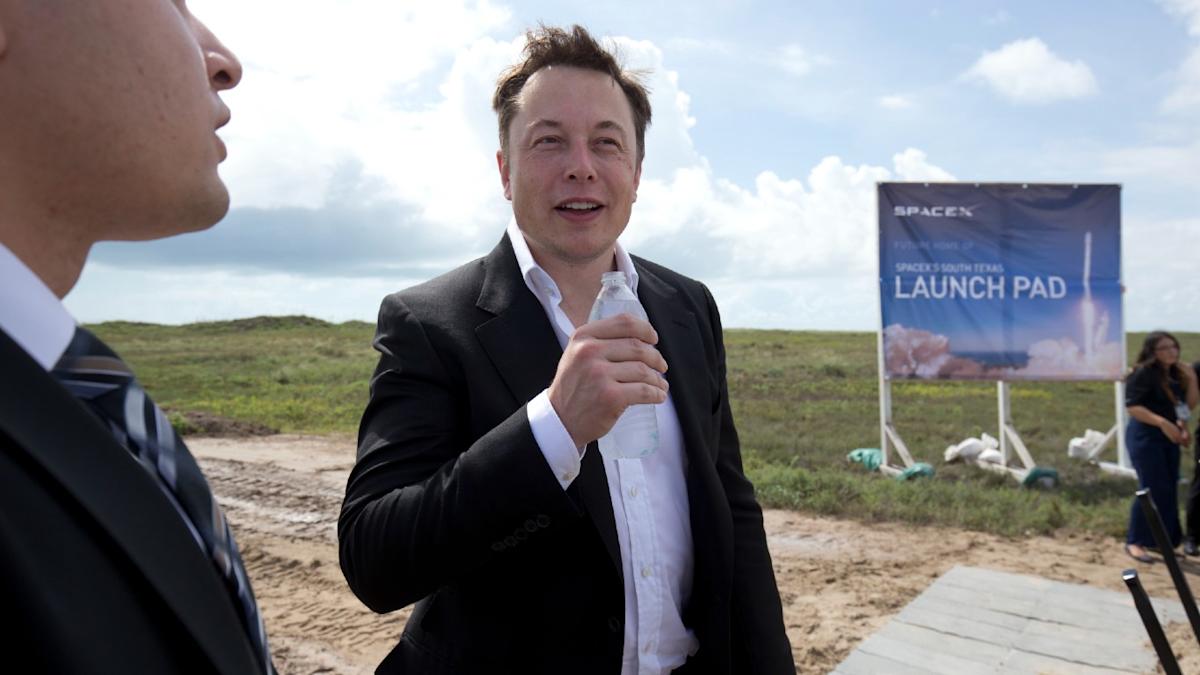
On the June 12 episode of The Ramsey Show, a debt-free single woman with a roughly $250,000 net worth called in asking whether to buy 10 to 100 shares of SpaceX at about $162 each because a friend told her the stock was “going to skyrocket.” Dave Ramsey’s answer doubled as a personal finance lesson for anyone tempted by a hot single-stock tip: “I am not investing in SpaceX. I’m not buying single stock in that company. As much as I’m rooting for it, I could just keep doing what I’m doing, invest in mutual funds and stay boring.”
Robert Daemmrich Photography Inc / Getty Images
One housekeeping note before the math: SpaceX is not listed on a U.S. exchange, so most retail investors cannot simply buy shares the way the caller described. The closest public-market proxy is Elon Musk’s other company, Tesla (NASDAQ:TSLA), which recently made a $2 billion equity investment in SpaceX and is building a chip fab at Gigafactory Texas with SpaceX.
The verdict: Ramsey is right, and the math is the reason
Ramsey’s position is correct for the caller, and the case rests on opportunity cost. He framed it plainly: the claim behind any single-stock bet is that it will so badly beat the broad market that locking up the money is worth the risk. He reminded the caller that the U.S. market has roughly doubled every seven years, meaning a $5,000 index purchase has historically tended to become about $10,000 over that span without anyone touching it.
Real numbers back up the “boring” path. The SPDR S&P 500 ETF Trust (NYSEARCA:SPY) is up 23% over the past year, 75% over five years, and 257% over ten years. It does that work for a 0.09% expense ratio, holding 500 companies across eleven sectors. The fund’s top ten names, including NVIDIA at 8% and Tesla at 2%, already capture the AI and electrification story most retail investors are chasing.
If you want more growth tilt, the Invesco QQQ Trust (NASDAQ:QQQ) returned 35% over the past year and 568% over ten years. Co-host George Kamel’s point lands here: a good growth-stock mutual fund will absorb SpaceX over time once it goes public, so patient investors get a piece anyway without taking single-stock risk today.
The variable that actually decides this: your play-money cushion
What actually changes the answer is how big the bet is relative to everything else — not age or income, but cushion size. Ramsey ran his “kitchen table test”: imagine putting the $5,000 on the table and watching it burn. Would you still be okay? She said yes, and Ramsey allowed it “could be a fun ride for you.” Kamel drew the line at the cushion size: he wouldn’t stop someone with a $1 million-plus net worth and 20 years of mutual fund investing from playing with $5,000, but told this caller “I think you’re still building.”
Are You Ready To Retire, Or Years Behind?
Most Americans suspect they’re behind on retirement and never find out. Advisor.com’s free matching tool pairs you in about three minutes with a vetted fiduciary advisor who can help you with investing, taxes, retirement, estate planning, and more. No minimums. No sales call. Find out where you stand.
Both hosts capped speculative single-stock positions at 5% to 10% of a total portfolio. On $250,000, that ceiling is roughly $12,500 to $25,000 total across every speculative bet combined, not per stock. A $5,000 SpaceX position would fit inside that band, but only if no other lottery tickets are already in the account. Ramsey also referenced the Dogecoin run-up around Elon Musk’s SNL appearance as the cautionary version of this story.
The Tesla example shows why concentration is dangerous even when the company succeeds. Tesla trades at 402 times earnings and 245 times free cash flow, with a 4% net margin and 5% return on equity. The stock is down 10% year to date even after a 27% one-year gain. Single names move like that. Index funds rarely do.
What to actually do this week
Add up every speculative position you already own (crypto, single stocks, options) and divide by your total invested assets. If that number is above 10%, do not add SpaceX, Tesla, or any other single name until the ratio comes down.
Run Ramsey’s kitchen table test on the exact dollar figure you are considering. If burning it would force you to change your retirement date, the bet is too big.
Compare the expected hold period against a plain index alternative. $5,000 doubling to roughly $10,000 in seven years in an S&P 500 fund is the hurdle any single stock has to beat after taxes.
If SpaceX eventually IPOs, check whether your existing growth fund already holds it before buying separately. As Kamel noted, the fund will likely do that work for you.
The boring portfolio is boring because it works. A speculative single stock is allowed to be in the picture only after the boring part is doing the heavy lifting.
Are You Ready To Retire, Or Years Behind?
Most Americans have no idea where they actually stand. Most guess, or hope Social Security and a 401(k) will work out. Advisor.com’s new matching tool gives you a real answer, free.
They pair you with a fiduciary (required by law to put YOUR interest first) with questions related to taxes, estate planning, retirement, insurance analysis, and more. See you who you match with today, and get the answers you need.