
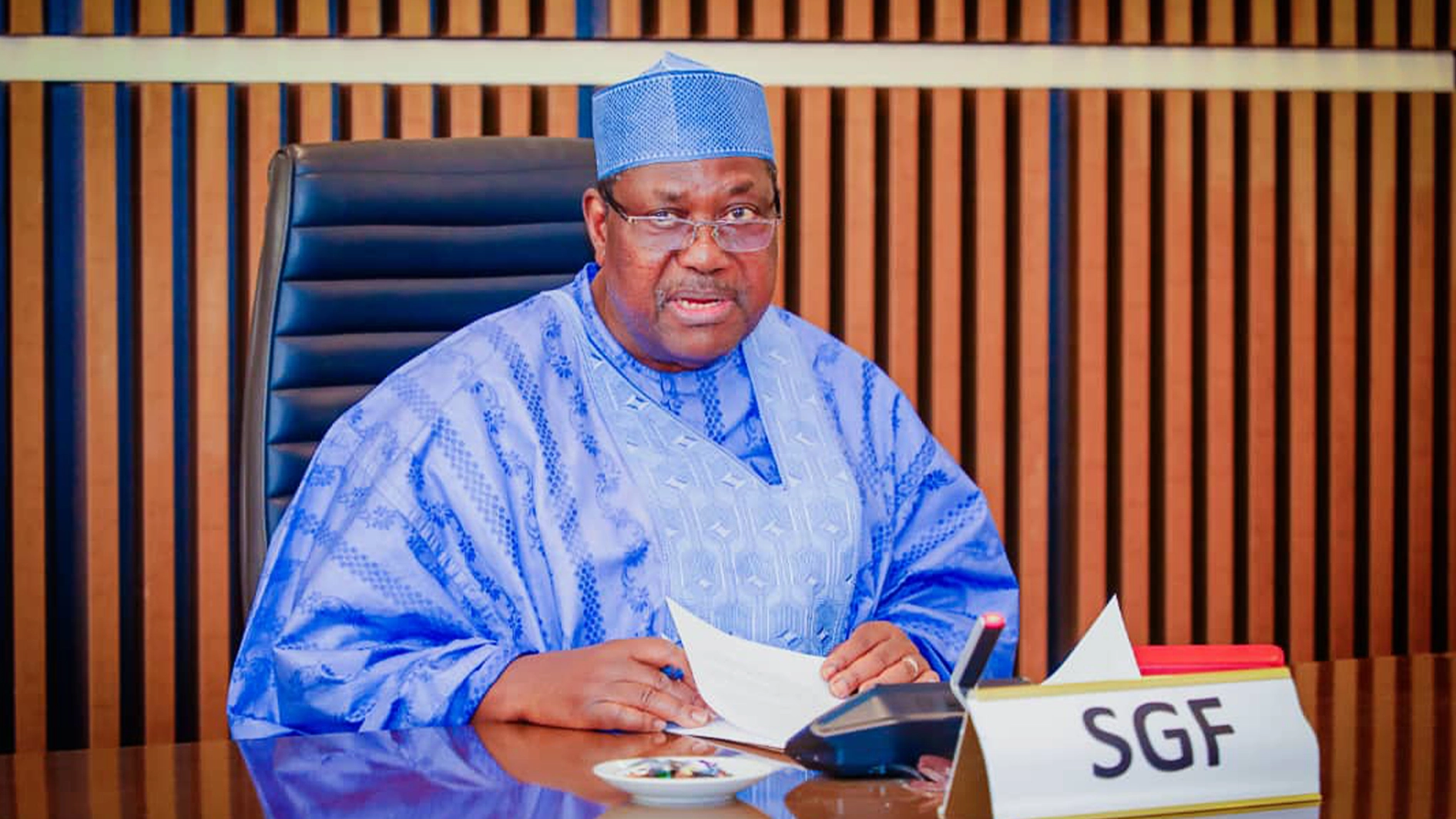
Secretary to the Government of the Federation (SGF), Senator George Akume, has called for stronger collaboration among Nigeria’s fiscal and oversight institutions to enhance transparency, accountability and prudent public financial management in support of President Bola Tinubu’s Renewed Hope Agenda.
Akume made the call on Tuesday in Abuja while receiving the management of the Fiscal Responsibility Commission (FRC), led by its Acting Executive Chairman and Chief Executive Officer, Barrister Charles Chukwuemeka Abana.
The SGF stressed the need for closer coordination between the FRC and key public finance institutions, including the Federal Ministry of Finance, the Budget Office of the Federation, the Office of the Accountant-General of the Federation, the Debt Management Office and other oversight agencies to eliminate duplication of responsibilities and strengthen fiscal governance.
He described the Fiscal Responsibility Commission as a critical pillar of Nigeria’s fiscal governance architecture, noting that its mandate remains central to promoting discipline, transparency and accountability in the management of public resources.
According to Akume, fiscal responsibility is essential to sustaining macroeconomic stability, strengthening investor confidence, ensuring debt sustainability and guaranteeing the efficient utilisation of public funds across all tiers of government.
“The Fiscal Responsibility Commission occupies a strategic position in strengthening public financial management and ensuring that government resources are managed with discipline, transparency and accountability in line with the Renewed Hope Agenda of President Bola Ahmed Tinubu,” he said.
Earlier, Abana said the Commission had renewed its focus on improving transparency in revenue reporting, ensuring prompt remittance of operating surpluses into the Consolidated Revenue Fund and tackling revenue leakages and waste across public institutions.
He disclosed that through enhanced monitoring of operating surpluses from Government-Owned Enterprises (GOEs) and internally generated revenue by Ministries, Departments and Agencies (MDAs), the Commission monitored about N1.84 trillion in independent revenue as of September 2025.
Abana said the Commission is targeting N2.5 trillion in independent revenue in 2026 as part of efforts to improve fiscal compliance and boost government earnings.
He also revealed that the Commission had reviewed and upgraded its Operating Surplus Calculation Template, first developed in 2016, to align with current fiscal realities, including the provisions of the Finance Act 2020 and subsequent fiscal policy reforms.
According to him, the template has now been fully automated to improve efficiency, accuracy and transparency in revenue computation, compliance monitoring and overall fiscal oversight.