
The country’s young capital market is expanding its institutional foundations, but industry leaders say a shortage of skilled local professionals remains a critical challenge as the country moves towards a more developed securities market.
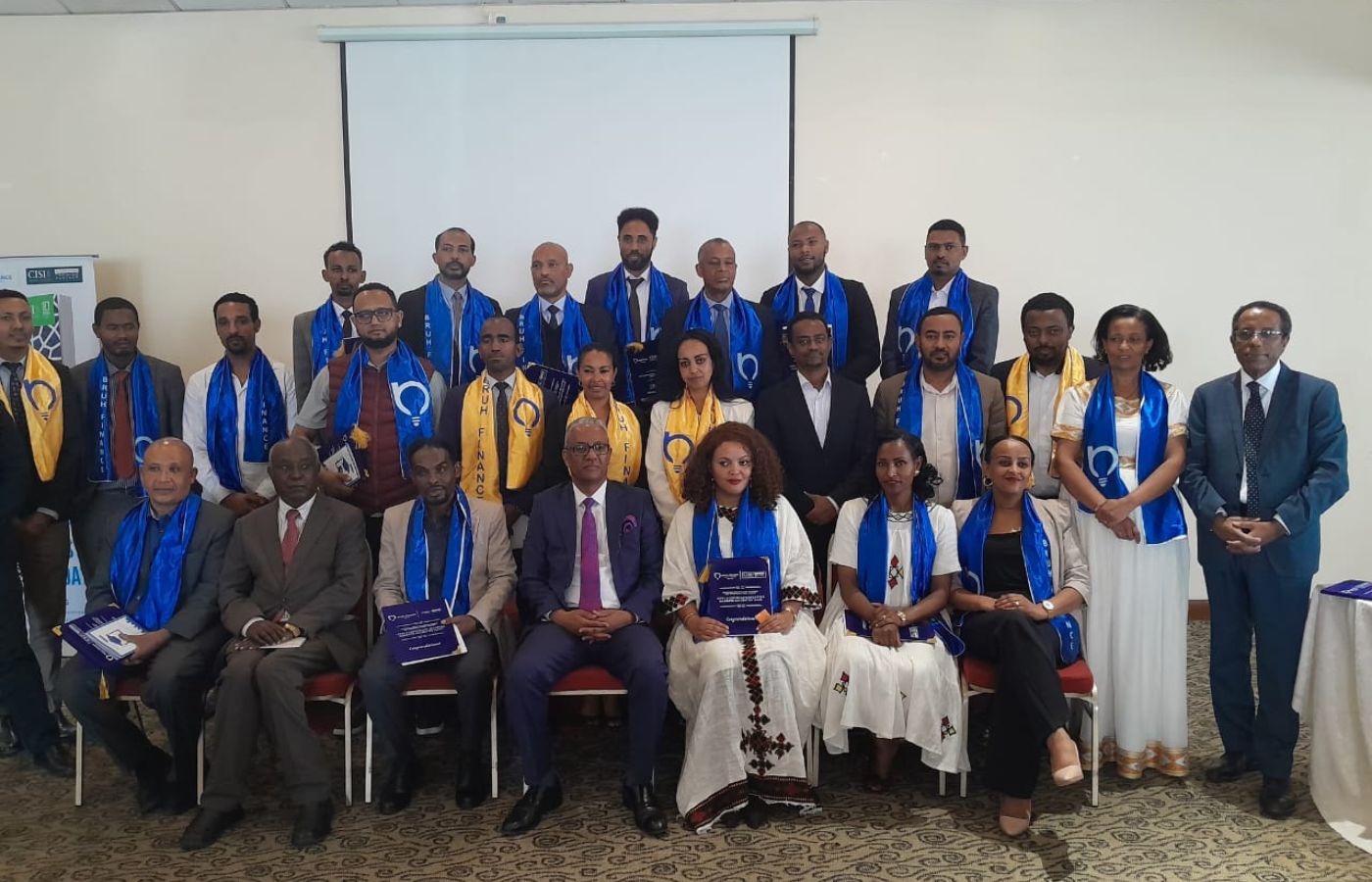
Thirty-seven finance professionals have completed internationally recognised capital market and investment qualifications, adding to the pool of specialists expected to support Ethiopia’s growing securities industry.
The graduates include 22 professionals who completed the Level 3 Certificate in Capital Markets – Securities and 15 who earned the International Certificate in Wealth & Investment Management, both qualifications offered by the UK’s Chartered Institute for Securities & Investment (CISI) through Bruh Finance.
The graduates included senior executives from across the financial services industry, including leaders from insurance companies, commercial banks and investment banks.
The graduation comes as East Africa’s youngest capital market moves into a new phase of development, with the Ethiopian Securities Exchange (ESX) expanding its ecosystem through new listings, licensed intermediaries and emerging investment products. The country now has 21 licensed capital market service providers (CMSPs) and five listed companies. The listing of Ethio Telecom marked a significant shift for the exchange, becoming the first major non-financial company to join the bourse and broadening a market that had initially been dominated by banks.
However, industry executives say developing the market requires more than trading platforms and regulatory frameworks. A shortage of professionals with practical knowledge of securities markets, investment analysis and portfolio management remains a major constraint.
“The market currently lacks local talent,” said Yared Molla (PhD), chief executive of Nyala Insurance company, during remarks at the graduation ceremony.
“As the market matures, local talents that understand the market are important,” he told graduates.
Yared said professionals with a strong understanding of Ethiopia’s economic environment, businesses and regulatory landscape would be essential as market activity increases.
Bruh Finance Chief Executive Getachew Beshahwred said Ethiopia could acquire technology and financial systems from international markets, but developing professionals who understand local conditions requires domestic investment.
“We can bring technology, but we can’t bring talent that understands the local circumstance,” he said.
Since beginning operations, ESX has focused on building the infrastructure required for capital market activity, including attracting issuers, expanding trading membership and developing new products. The exchange has admitted additional market participants, while companies have started exploring equity financing options through the platform.
The market has also moved beyond the initial establishment phase, with efforts underway to introduce additional instruments, including sustainable finance products and other investment vehicles aimed at broadening participation.
But the shortage of experienced professionals remains one of the challenges facing the sector. Investment banking, securities analysis, asset management, risk management and compliance require specialised expertise that remains limited in Ethiopia.