
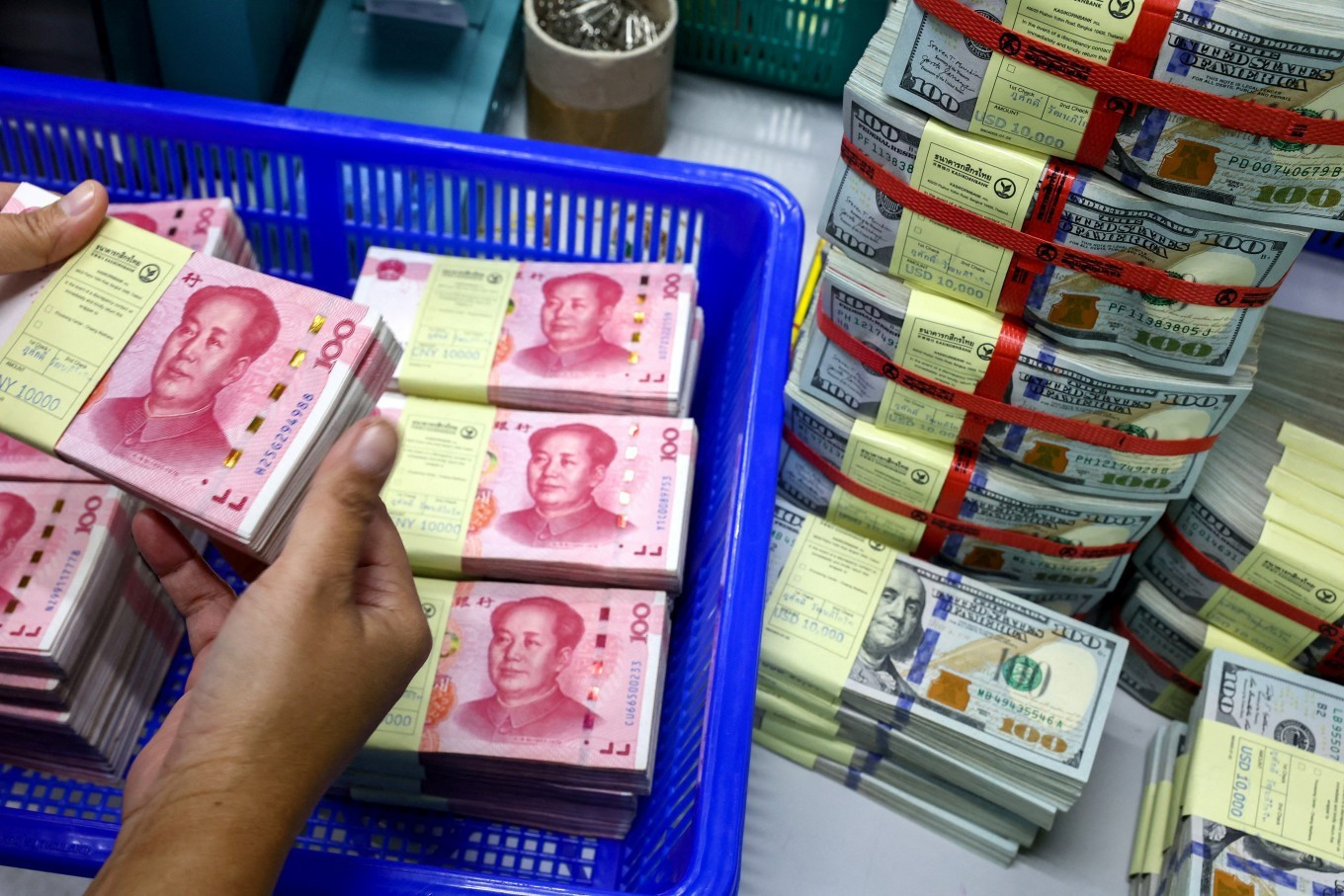
ndonesia’s latest return to China’s capital market has been met with overwhelming demand as the government successfully issued two tranches of yuan-denominated Panda Bonds totaling 7 billion yuan (Rp 18.6 trillion or US$1.1 billion) to help finance the 2026 state budget. The offering was oversubscribed by 2.4 times, underscoring continued confidence in Indonesia’s fiscal outlook. However, the timing of the issuance has also attracted attention, as it comes amid heightened scrutiny over Indonesia’s economic relations with major global powers.
The appeal of Panda Bonds lies in their ability to offer Indonesia a lower-cost alternative to conventional United States dollar-denominated debt. The latest issuance carried coupons of 1.90 percent for the three-year tranche and 2.19 percent for the five-year tranche, significantly below Indonesia’s recent US dollar global bonds, which carried coupons of 4.35 percent for the five-year tranche and 4.95 percent for the ten-year tranche.
While the comparison is subject to currency considerations, the difference highlights the advantage of accessing China’s domestic bond market as an additional source of financing. The issuance also comes amid China’s broader efforts to internationalize the yuan by expanding its role in global trade and financial markets. As part of this effort, the Chinese government has sought to deepen the use of yuan-denominated financial instruments, including by encouraging foreign governments and institutions to tap its domestic bond market through Panda Bonds. Indonesia was therefore entering a market where Chinese authorities had strong incentives to attract high-quality foreign issuers, particularly sovereign borrowers, as part of efforts to strengthen the yuan’s international profile.
This opportunity has emerged partly as a consequence of shifting global monetary conditions. The US Federal Reserve’s aggressive rate hikes, driven by persistent inflationary pressures in the US economy, were necessary to restore price stability but also increased the cost of dollar-denominated financing globally, which includes fixed-income products. This created a more favorable environment for alternative funding channels, such as yuan-denominated bonds, at a time when China has been actively promoting the internationalization of its currency and expanding the role of yuan-based financial instruments.
Indonesia’s decision to tap China’s domestic bond market therefore comes at a politically sensitive moment, as Indonesia benefits from an initiative that aligns with China’s financial ambitions shortly after concluding the US-Indonesia Agreement on Reciprocal Trade (ART).
While the issuance itself is driven by financing considerations, the move could add complexity to bilateral relations with the US. This sensitivity is further compounded by Indonesia’s imports of Russian crude oil, which could create additional friction with the US and increase the risk of geopolitical pressure, including potential secondary sanctions.

Every Thursday
Nevertheless, the successful issuance highlights the potential of Panda Bonds as a strategic alternative source of financing for Indonesia. Beyond providing access to China’s deep domestic capital market, the instrument offers an opportunity to diversify Indonesia’s funding base beyond traditional US dollar-denominated debt.