
University of Social Sciences and Humanities – VNU Hanoi
https://ussh.vnu.edu.vn/uploads/ussh/logo-ussh-2_100_100.png

The seminar “Content Orientation of the Policy Framework to Support Intellectual Property Management in Vietnam’s Cultural and Creative Industries” was organized by the School of Science and Humanities.
Five pillars of the intellectual property governance policy framework.
Emphasizing the urgent need to shape a policy framework to support the governance of intellectual property in the cultural and creative industries, Associate Professor, Dr. Dang Thi Thu Huong, Vice Rector of the University of Social Sciences and Humanities (Vietnam National University, Hanoi), stated that Resolution No. 80-NQ/TW of the Politburo on the development of Vietnamese culture sets the goal for cultural industries to contribute 1% of GDP by 2030 and 9% of GDP by 2045. It also requires the development of laws on copyright and the development of cultural industries, supporting businesses in protecting intellectual property rights in the digital environment and establishing an exchange platform for cultural and artistic products in the form of digital assets.
Resolution No. 28/2026/QH16 of the National Assembly on the development of Vietnamese culture stipulates that the annual expenditure on culture must be at least 2% of the total state budget expenditure and allows for the piloting of some special and outstanding mechanisms and policies.
Furthermore, Decision No. 2486/QD-TTg of the Prime Minister approving the Strategy for the Development of Vietnam’s Cultural Industries until 2030, with a vision to 2045, identifies 10 cultural industries as those that create products combining cultural elements, creativity, technology, and intellectual property rights. Strengthening intellectual property protection is one of eight general tasks and solutions. Therefore, intellectual property has been established as an intrinsic component of the cultural industry value chain, creating an urgent need for a systematic and feasible policy framework to support its governance.
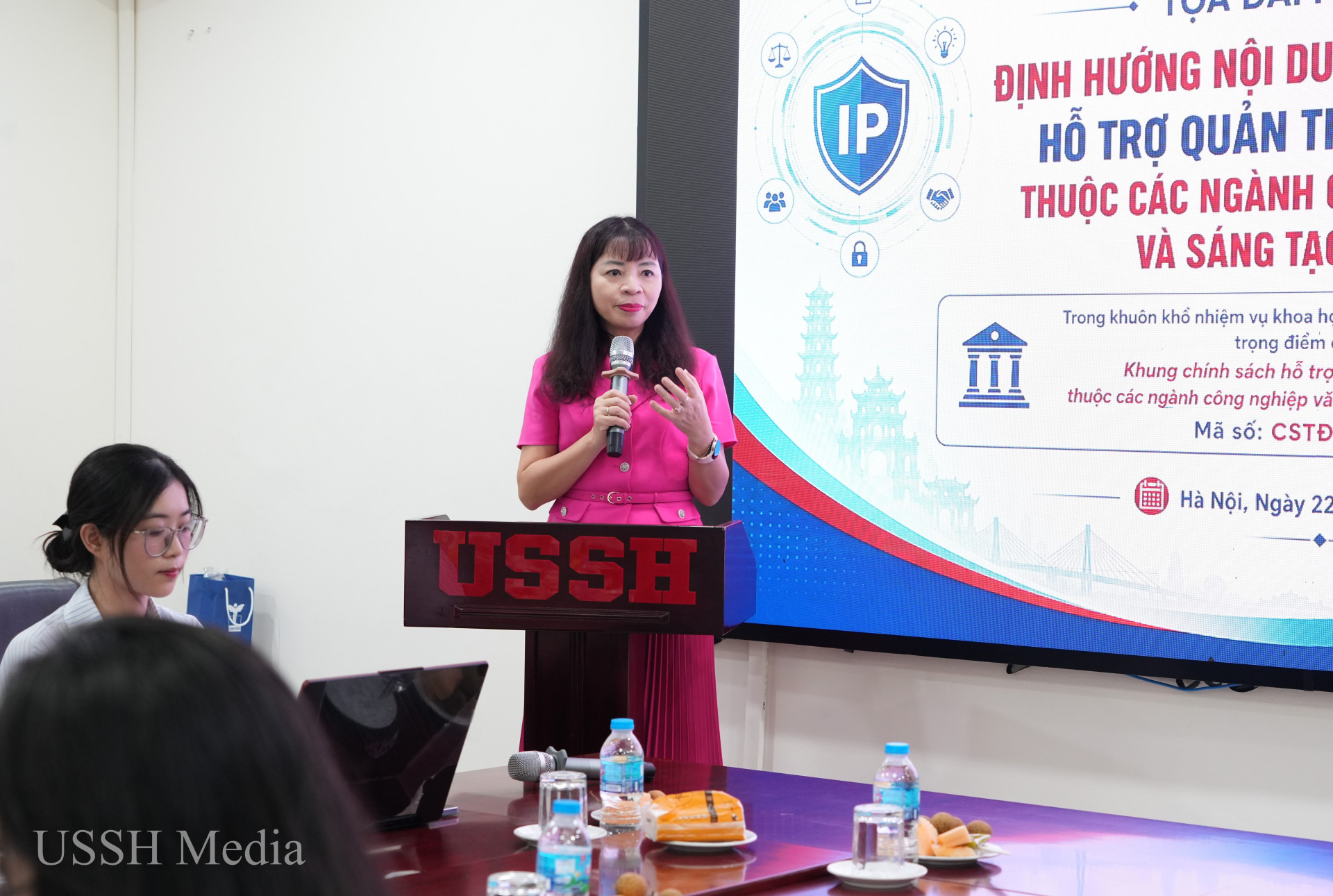
Associate Professor Dr. Dang Thi Thu Huong, Vice Rector of the University of Social Sciences and Humanities
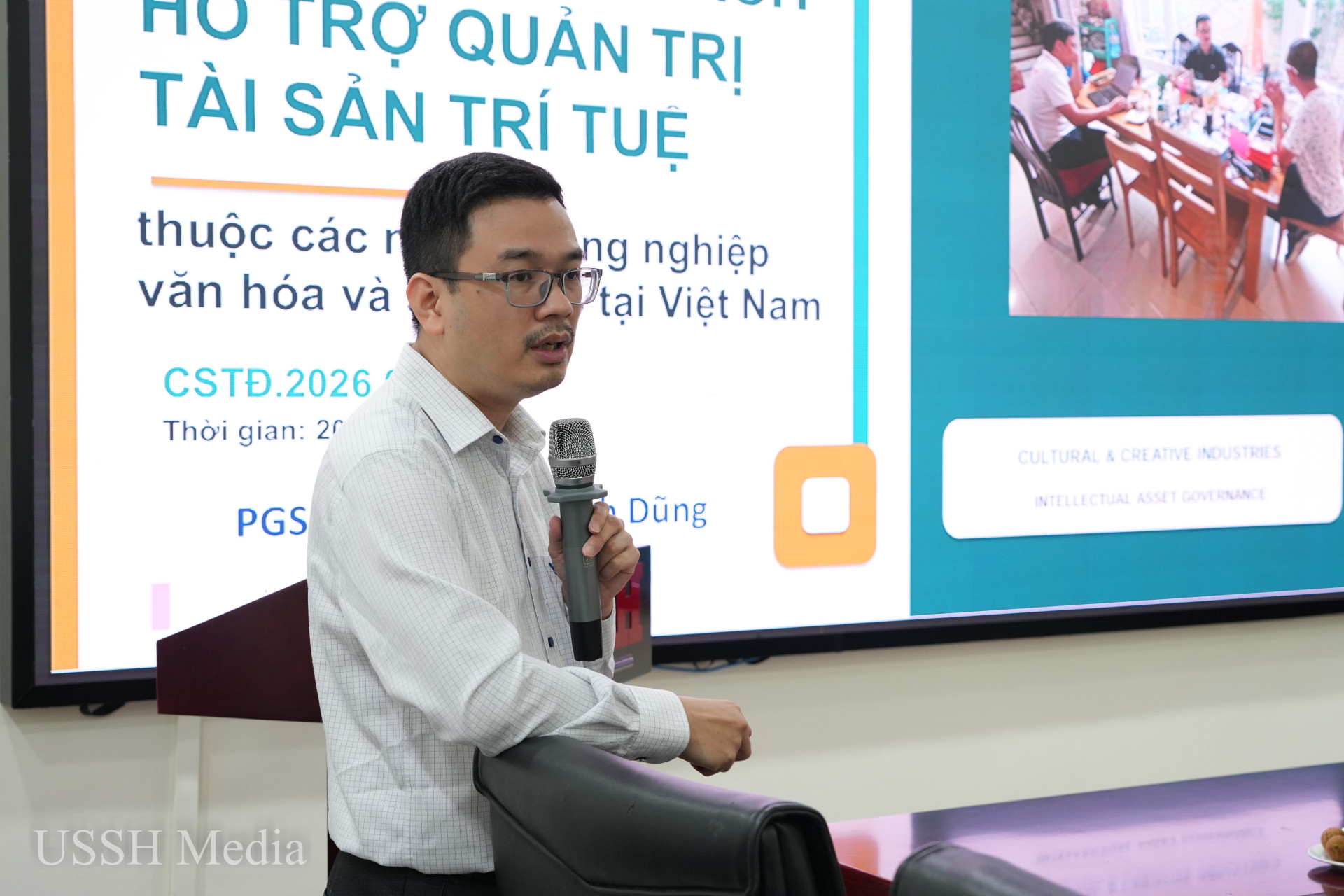
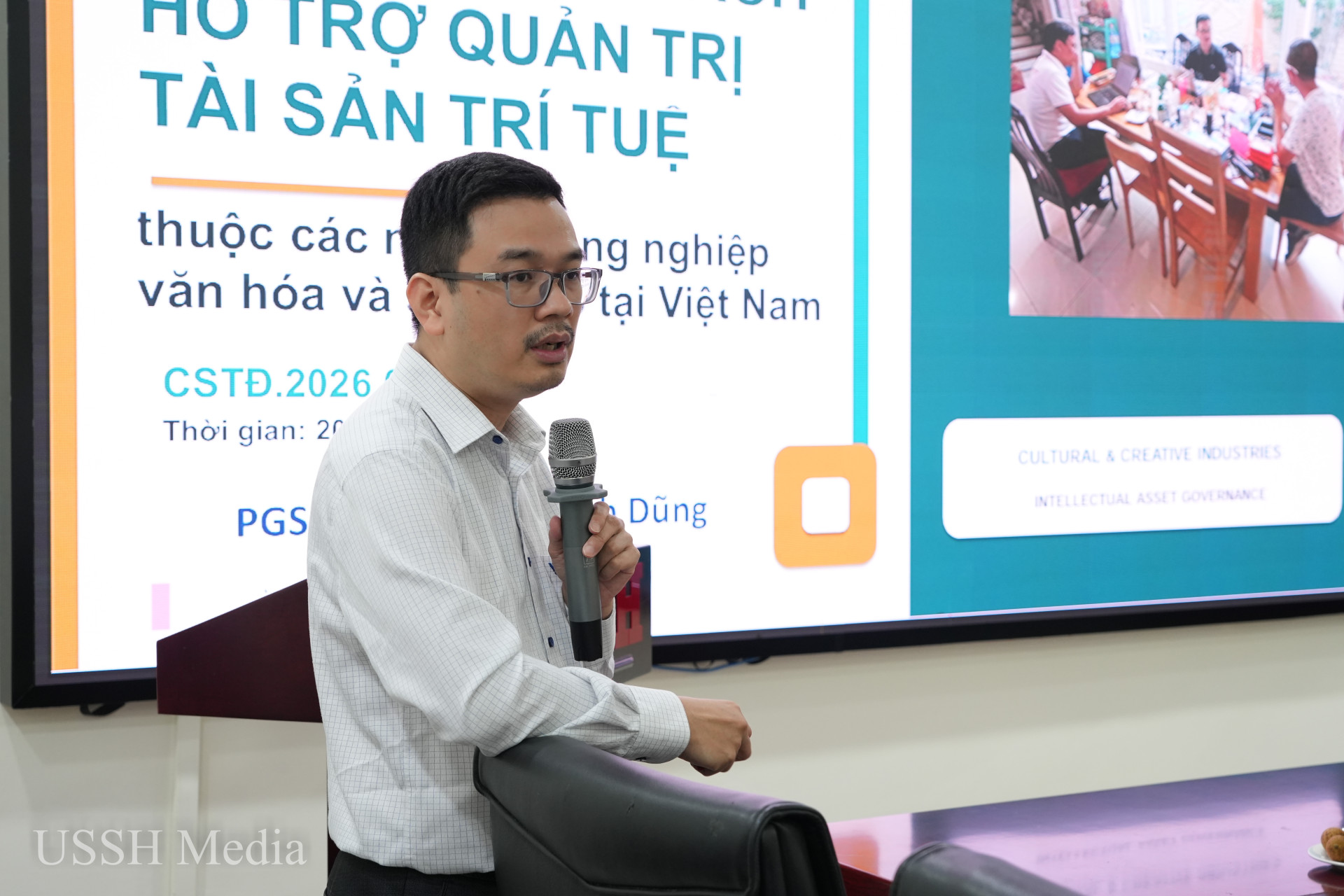
Assoc. Prof. Dr. Nguyen Manh Dung – Head of the key science, technology and innovation project at the grassroots level “Policy framework to support the management of intellectual property assets in cultural and creative industries in Vietnam” (CSTĐ.2026.02), presented the introductory report.
Associate Professor, Dr. Dang Thi Thu Huong argues that a work of art, a design, a fashion collection, a performance… all contain intellectual property of immense value. If this intellectual property is not properly identified, fully registered and protected, appropriately valued, effectively managed, and strategically commercialized, its creative value is easily lost, copied, and fails to transform into economic and social value.
Therefore, developing the cultural and creative industries should not only focus on creating products but also on building an ecosystem for managing intellectual property from creation, establishing rights, protection, valuation, exploitation, commercialization, and distributing benefits for reinvestment in creativity. This is one of the fundamental issues for the sustainable development of cultural and creative industries in Vietnam in the new era.
Based on identifying the bottlenecks in the current state of intellectual property management in the cultural industry before 2025, as well as evaluating the cultural development policy system after 2025 which has opened up a legal framework and created a strategic breakthrough in the development of the cultural industry, scientists and experts at the seminar proposed a structural framework for an ecosystem supporting intellectual property management in the cultural industry with five main components: institutions, policies and coordinating agencies; digital cultural infrastructure and technology for protecting intellectual property; a network of intermediary services and intellectual property exchanges; a financial and investment market for creative intellectual property; and a network of creators and the community.
This ecosystem operates in a closed-loop cycle, supported by a digital technology platform. Specifically, in the initial stage, the creator relies on a wealth of new scientific knowledge, a treasure trove of traditional cultural heritage, and a digital technology platform to create new innovative intellectual property products in digital or traditional forms.
During the establishment and digitization phase, intellectual property is integrated into the digital cultural infrastructure, automatically assigned a digital identifier, and encrypted using blockchain technology.
During the valuation and licensing phase, intellectual property assets will be valued by an intermediary service network and listed on a digital intellectual property exchange for licensing, transfer, or use as collateral.
During the financialization, reinvestment, and community benefit distribution phase, capital generated from the commercialization of intellectual property in the financial market will be reinvested in the creators, while benefits will be distributed to the traditional knowledge-owning community.
To make intellectual property into collateral
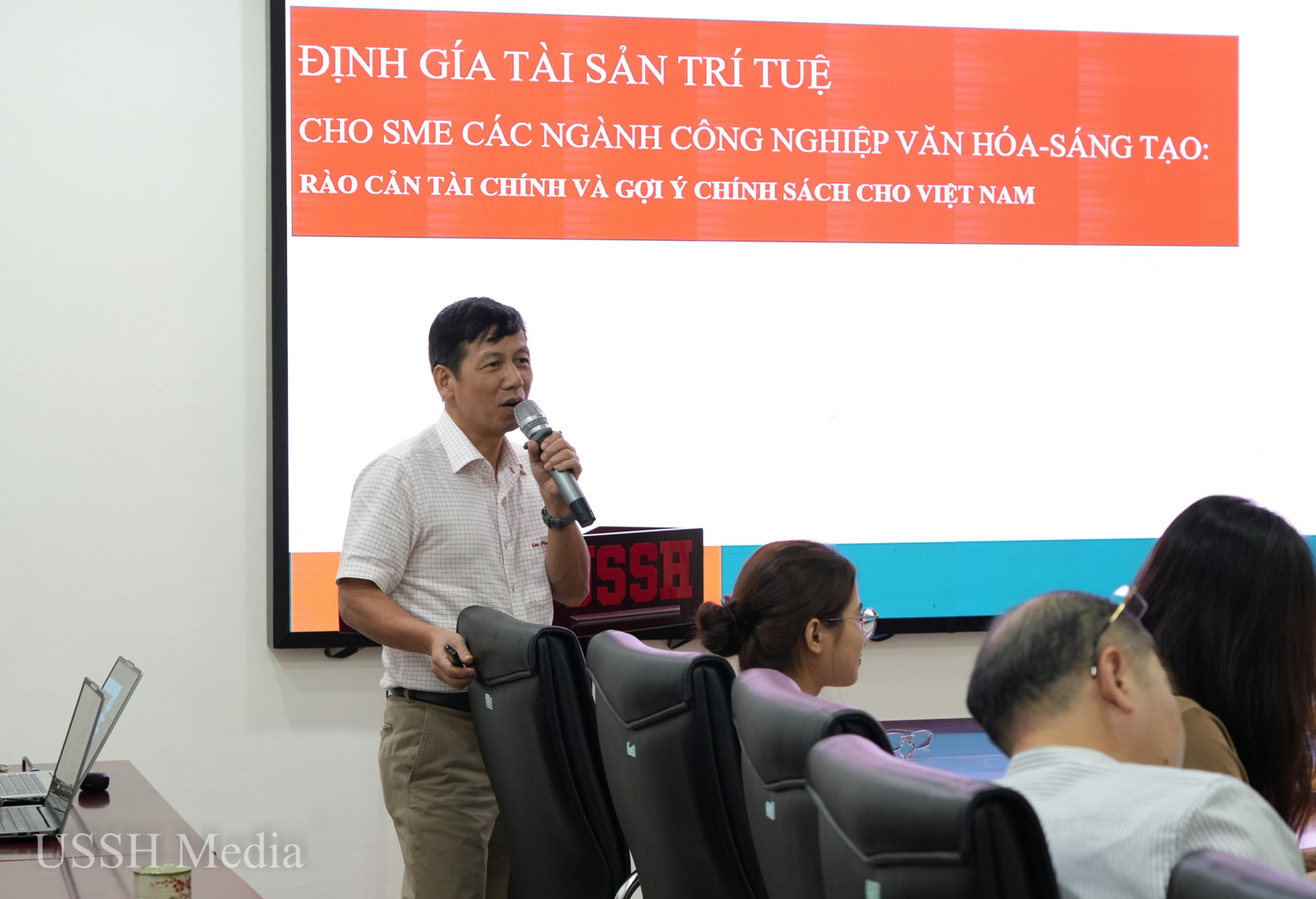
A key issue addressed by experts at the seminar was the valuation of intellectual property assets so that they can be accepted as collateral. Vietnam already has standards in place.valuationRegarding intangible assets, Circular 37/2024/TT-BTC and standards on market access, costs, and income are stipulated in Circular 32/2024/TT-BTC. The Civil Code stipulates that intellectual property rights are a type of asset that can be used as capital contribution. Decree 34/2028/ND-CP identifies property rights owned by enterprises as one of the measures to secure loan guarantees.
However, several obstacles prevent intellectual property from becoming a form of collateral in practice, such as: a lack of data on the market for similar transactions; cultural products have a short lifecycle, and their value depends heavily on tastes and trends, making it difficult to predict future revenue potential; businesses have not fully established, inventoried, and managed their intellectual property, making it difficult to demonstrate the contribution of intellectual property to revenue; and the market lacks professional brokerage organizations, exchanges, and support services.
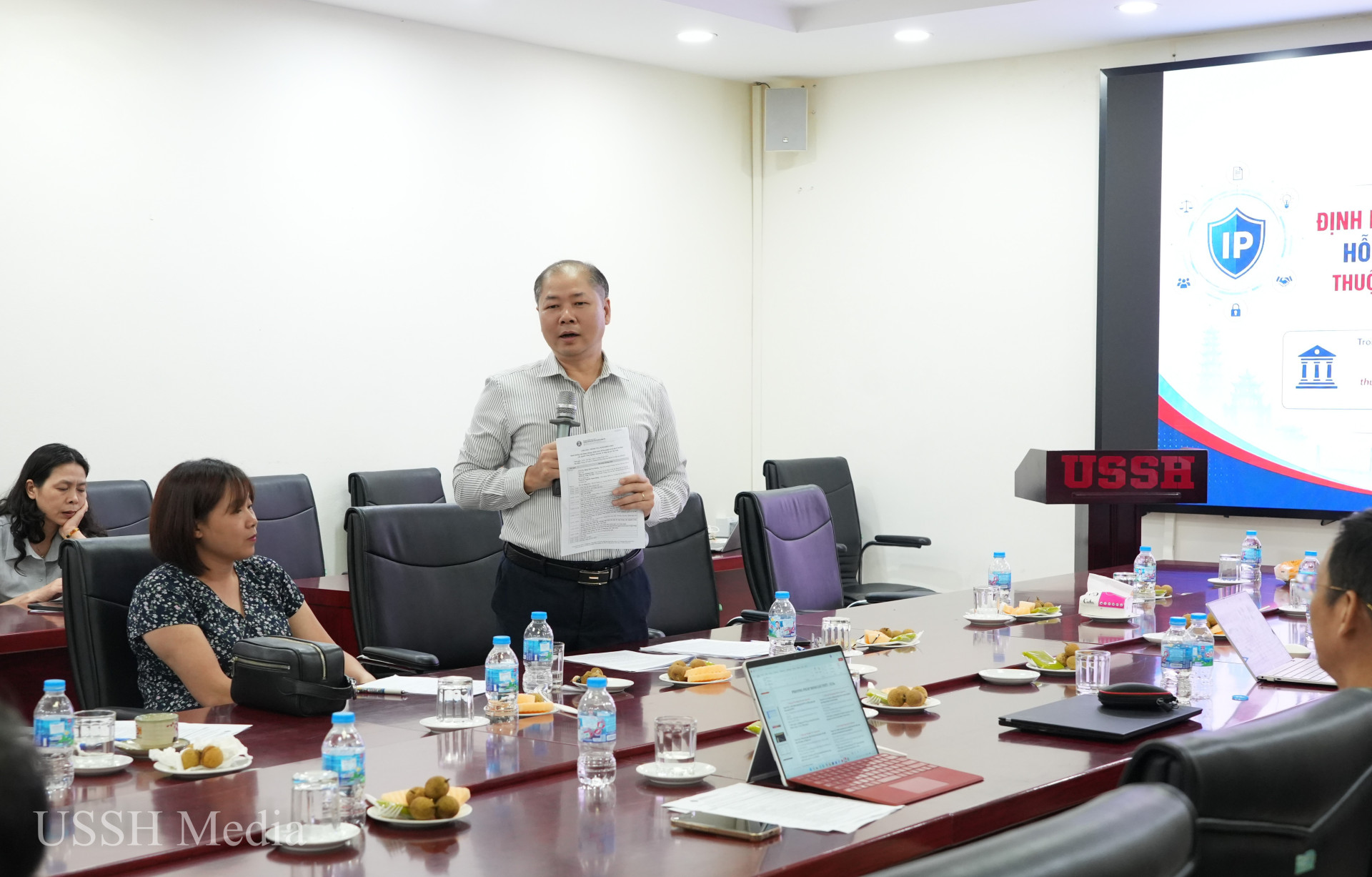
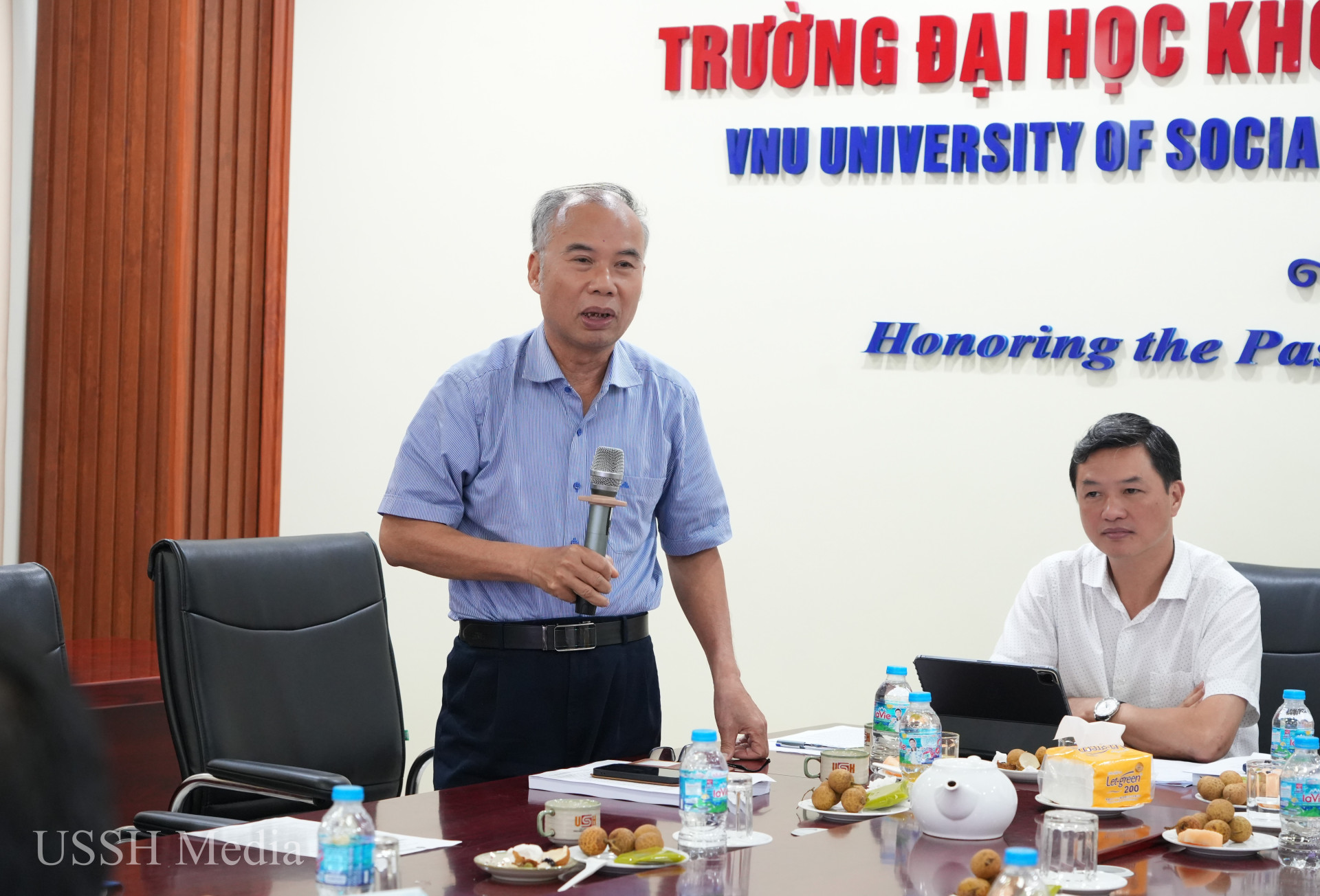
Based on this, experts propose standardizing the intellectual property valuation process; building a database of intellectual property transactions; developing intermediary valuation and underwriting organizations; combining monetary valuation with business evaluation based on intellectual property; establishing a state mechanism to support valuation costs; and enhancing the capacity of experts in the valuation field… These are the necessary conditions for the creative value of businesses to be transformed into investment capacity, growth, and competitiveness in the digital economy.
“Ordering” research on new issues
Mr. Luu Hoang Long, Director of the Intellectual Property Office (Ministry of Science and Technology), emphasized the need to continue improving the policy framework to encompass the entire lifecycle of intellectual property, from creation, protection, exploitation to safeguarding and enforcement of rights. Recalling a discussion with the Director General of the World Intellectual Property Organization (WIPO), Mr. Long stated that cultural industries are maintaining double-digit growth rates globally, indicating they have become an increasingly large and important economic sector. Intellectual property is identified as one of the core pillars within this sector. Therefore, intellectual property governance must also be placed at the center of policies for developing cultural industries.
According to the Director of the Intellectual Property Office, intellectual property management is essentially asset management, specifically intellectual property management, encompassing the processes of creation, protection, exploitation, commercialization, and enforcement of rights. This chain of activities makes the scope of the policy framework requiring study relatively broad and demands the integration of multiple management tools. Among these, the protection and enforcement of intellectual property rights is a particularly crucial link. If rights are not effectively protected and enforced, the efforts in the earlier stages of creation and protection are unlikely to yield results. This has also been emphasized in recent policies of the Politburo and the Government on strengthening the protection of intellectual property rights.

Mr. Luu Hoang Long, Director of the Intellectual Property Office, chaired the seminar.
Therefore, Mr. Luu Hoang Long suggested that the research group dedicate a significant component in the policy framework to the question of how to improve the effectiveness of protecting and enforcing rights. One of the directions the Intellectual Property Office is researching is building a database to serve the protection and enforcement of intellectual property rights and applying technology to early identify intellectual property infringements in the digital environment.
The Director General of the Intellectual Property Office commissioned the research team to continue studying the theoretical aspects of the concept of intellectual property to suit Vietnamese practice and ensure compatibility with international standards. Based on further research into the concepts and approaches of WIPO and other international organizations, he expects the team to propose a sufficiently standardized concept to serve as a reference for future revisions of intellectual property law.
Determining valuation is a crucial step in the management and commercialization of intellectual property. Mr. Luu Hoang Long noted to the research group that to clearly distinguish between valuation and appraisal, the valuation policy needs to ensure the rights of intellectual property owners, without restricting the rights already stipulated in the law on pricing. Even with a valuation certificate, intellectual property remains a risk that credit institutions need to identify when accepting it as collateral. Therefore, it is most important to integrate this into the process of evaluating collateral for lending. This is an issue that the world is researching and experimenting with, and Vietnam also needs to study it to develop appropriate policies.
The press reported on the event:
Nhan Dan Newspaper:The ecosystem supports intellectual property governance.
People’s Representatives Newspaper:Finding solutions to the problem of intellectual property management in the cultural industry.
Culture Newspaper:Improving the policy framework for intellectual property governance in the cultural industry.
Vietnam Science and Technology Magazine (Ministry of Science and Technology):Intellectual Property Management: From Rights Protection to Creating Value for the Cultural and Creative Industries