

Introduction & Market Context
Affiliated Managers Group Inc. (NYSE:AMG) presented its Q1 2026 investor overview on May 1, 2026, showcasing a transformative quarter marked by record assets under management and accelerating earnings growth driven by its strategic pivot toward alternative investments. The company’s stock rose 1.81% in premarket trading to $300.01, reflecting investor confidence despite challenging equity market conditions that saw the S&P 500 decline 4.3% during the quarter.
The presentation highlighted AMG’s evolution as a strategic partner to approximately 40 independent investment firms, with the company’s diversified business model demonstrating resilience amid market volatility. With over 30 years of experience partnering with leading investment specialists, AMG has positioned itself at the intersection of secular growth trends in private markets, liquid alternatives, and differentiated long-only strategies.
Quarterly Performance Highlights
AMG reported record assets under management of $882 billion as of March 31, 2026, representing a substantial increase from $712.2 billion in the prior-year quarter. This 24% year-over-year growth was driven by strong net client cash inflows of $22.5 billion in Q1 2026, a dramatic reversal from net outflows of $0.4 billion in the same period last year.
Economic earnings per share reached $8.23, marking a 58% increase from $5.20 in Q1 2025 and exceeding analyst expectations of $8.07. Adjusted EBITDA climbed 39% year-over-year to $317.3 million, while net performance fee earnings contributed $49 million, up $29 million from the prior year. Revenue totaled $544.9 million, slightly below the $547.32 million forecast but reflecting the company’s evolving business mix.
As illustrated in the company’s strategic overview, AMG’s business model centers on four core pillars that drive its competitive positioning.
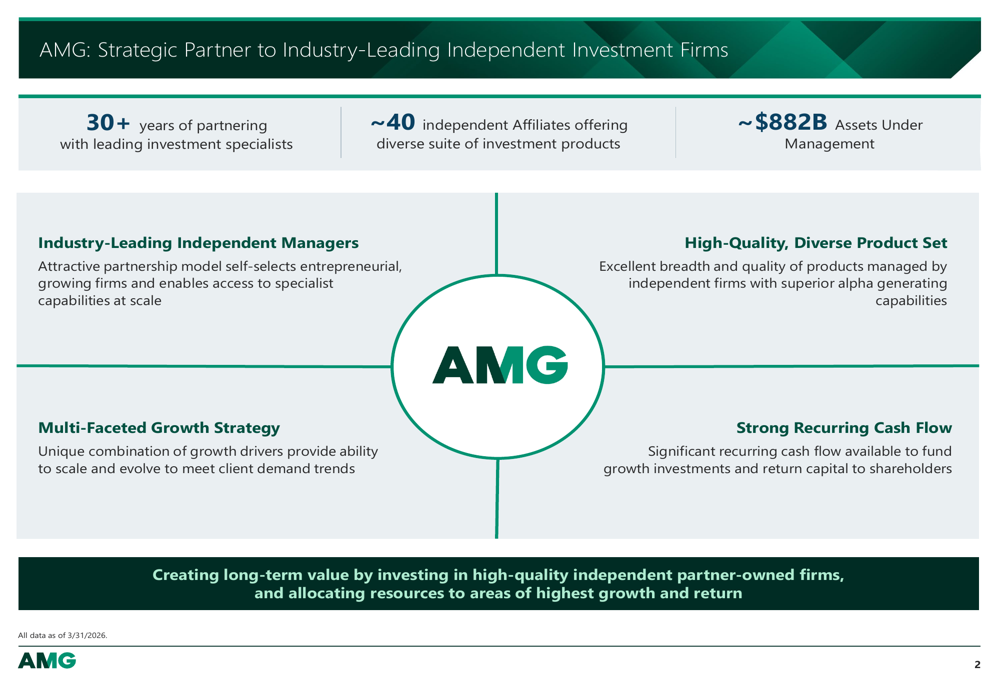
The company’s average AUM for the quarter reached $881.7 billion, providing a strong foundation for recurring fee generation across its diversified affiliate base.
Strategic Pivot to Alternatives
The most significant theme emerging from AMG’s presentation is the accelerating shift toward alternative asset classes, which now represent 58% of the company’s EBITDA contribution, up from approximately 35% in 2020. This strategic evolution positions AMG to capitalize on areas of secular client demand and higher-growth market segments.
The company’s exposure to alternative strategies is diversified across private markets ($148 billion in AUM) and liquid alternatives ($261 billion in AUM), complemented by $474 billion in differentiated long-only strategies. As shown in the following breakdown of AMG’s alternative asset class exposure, the firm has assembled a comprehensive portfolio of leading independent managers.
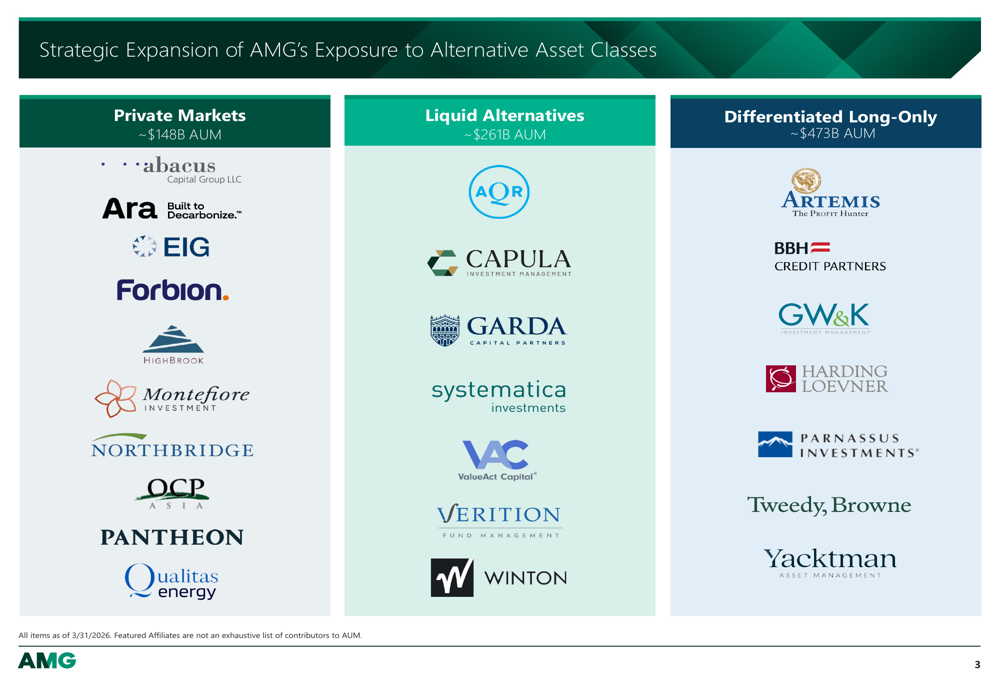
Within the alternatives segment, private markets now contribute 39% of LTM EBITDA, while liquid alternatives add another 19%. The presentation emphasized that over 60% of EBITDA now comes from high-growth areas aligned with client demand trends, including private markets, liquid alternatives, and wealth management.
The strategic composition of AMG’s business by EBITDA contribution demonstrates this evolution clearly.
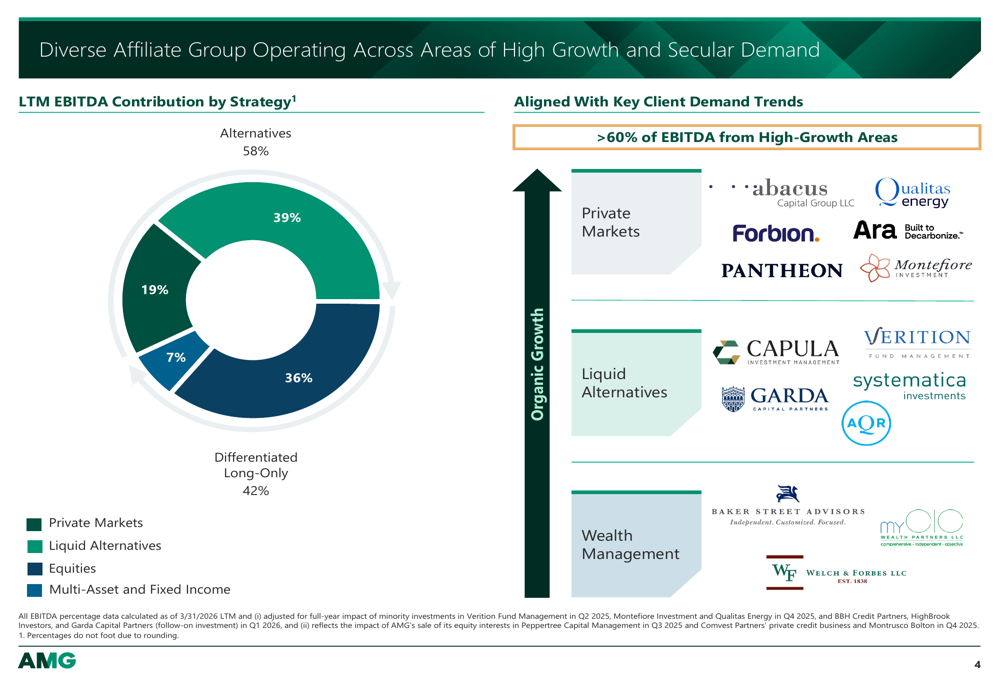
This shift reflects deliberate capital allocation decisions and new affiliate partnerships that have enhanced AMG’s exposure to secular growth areas while maintaining diversification across market cycles.
Investment Performance and Client Demand
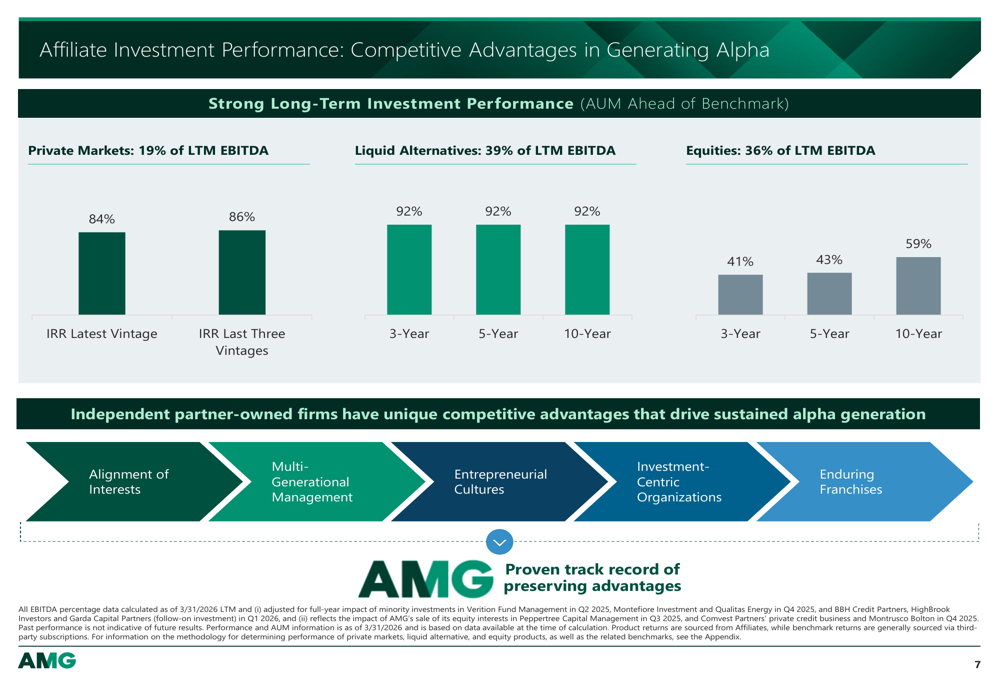
AMG’s presentation highlighted strong investment performance across its affiliate base as a key driver of client flows and business growth. In private markets, 84% of AUM outperformed benchmarks based on IRR for the latest vintage, while 86% outperformed across the last three vintages. Liquid alternatives demonstrated even stronger results, with 92% of AUM ahead of benchmarks across 3-year, 5-year, and 10-year periods.
The company’s competitive advantages in generating alpha stem from what it identifies as five unique characteristics of independent partner-owned firms: alignment of interests, multi-generational management, entrepreneurial cultures, investment-centric organizations, and enduring franchises. As detailed in the following performance analysis, these advantages translate into measurable outperformance.
Client demand trends strongly favor AMG’s strategic positioning. The dramatic turnaround in net client cash flows is evident in the quarterly progression, with the last twelve months showing $52 billion in positive flows as of Q1 2026. This improvement reflects robust fundraising in private markets and strong inflows to liquid alternative strategies, which more than offset continued headwinds in traditional equity products.
The trajectory of net client cash flows by strategy illustrates this dynamic clearly.
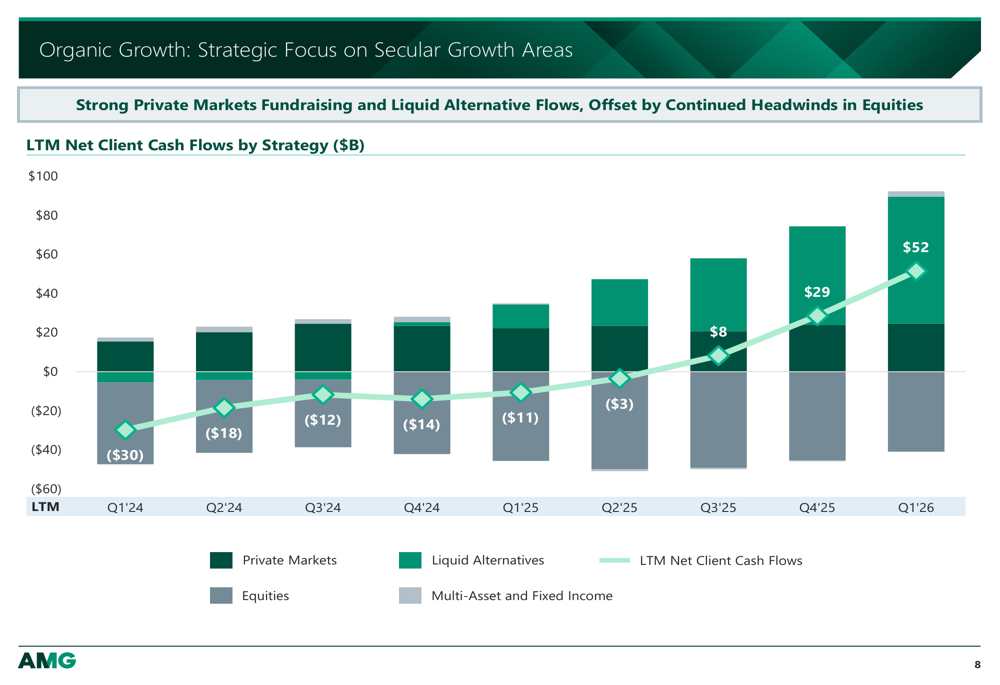
Private markets and liquid alternatives have consistently generated positive flows, while equity strategies have experienced outflows reflecting broader industry trends toward alternative investments. This pattern validates AMG’s strategic emphasis on alternative asset classes and suggests continued momentum in these areas.
Capital Formation and Partnership Value
AMG’s presentation emphasized the strategic value it provides to affiliate partners through specialized capital formation capabilities. The company has facilitated over $125 billion in institutional gross sales since 2009 and $150 billion in wealth gross sales since 2005, demonstrating the tangible impact of its distribution platform.
The firm’s support infrastructure includes over 50 AMG distribution professionals and 500+ affiliate-level sales and marketing specialists. As shown in the following overview of capital formation capabilities, AMG provides comprehensive support across the product lifecycle.
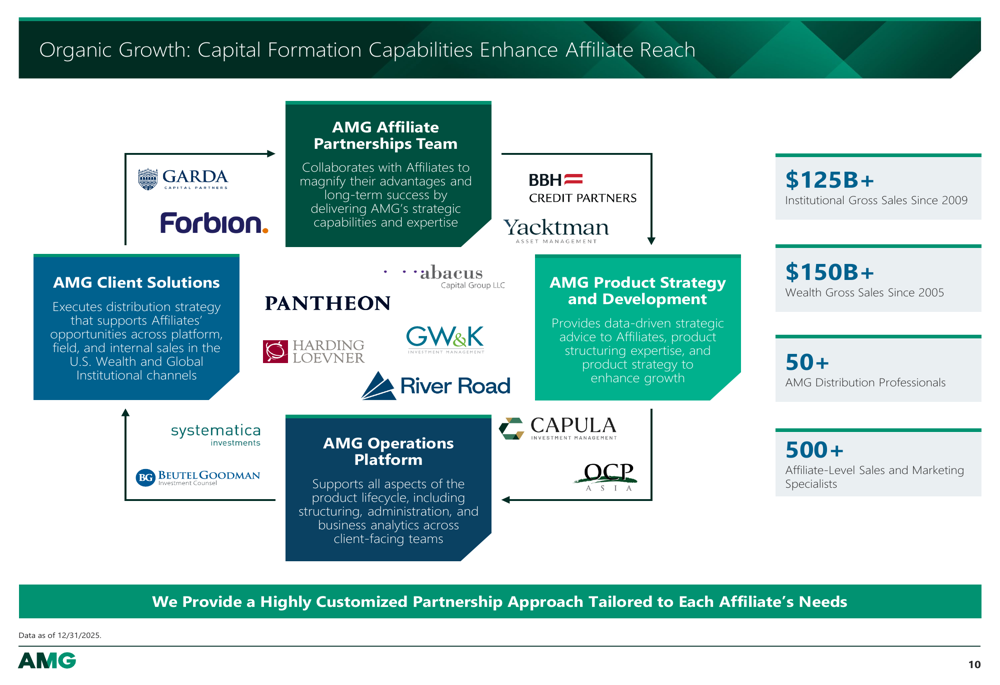
This infrastructure enables AMG to enhance affiliate reach while preserving the independence and entrepreneurial culture that drives investment performance. The partnership model offers affiliates three primary benefits: access to growth capital, partial liquidity for principals, and succession planning solutions—all while maintaining investment independence and operational autonomy.
The company’s approach to affiliate partnerships is designed to create mutual value while preserving what makes independent firms successful.
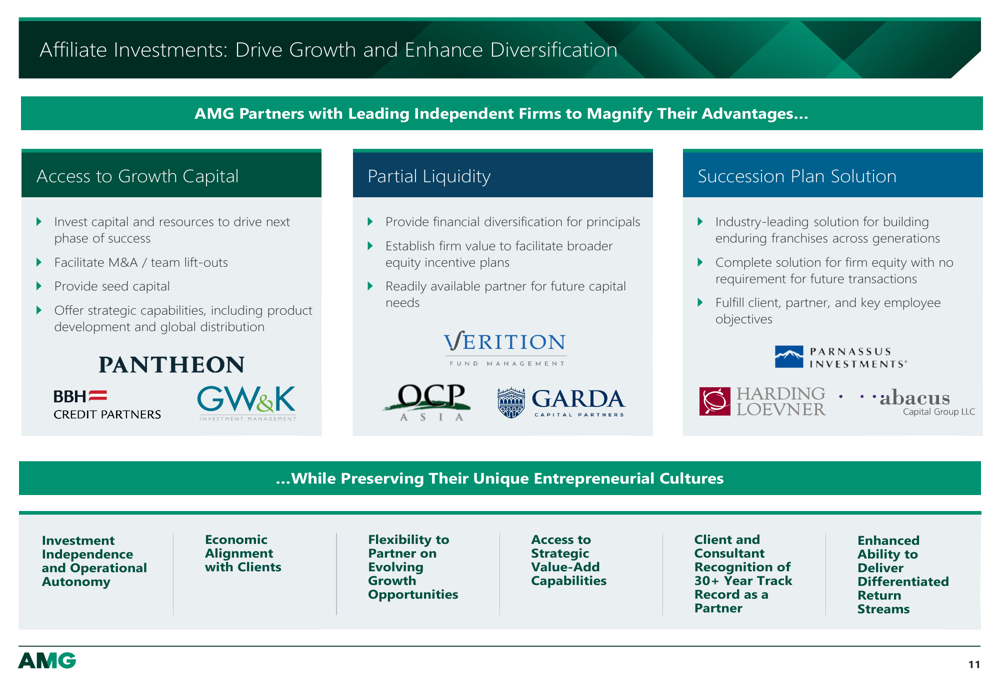
AMG’s investment criteria focus on high-quality businesses positioned for growth that desire to maintain independence. The ideal affiliate profile combines entrepreneurial culture, multi-generational leadership, strong alignment of incentives, proven track records, and products in areas of secular growth.
Capital Allocation and Shareholder Returns
AMG’s disciplined capital allocation strategy has delivered substantial shareholder value through a combination of growth investments and share repurchases. Over the past five years, the company has returned approximately $3 billion in excess capital to shareholders, repurchasing roughly 10% of shares annually at an average price of $167.
The reduction in shares outstanding has been dramatic, falling from 43 million adjusted diluted shares on March 31, 2021, to 27 million shares on March 31, 2026—a 37% decrease. This capital return program has been a significant contributor to the 58% year-over-year growth in economic earnings per share.
The company’s track record of share count reduction is illustrated in the following chart.
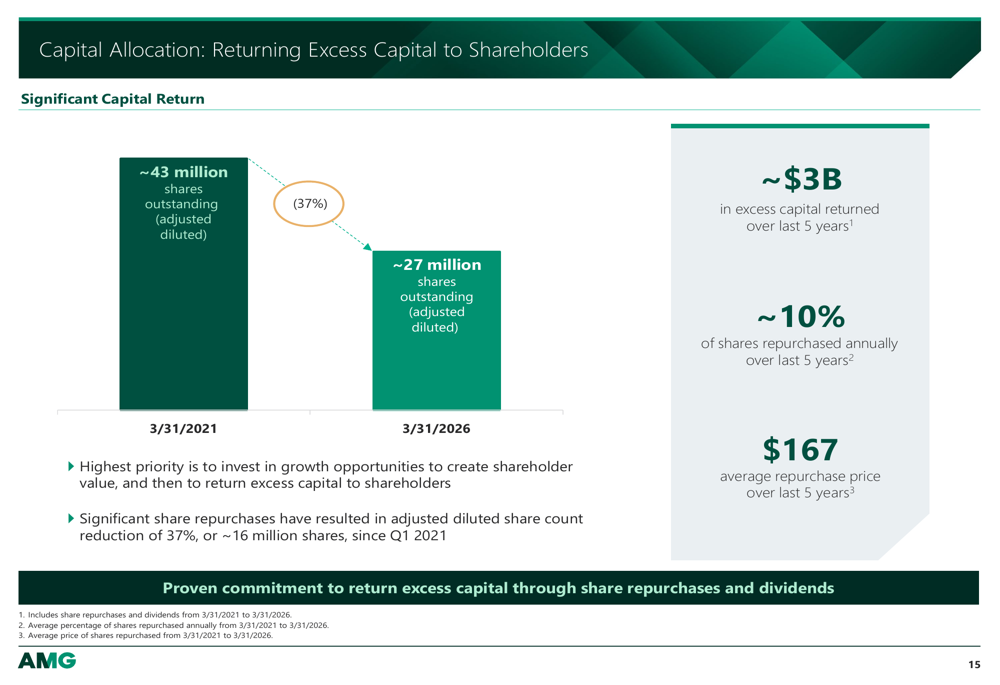
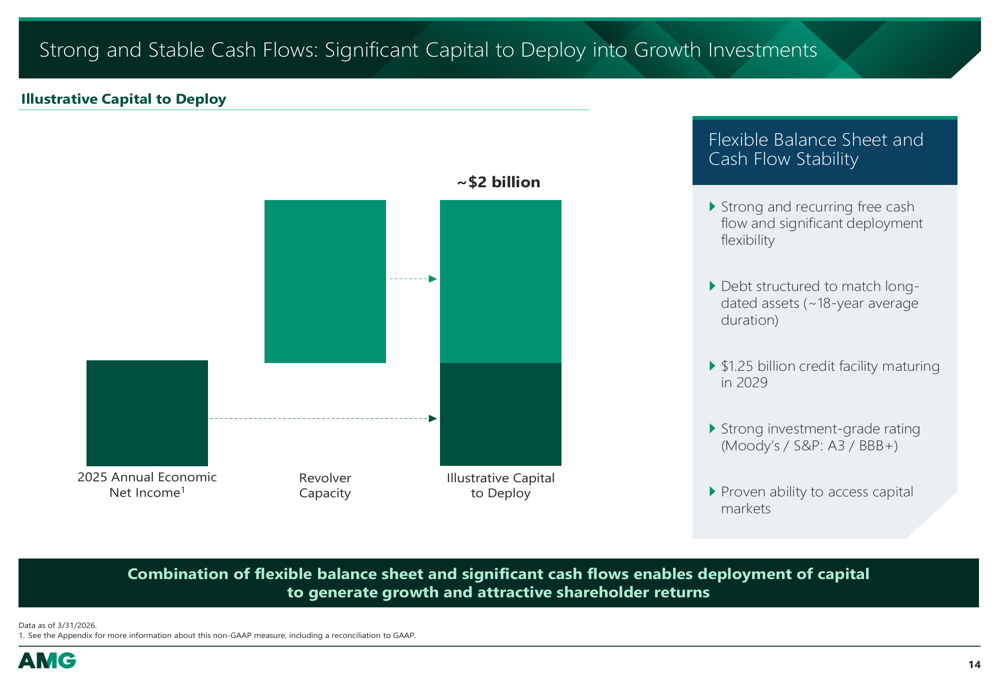
During Q1 2026 alone, AMG repurchased approximately $186 million in shares, contributing to a 10% share count reduction over the past year. The company maintains significant capacity for continued capital deployment, with approximately $2 billion in available capital comprising 2025 annual economic net income and revolver capacity.
AMG’s financial strength is supported by a flexible balance sheet featuring a $1.25 billion credit facility maturing in 2029, strong investment-grade ratings (Moody’s A3 / S&P BBB+), and debt structured to match long-dated assets with an approximately 18-year average duration.
Long-Term Growth Strategy and Outlook
AMG’s presentation outlined a comprehensive growth framework targeting mid-teens annualized long-term earnings growth through four sequential pillars: affiliate performance driven by diversified market exposures and alpha generation, organic growth fueled by net client cash flows in secular growth areas, affiliate investments to enhance earnings and organic growth, and share repurchases to return excess capital.
The strategic framework for compounding earnings growth is illustrated below.
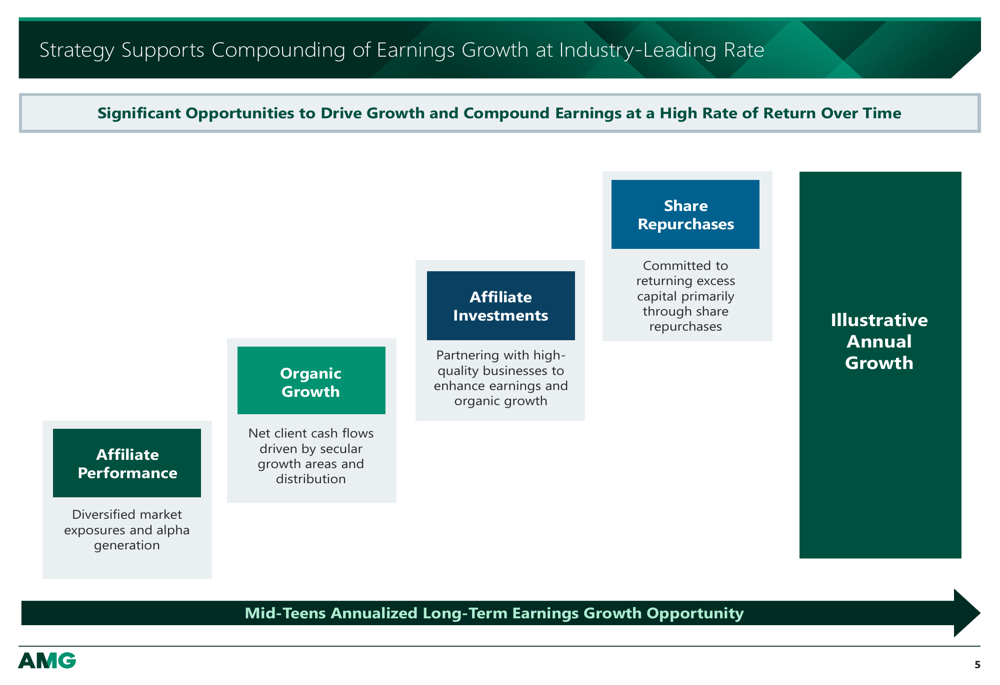
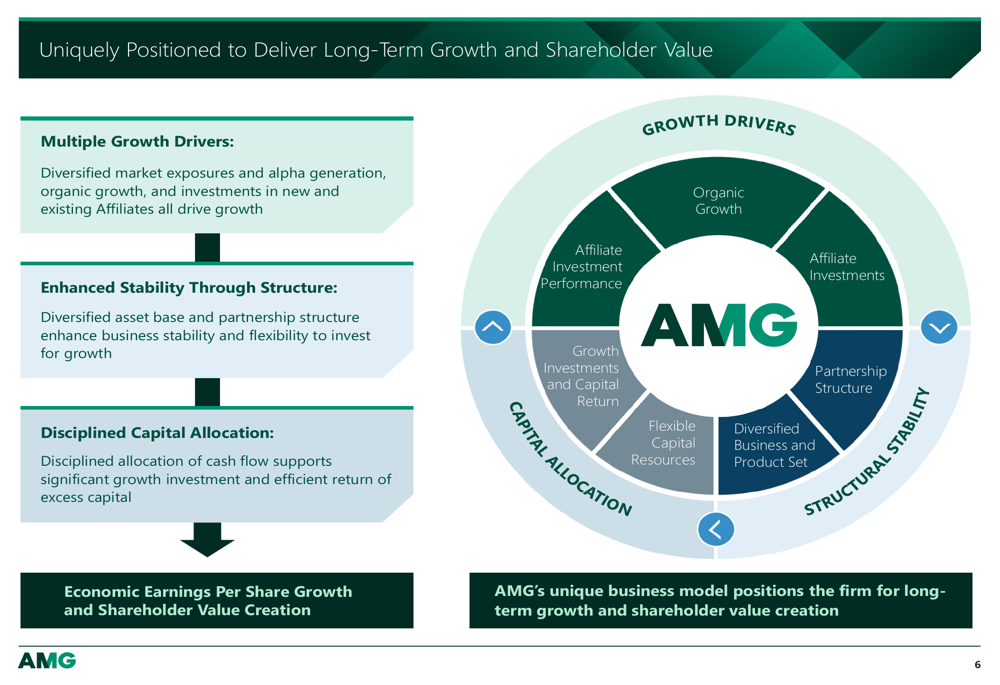
This multi-faceted approach provides what AMG describes as “multiple growth drivers” that work in concert with “enhanced stability through structure” and “disciplined capital allocation” to drive economic earnings per share growth and shareholder value creation.
The company’s track record demonstrates the effectiveness of this strategy. From 2020 to 2025, adjusted EBITDA grew from $795 million to $1,077 million (6% CAGR), while economic earnings per share increased from $13.30 to $26.05 (14% CAGR). The faster growth in per-share earnings reflects both business growth and the impact of share repurchases.
The evolution of AMG’s earnings profile over the past five years shows consistent progress.
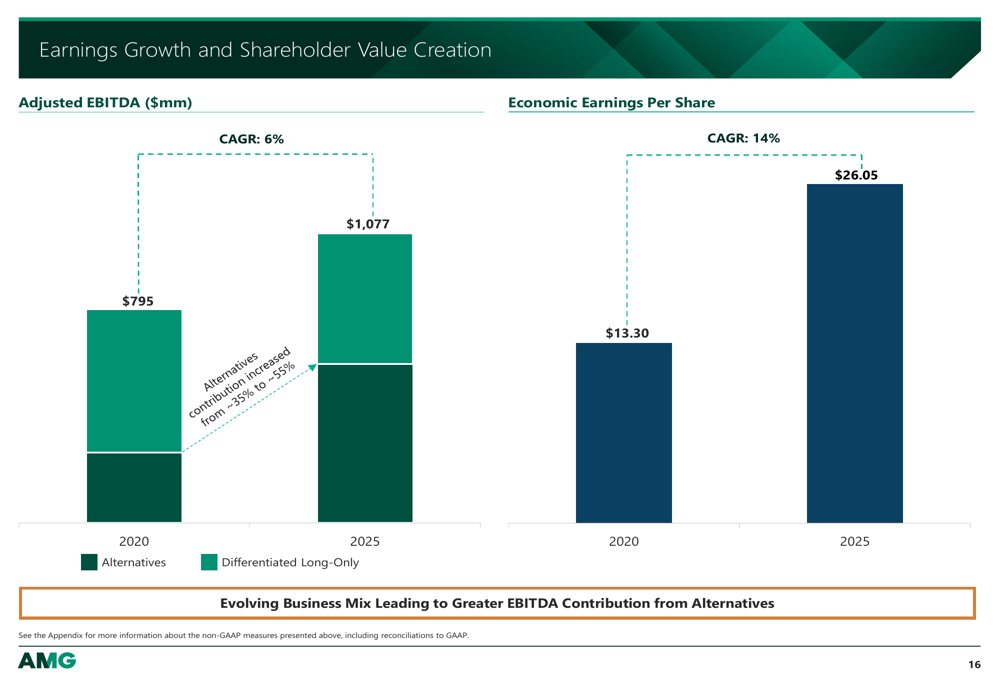
Notably, the alternatives contribution to adjusted EBITDA increased from approximately 35% to 55% during this period, reflecting the successful execution of AMG’s strategic pivot toward higher-growth asset classes.
Performance Fee Stability and Diversification
An important element of AMG’s earnings stability is its diversified base of performance fee earnings, which have averaged $172 million annually over the past five years. In 2025, performance fees totaled $161 million, with contributions from private markets, absolute return, and beta-sensitive strategies.
The company manages approximately $240 billion in AUM eligible to generate performance fees as of March 31, 2026, with 75% of this AUM in strategies with low or negative correlation to public market beta. This diversification enhances the stability and predictability of performance fee earnings across market cycles.
AMG’s track record of performance fee generation demonstrates consistency despite varying market conditions.
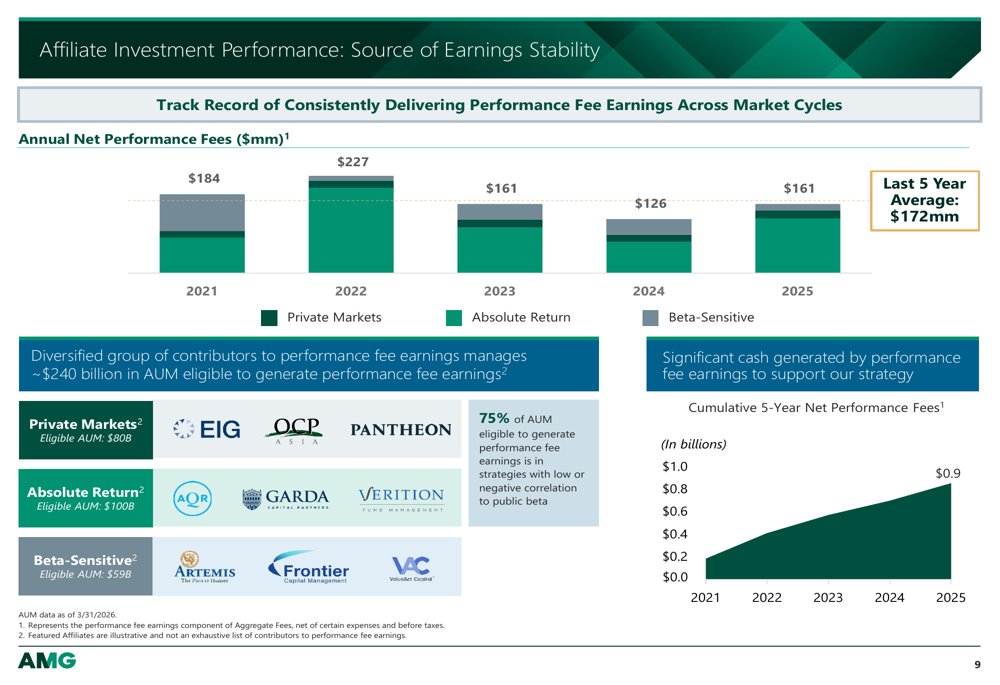
The diversified group of contributors includes leading firms across private markets ($80 billion eligible AUM), absolute return strategies ($100 billion eligible AUM), and beta-sensitive strategies ($59 billion eligible AUM), providing multiple sources of potential performance-based compensation.
Forward-Looking Positioning
Looking ahead, AMG emphasized its unique positioning to deliver long-term growth and shareholder value through the combination of its multiple growth drivers, structural stability, and disciplined capital allocation. The company expects to generate significantly higher cumulative capital over the next five years, supported by strategic investments and continued expansion in alternative strategies.
CEO Jay Horgen stated, “Our record first-quarter results reflect the strength of our diversified business model and the successful execution of our growth strategy across alternative investments.” CFO Tom Wojcik added, “We are well-positioned to capitalize on market opportunities and continue delivering value to our shareholders.”
The framework for value creation integrates organic growth, affiliate investments, and investment performance as growth drivers, supported by partnership structure and business diversification for stability, all enabled by flexible capital resources.
While AMG faces potential headwinds from market volatility and continued outflows from traditional equity strategies, the company’s strategic positioning in high-growth alternative asset classes, strong investment performance track record, and disciplined capital allocation approach provide a foundation for sustained growth. The slight revenue miss in Q1 2026 suggests potential challenges in achieving top-line growth, though the strong earnings performance demonstrates operating leverage and business quality.
With a current ratio of 3.44 indicating liquid assets comfortably exceed short-term obligations, and a 76.56% stock return over the past year, AMG has demonstrated both financial strength and market recognition of its strategic transformation. The company’s continued focus on partnering with high-quality independent firms while allocating capital to areas of highest growth and return positions it to capitalize on secular trends favoring alternative investments and independent asset management.
Full presentation:
This article was generated with the support of AI and reviewed by an editor. For more information see our T&C.