
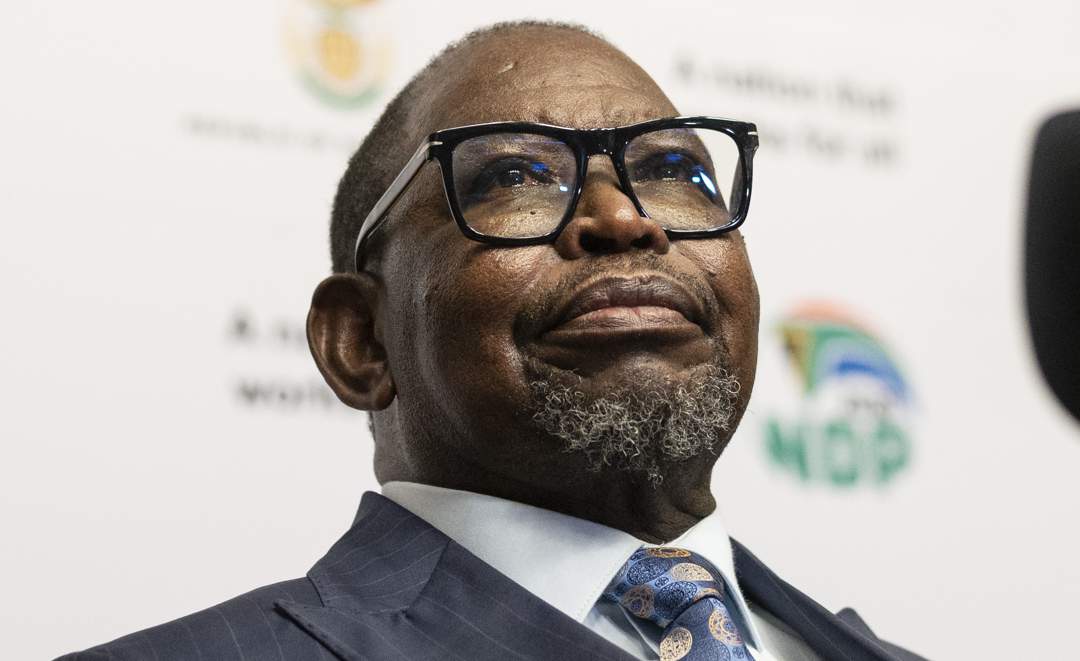
The recent intervention by the minister of finance, Enoch Godongwana, into the affairs of the City of Johannesburg should alarm every South African.
Far from being another bureaucratic disagreement between spheres of government, the National Treasury’s strongly worded communication lays bare the possibility that South Africa’s economic capital is edging dangerously close to a full-blown fiscal and governance crisis.
The issues raised are not technical footnotes buried in accounting jargon.
They go to the heart of constitutional governance, public accountability and the sustainability of municipal democracy itself.
At the centre of Treasury’s concerns is an allegation that Johannesburg has adopted and implemented an unfunded budget – a direct transgression of the Municipal Finance Management Act (MFMA).
This means that the city may have approved spending plans without realistic revenue projections or sufficient cash backing to sustain them. Put differently, the city appears to be budgeting on hope rather than financial reality.
That is not merely imprudent. It is potentially unlawful.
Municipal budgets are not political wish lists. They are legal instruments that determine how public money may be spent.
Section 18 of the MFMA is unequivocal: municipal budgets may only be funded from realistically anticipated revenue and cash-backed accumulated surpluses.
If Treasury’s assertions are accurate, then Johannesburg may already be operating outside the bounds of lawful financial management.
READ: Fake budgets, real bankruptcy: How Joburg cooked the books into crisis
The consequences of such conduct are severe. Unfunded budgets distort governance, create false expectations, conceal institutional weakness and delay the difficult but necessary decisions required to restore financial stability.
They also create fertile ground for unauthorised expenditure, irregular procurement and the erosion of public trust.
What makes this situation especially concerning is that Treasury’s intervention does not appear to be focused on a temporary cash flow challenge or isolated compliance failure.
The letter paints a picture of systemic dysfunction.
Treasury alleges that Johannesburg continues to suffer from major failures in implementing the Municipal Standard Chart of Accounts, the national framework intended to standardise municipal financial reporting and improve oversight.

The 2023/24 local government audit outcomes show that both Johannesburg and Ekurhuleni received unqualified audits with findings – meaning their financial statements were deemed credible, but material flaws were found in performance reporting and legal compliance.
According to the minister, the city remains unable to fully transact and report through a compliant financial management system.
Less than 30% of applications are reportedly integrated into the city’s enterprise resource planning system, with key sub-systems operating in fragmented silos.
This may sound abstract to ordinary residents, but its implications are profound. Weak financial systems undermine the reliability of data used to make budgetary decisions.
They impair oversight, weaken internal controls, increase vulnerability to corruption, and compromise the integrity of financial reporting itself.
When a municipality cannot confidently reconcile its own numbers, governance begins to drift into dangerous territory.
Equally alarming is the city’s reported liquidity position. Treasury notes that outstanding creditors have risen dramatically from approximately R17 billion in 2022/23 to R25.2 billion in 2024/25, while cash and cash equivalents reportedly stand at only R3.9 billion.
Those figures suggest severe financial distress.
Municipalities do not collapse overnight. Fiscal crises often unfold gradually through delayed payments to suppliers, mounting debt obligations, deteriorating infrastructure maintenance, escalating litigation, emergency procurement practices and declining service delivery.
Eventually, confidence erodes among businesses, investors, employees and residents alike.
READ: Broke and busted: Godongwana nixes Joburg’s R10.3bn wage hike and says it broke the law
The inability to pay creditors within the legally prescribed 30-day period is particularly harmful for small and medium-sized businesses that depend on municipal contracts to survive.
For many service providers, delayed municipal payments mean retrenchments, insolvency, or closure.
Yet perhaps the most explosive aspect of Treasury’s intervention relates to the city’s salary agreement with the SA Municipal Workers’ Union. The minister’s language here is unusually forceful.
Treasury effectively argues that Johannesburg committed itself to billions in salary increases despite lacking the financial capacity to sustain them.

Johannesburg deputy mayor Loyiso Masuku dances with her hands out as her vote for the adjusted budget, which she helped create when she was MMC of finance, is counted. Despite receiving the most votes, the adjusted budget did not receive a majority and did not pass.
This is where the issue moves beyond poor governance into the realm of potential legal exposure for accounting authorities and senior officials.
Public officials entrusted with public finances are not free to make politically expedient financial commitments in disregard of statutory obligations.
The MFMA imposes clear duties on accounting officers and senior managers to prevent unauthorised, irregular, fruitless and wasteful expenditure.
Failure to comply with these obligations can attract administrative sanctions, civil liability and, in certain circumstances, criminal consequences.
South Africans often underestimate how serious financial misconduct provisions within public finance legislation actually are. Reckless or deliberate disregard for statutory financial obligations is not simply a political embarrassment. It may also amount to unlawful conduct.
This is why Treasury’s intervention should not be dismissed as political grandstanding or bureaucratic heavy-handedness. National Treasury has a constitutional obligation to enforce fiscal discipline and protect the integrity of public finance management systems.
Section 216 of the Constitution empowers Treasury to stop the transfer of funds to organs of state that commit serious or persistent material breaches of financial management obligations.
The minister’s warning that Treasury may invoke section 216(2) and target Johannesburg’s equitable share allocation should therefore be understood for what it is: a signal that Treasury believes ordinary engagement has failed and that coercive constitutional mechanisms may now become necessary.
READ: Treasury threatens to cut Joburg funding over ‘illegal’ wage deal
Some may argue that Treasury’s approach is excessively harsh and risks worsening the city’s financial problems.
That concern is not entirely unfounded. Withholding transfers can deepen operational strain and ultimately affect residents rather than political decision-makers.
However, there is an equally important danger in allowing chronic financial mismanagement to continue unchecked.
The normalisation of unfunded budgets, weak oversight, unreliable financial reporting, and fiscally reckless commitments corrodes the foundations of democratic governance itself.
Johannesburg is not just another municipality. It is South Africa’s economic engine. Its financial instability carries implications for national growth, investor confidence, infrastructure development, employment and broader economic stability.
The city, therefore, requires more than political spin or temporary public relations exercises. It requires radical honesty about its financial position, competent administration, lawful governance and immediate corrective action grounded in fiscal reality rather than political convenience.
The time for denial has passed.
Treasury’s intervention should serve as a national wake-up call about the consequences of governance that becomes detached from economic reality. South Africa cannot build capable municipalities on unsustainable promises, manipulated numbers, and perpetual financial deferral.
Eventually, fiscal reality always arrives.
- Khaas is the founder and chairperson of Public Interest SA.