
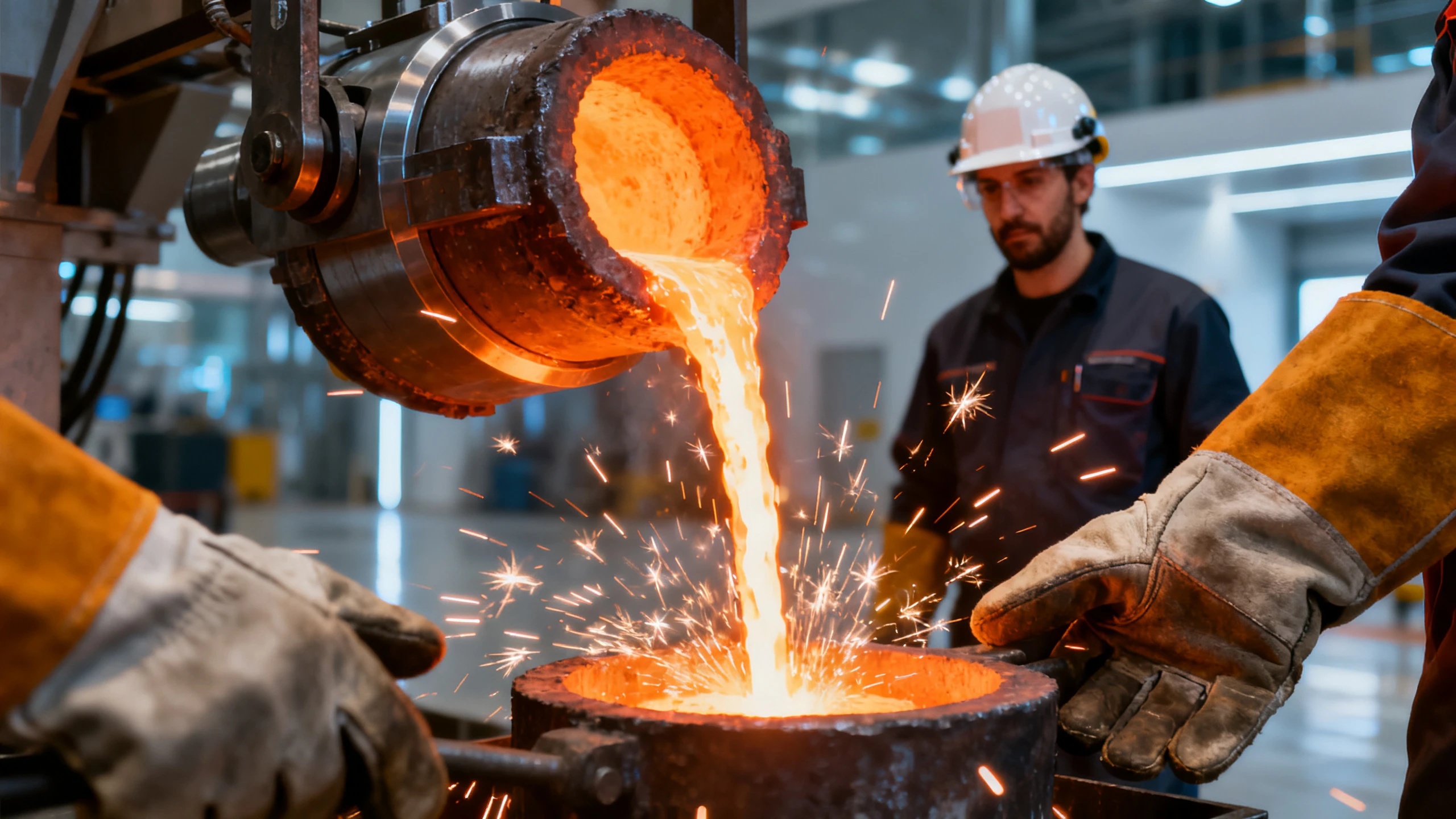
The first experiment that could change Europe’s approach to electronic waste has been completed in Madrid. Researchers from the National Metallurgical Research Center (CENIM-CSIC) have, for the first time, obtained gold, copper, silver, and platinum from old mobile phones and computers using a unique smelting technology.
The key to success is a vertical furnace with a submerged burner, capable of processing complex waste mixtures. Unlike traditional methods, where heat is applied from the outside, here the energy is directed straight to the core of the mass. This accelerates chemical reactions, reduces energy consumption, and makes it possible to work with heterogeneous materials, which is especially important for modern electronics.
During the experiment, the waste was heated to temperatures above 1200 degrees. Fuel and oxygen were supplied directly into the melt, creating intense turbulence. As Félix Antonio López, lead researcher at CENIM-CSIC, explains, this approach ensures more complete and rapid separation of components. Heavy metals—copper, gold, silver, and platinum—settle at the bottom of the reactor, while non-metallic impurities remain on the surface.
Industrial significance
The project is being implemented with the support of the Spanish Ministry of Science, Innovation, and Universities. The work involves not only scientists but also major industrial partners—Atlantic Copper and Glencore Technology. This allows scientific solutions to be tested immediately in conditions close to real production.
According to Talent24h, Europe loses a significant portion of valuable metals every year by sending electronic waste outside the continent or failing to recycle it properly. This new approach offers a chance to return these resources to the economy and reduce dependence on imports, which is especially relevant amid the global shortage of strategic materials.
Technology and prospects
The Spanish development stands out not only for its efficiency but also for its environmental friendliness: the process requires less energy and minimizes harmful emissions. According to Félix Antonio López, the technology allows for the recycling of waste types previously considered too difficult for industrial processing.
Experimental smelting has already confirmed the viability of the method. The next challenge is to scale up the technology and implement it at large enterprises. If successful, Spain could become one of the leaders of Europe’s ‘urban mining’—a field where waste becomes a source of new resources.
For reference: according to the European Commission, electronic waste is one of the fastest-growing types of waste in the world. It contains dozens of types of metals, including rare earth and precious metals, which are increasingly difficult to extract by traditional means. That is why developing recycling technologies is becoming a strategic issue for European industry and environmental policy.