
The anonymous donor, who signed notes as “James, servant of the living God”, has become the subject of widespread interest after a number of churches uncovered donations of gold Britannia coins worth tens of thousands of pounds.
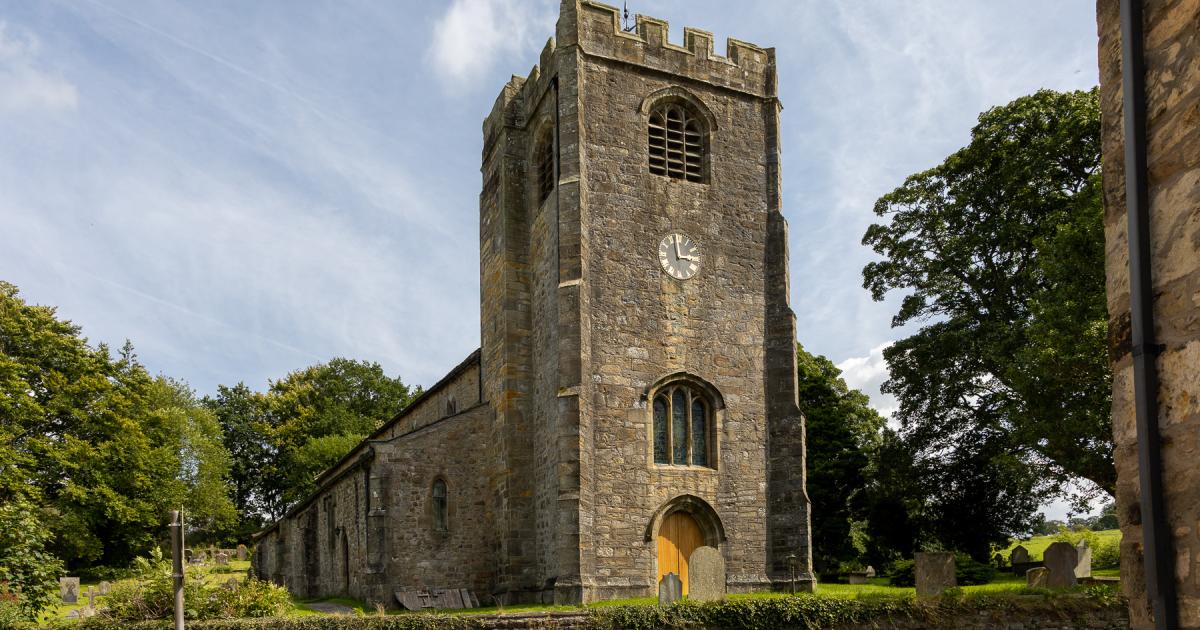
Earlier this week it emerged that St Wilfrid’s Church in Melling, near Carnforth, had discovered nine gold coins hidden beneath its altar.

The coins were later sold for almost £30,000, providing a financial boost for the church as it seeks to raise £750,000 for urgent repairs.
Now, fresh details reported by The Times have shed light on the mystery donor’s identity and motives.
The newspaper reports that the benefactor was a leather-clad biker who chose churches and community buildings located along some of his favourite riding routes through Lancashire, many of them close to the A683.
One of the recipients was Quernmore Church of England Primary School near Lancaster, which received 10 gold coins.
Headteacher Fiona Richardson told The Times that the donation had a transformative effect on the school, allowing it to purchase interactive whiteboards that would otherwise have been beyond its budget.
She also revealed that the donor had spoken briefly to a member of staff when delivering the gift.
Richardson said the man described himself as a biker who enjoyed riding through the area and had been impressed by the setting of both the school and neighbouring St Peter’s Church.
The school was not the only beneficiary in Quernmore.
According to the report, St Peter’s Church also received three gold coins, which were discovered beneath a back door in 2022.
Other churches believed to have benefited include St Margaret’s in Hornby, where five gold coins were reportedly found in a donation box, and St Thomas’s Church in Garstang, which recorded the receipt of three gold coins.
Churches in Kirkby Lonsdale, Casterton, Tunstall, and Brookhouse are also said to have received gifts of gold or silver coins.
Retired teacher Rachel Stevenson, who accepted coins on behalf of Quernmore Primary School, described the donor as “very shy and unassuming” despite the value of the gift.
She said: “He said he enjoyed riding around these country roads, which are wonderful and very popular with motorcyclists.”
According to Stevenson, the donor explained that he had decided to pass on the coins because he no longer needed them and wanted them to do some good.
Despite efforts to identify him, his true identity remains unknown.
Those who met him said he was determined to remain anonymous and did not seek recognition for his generosity.
His donations have arrived at a crucial time for many churches facing significant repair bills and rising costs, with several congregations describing the gifts as a major boost to fundraising efforts.
For St Wilfrid’s in Melling, where the discovery of nine gold coins provided a £30,000 windfall, the donation has already helped renew hopes that the historic church can remain open for future generations.