
The move faces a real uphill battle disrupting the deep trading ecosystem overnight
Published Sat, May 23, 2026 · 01:25 PM
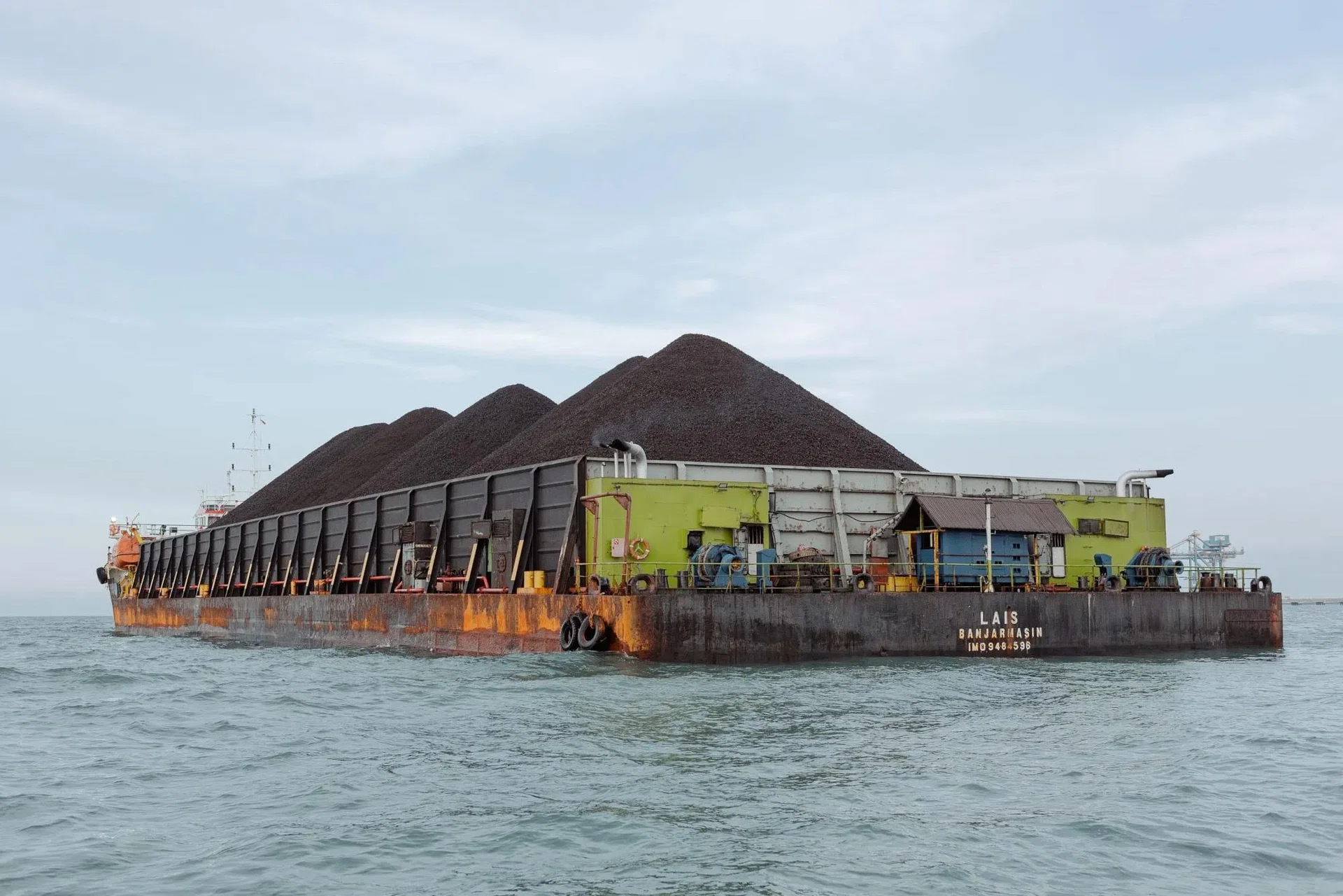
[JAKARTA] For years, Indonesia’s raw materials have been ferried from remote mines and plantations to global markets by armies of traders who handle negotiations, loans and even cranes and river barges.
Now the government is taking over, hoping to save billions of US dollars it says are otherwise lost in transit.
Under the surprise plan, the country will take control of exports of the country’s major commodities. It is a sweeping move reminiscent of the country’s authoritarian past – radical even for President Prabowo Subianto, a former general who has sought to harness the country’s raw materials and centralise economic management since he took power in 2024.
The policy, Prabowo said this week, is intended to eventually increase transparency and curb tax evasion. In the short term, it has rattled already nervous investors, and left traders, producers and even some government officials scrambling to understand how it can even begin to be implemented.
Only the broad strokes of the plan have so far been made public, including a decision to begin with coal and palm oil, two commodities in which Indonesia has unparallelled clout as a top exporter. Details are yet to be decided. What is already evident, according to many of those involved, is that the mission is daunting.
Commodity producers spread across the Indonesian archipelago connect with foreign buyers through a network of hundreds of agents, traders and trading houses, from multinational giants like Trafigura Group to small, local firms. The links – financial, personal and logistical – have been forged over decades, and will have to be replicated in just months.
Navigate Asia in
a new global order
Get the insights delivered to your inbox.
“It’s going to be a real uphill battle,” said Kevin O’Rourke, political analyst and principal at Jakarta-based consultancy Reformasi Information Services. “There is a whole ecosystem of human relations. It’s not something that can be subjected to this type of disruptive action on such a short time scale.”
The new entity, Danantara Sumberdaya Indonesia, will sit under sovereign wealth fund Danantara – an outfit that was itself set up just over a year ago and reports to Prabowo.
Pandu Sjahrir, Danantara’s chief investment officer, has sought to reassure investors that it will be market-friendly. It will be an operator not a regulator, he said on Friday (May 22), staffed with the best talent recruited from the industry, and meeting high governance standards. Its new CEO will be a former director of Vale Indonesia.
Prabowo has been more blunt. Indonesia, as leading producer, should have more control over the price at which it sells its raw materials, he said in his address to lawmakers on Wednesday, and cannot afford to leak an annual sum he estimates at US$150 billion.
Indonesia’s natural resources industry is perilous even for the most experienced and deep-pocketed firms. Asset and company ownership is frequently opaque, the government has battled corruption for years and – as the past week has demonstrated – policy changes can be abrupt and unexpected. Over the years, multinational miners have largely abandoned the country, leaving local firms to take over prized assets.
That’s left room for commodity traders, whose more nimble business model has allowed them to buy and sell raw materials while, in many cases, avoiding the entanglement of owning assets.
In coal, their most crucial contribution is credit. Traders draw from international banks and finance small miners, who in turn promise discounted coal to be delivered at a later date. Those are crucial funds for companies that may struggle to find affordable credit lines – and it is unclear how the new Danantara system can replace that.
Not all coal producers need traders to supply funds. The top six miners in Indonesia, including Bayan Resources and Adaro Andalan Indonesia, have ample access to credit and account for about half of the 600 million tonnes of annual supply. But the remainder is split between scores of smaller firms, many of whom produce less than a million tonnes a year and are in need of cash.
Those small mines make Indonesia the world’s top thermal coal exporter. And most of that coal goes to China, where Prabowo’s attempts to exert control have already irked buyers.
Several major Chinese trading firms – whose prominence in Indonesia has grown in recent years, along with Chinese investors like nickel heavyweight Xiang Guangda of Tsingshan Holding Group – fear that their long-term contracts could face disruption and heftier costs once Danantara’s new trading entity begins operations, according to three traders familiar with the matter. They asked not to be named as the matter is sensitive.
Some coal and palm oil contracts extend through 2027. Renewing these contracts will almost certainly mean dealing with different interlocutors and meeting new requirements, though they could also gain access to additional mining assets, they added.
Then there are the practical challenges of building an Indonesian version of Glencore in a matter of months, and the question of state meddling in its dealings.
The new entity will handle exports that total some US$65 billion a year, requiring vast working capital, connections and manpower. Executives for Danantara have already sought advice from other commodity traders on how to manage the project, according to people familiar with the matter. They asked not to be named as the requests were not public.
In the palm sector, long-fragmented supply chains connect smallholder farmers to agents to merchants to global food giants – a business dominated by large conglomerates like Wilmar International and Musim Mas Holdings .
The prospect of disruption is already impacting the market. Bidders have pulled back from Indonesian tenders on fears the restrictions may slow shipments and swell stockpiles.
“It’s definitely going to be a bumpy road for everyone,” said Putra Adhiguna, managing director at the Australia-based Energy Shift Institute. “The government included.” BLOOMBERG
Decoding Asia newsletter: your guide to navigating Asia in a new global order. Sign up here to get Decoding Asia newsletter. Delivered to your inbox. Free.