
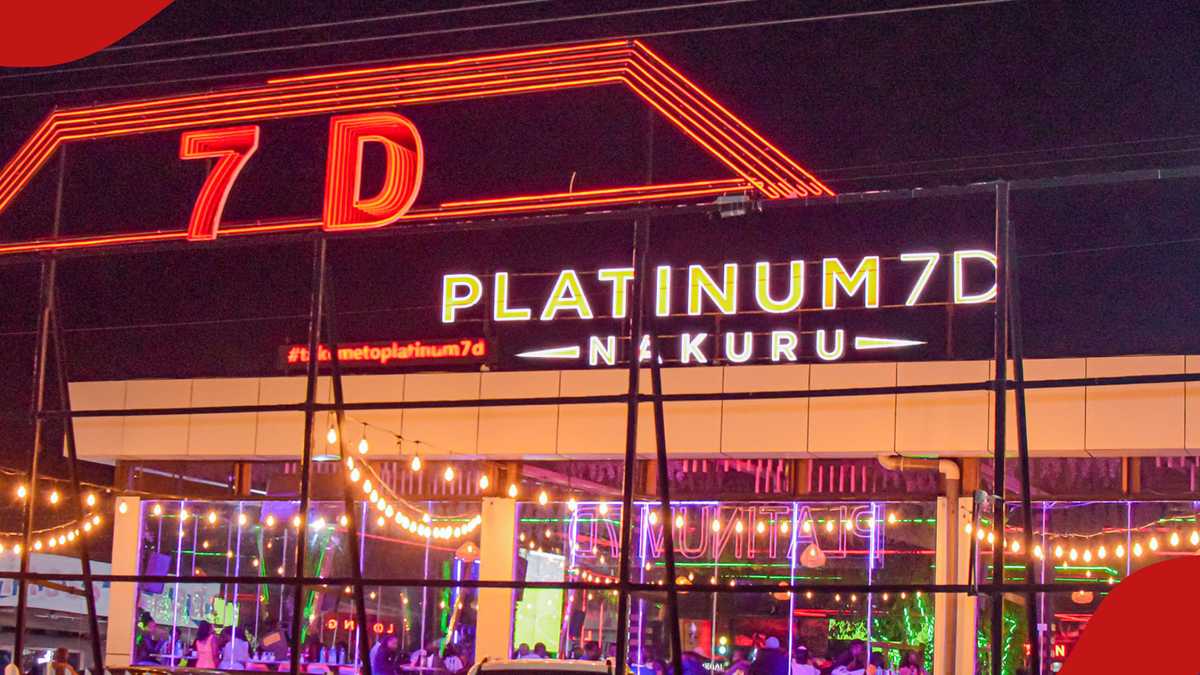
After fourteen years as the undisputed epicenter of Nakuru’s vibrant nightlife, the iconic Platinum 7D nightclub has permanently closed its doors. The celebrated establishment, long considered the heartbeat of the Rift Valley city’s leisure economy, succumbed to a toxic cocktail of suffocating economic conditions and an aggressive new taxation regime.
The sudden shuttering of the popular entertainment joint sends a chilling signal through Kenya’s entire hospitality sector. In an emotional final dispatch to its loyal clientele, the club’s management explicitly cited an unsustainable business environment, characterized by skyrocketing operational costs and punitive state levies. The closure marks the end of an era, leaving dozens of employees destitute and stripping Nakuru of a major cultural landmark.
The End of an Era
Platinum 7D was not merely a bar; it was an institution. Located on the bustling outskirts of the city, the club earned the moniker of Nakuru’s “party central.” It featured meticulously zoned clubhouses, exclusive VIP enclaves, and expansive dance floors that captured the electric energy of local revellers and visiting tourists alike. Its longevity in an notoriously volatile industry was a testament to its supreme management and deep connection with the community.
The closure comes as a brutal shock, arriving just days after the establishment celebrated its 14th anniversary in spectacular fashion. The abrupt transition from celebration to liquidation underscores the fragility of businesses operating in Kenya’s current economic climate, where profit margins are razor-thin and regulatory environments are deeply hostile.
- The club operated successfully for 14 continuous years before financial pressures forced the shutdown.
- Dozens of direct employees, including mixologists, security personnel, and waitstaff, have lost their livelihoods.
- The closure aligns with a broader national trend of major entertainment joints collapsing under the weight of excessive taxation.
Taxation Strangulation
The demise of Platinum 7D highlights the devastating impact of recent fiscal policies targeting the hospitality and entertainment sectors. Over the past two years, the government has systematically increased excise duties on alcoholic beverages, hiked licensing fees, and introduced complex digital taxation requirements. For high-volume establishments like Platinum 7D, these aggressive levies have obliterated profitability.
Economists tracking the sector warn that the government is essentially killing the goose that lays the golden egg. By squeezing entertainment venues with exorbitant taxes, the state is actively destroying businesses that generate substantial employment and stimulate localized economies. The management of Platinum 7D noted that passing the escalating costs onto consumers was no longer viable, as inflation had already decimated the disposable income of their target demographic.
Ripple Effects in the Local Economy
The economic fallout from Platinum 7D’s closure extends far beyond its immediate staff. The nightlife ecosystem is deeply interconnected. Local taxi drivers, late-night food vendors, specialized beverage distributors, and security firms all relied heavily on the massive foot traffic generated by the club. The silencing of the music at Platinum 7D translates directly into empty pockets for hundreds of informal workers operating in its shadow.
The Nakuru business community is raising urgent alarms over the systematic hollowing out of the city’s commercial vibrancy. As more flagship businesses buckle under economic strain, the city risks losing its appeal as a premier destination for domestic tourism and weekend getaways, threatening the broader economic revival of the Rift Valley region.
A Sector Under Siege
The tragedy of Platinum 7D is not an isolated incident; it is a glaring symptom of a sector under siege. Across Nairobi, Mombasa, and Kisumu, legendary nightclubs and restaurants are quietly shutting down, unable to weather the relentless storm of economic stagnation and predatory taxation. The hospitality industry, once a robust pillar of the Kenyan economy, is bleeding out.
If the government fails to urgently rethink its fiscal approach and provide tangible relief to the entertainment sector, the closure of Platinum 7D will merely be the prologue to a catastrophic wave of bankruptcies. The lights have gone out in Nakuru, and without immediate policy intervention, the rest of the country’s nightlife will soon follow into the dark.