
New export governance scheme targets under-invoicing, foreign exchange leakages, and centralized commodity oversight.
Indonesian President Prabowo Subianto has officially announced the establishment of a new state export agency under the sovereign entity PT Danantara Sumberdaya Indonesia (DSI) to oversee the overseas sales of Indonesia’s strategic natural resource commodities, marking one of the most significant shifts in the country’s export governance policy in decades.
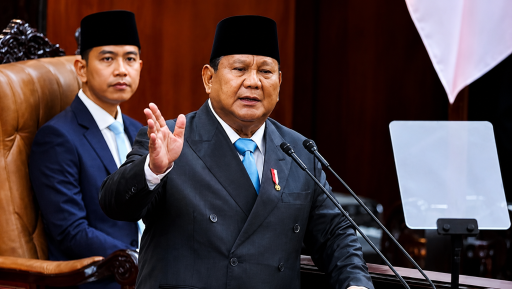
Speaking during a plenary session at the House of Representatives (DPR) on Wednesday, May 20, 2026, Prabowo said his administration had issued a government regulation on the governance of natural resource exports as part of broader efforts to strengthen state control over commodity trade, improve export transparency, and optimize state revenue collection.
“To achieve our national goals, the government that I lead has issued a government regulation on the governance of natural resource exports. The issuance of this regulation is a strategic step to strengthen the governance of our natural resource commodity exports,” Prabowo said.
Under the new policy, exports of strategic commodities such as crude palm oil (CPO), coal, and ferro alloy products will gradually be integrated into a centralized export governance system coordinated through PT Danantara Sumberdaya Indonesia (DSI), a specialized state enterprise established under Indonesia’s sovereign investment structure.
“All sales of Indonesia’s natural resource products, ranging from palm oil, coal, and ferro alloys, must be conducted through a state-owned enterprise appointed by the Government of the Republic of Indonesia as the sole exporter,” Prabowo stated.
The government said the new mechanism is intended to function as a centralized “marketing facility” designed to improve supervision and monitoring of export transactions, particularly to combat practices such as under-invoicing, transfer pricing, and the outflow of export foreign exchange earnings.
“This policy will optimize tax revenue and state revenue from the management of our natural resources. With this policy, we hope our revenue can be like Mexico, the Philippines, and our neighboring countries,” Prabowo said.
“We do not want our revenue to remain the lowest simply because we are not brave enough to manage what belongs to us, what belongs to our nation,” he added.
Strategic commodities placed under centralized export control
The regulation initially covers strategic commodities including coal and palm oil, while allowing the government to expand the list to other commodities through future inter-ministerial coordination mechanisms.
Under the framework, exporters will gradually transition into the centralized system through a two-phase implementation process announced by cabinet officials.
Phase 1: Transition and reporting period (June–December 2026)
During the first phase, exporters will still be allowed to use their existing international buyer networks, commercial arrangements, and export channels. However, companies will be required to submit export contract metrics, transaction data, and trading information to DSI as part of a centralized reporting and monitoring system.
The government described this period as a transition stage aimed at allowing industries to adapt operationally while authorities build the centralized digital infrastructure and oversight mechanisms.
Phase 2: Mandatory centralized platform (Starting January 2027)
Beginning in January 2027, all exports of covered strategic commodities will be required to pass through a centralized digital trading platform managed under the DSI framework.
The government said the platform is intended to strengthen transparency in export pricing and volumes, improve monitoring of export proceeds, and consolidate Indonesia’s bargaining position in international commodity markets.
Supervision and regulatory oversight will remain under the authority of relevant ministries and state agencies in accordance with prevailing laws and regulations.
Industry groups warn of market disruption risks
The policy has sparked concerns among industry players, particularly in the palm oil sector.
The Indonesian Palm Oil Association (GAPKI) warned that the creation of a centralized export body could disrupt existing trade networks and potentially reduce export volumes if implemented without sufficient preparation.
Eddy Martono, chairman of GAPKI, said the industry had not yet received full technical clarification from the government and cautioned against policies that could interfere with established export ecosystems.
“Because exporters already have their own respective markets, we hope this policy will not instead cause our exports to decline,” Eddy said, as cited by Katadata, on Wednesday.
According to him, the core issue extends beyond export margins and includes whether the new institution would be capable of managing export markets built over many years by individual exporters.
Eddy noted that exporters currently maintain their own buyer networks, trade contracts, and destination markets developed through long-term business relationships. He questioned whether a newly established centralized agency could immediately obtain comparable market access.
“If this is true, the agency must first understand the export markets that have already been operating in the national palm oil industry,” he said.
GAPKI also raised concerns regarding the future of independent trading companies that operate without owning plantations or processing facilities.
“How will their fate be if exports can only go through the agency?” Eddy asked.
The association argued that commodity traders have played an important role in expanding market access and maintaining flexibility in Indonesia’s international palm oil trade.
Broader strategic and market implications
The government has framed the policy as a major effort to address under-invoicing in exports, a practice in which exporters report commodity prices below their actual transaction value.
Authorities argue the issue has contributed to lost tax and royalty revenues, suboptimal repatriation of export earnings into the domestic economy, and weak monitoring of national trade flows.
However, market observers believe the initiative could carry implications far beyond tax enforcement and export supervision.
Analysts say the establishment of DSI could become an early step toward strengthening Indonesia’s control over export foreign exchange earnings, increasing the country’s bargaining power in global commodity trade, and creating a centralized national commodity trading platform capable of generating recurring income streams from export activities.
The model has drawn comparisons to state commodity trading houses used in several countries, while some observers also see similarities with selective forms of commodity coordination frameworks associated with producer alliances.
Economists note that the placement of the export mechanism under the Danantara sovereign structure significantly expands its long-term strategic potential. In such a scenario, DSI could evolve not only into an export supervision agency, but also into a strategic national commodity platform with access to recurring margins generated from Indonesia’s commodity trade flows.
Supporters of the policy argue the mechanism could strengthen control over export foreign exchange earnings, improve transparency in export prices and volumes, optimize state revenues, support rupiah stability and the current account balance, and enhance Indonesia’s leverage in international commodity markets.
At the same time, industry participants have warned of possible unintended consequences. Exporters fear profit margins could come under pressure, companies may lose pricing flexibility, and international trade operations could become less efficient if additional bureaucratic layers are introduced.
Analysts say the coal and crude palm oil (CPO) sectors are likely to become the most sensitive industries as the government moves toward a fully centralized and mandatory export structure beginning in 2027.
Investors are also expected to closely monitor future details surrounding pricing mechanisms, governance structures, operational spreads or margins collected by DSI, and the technical implementation of the centralized digital trading platform.