
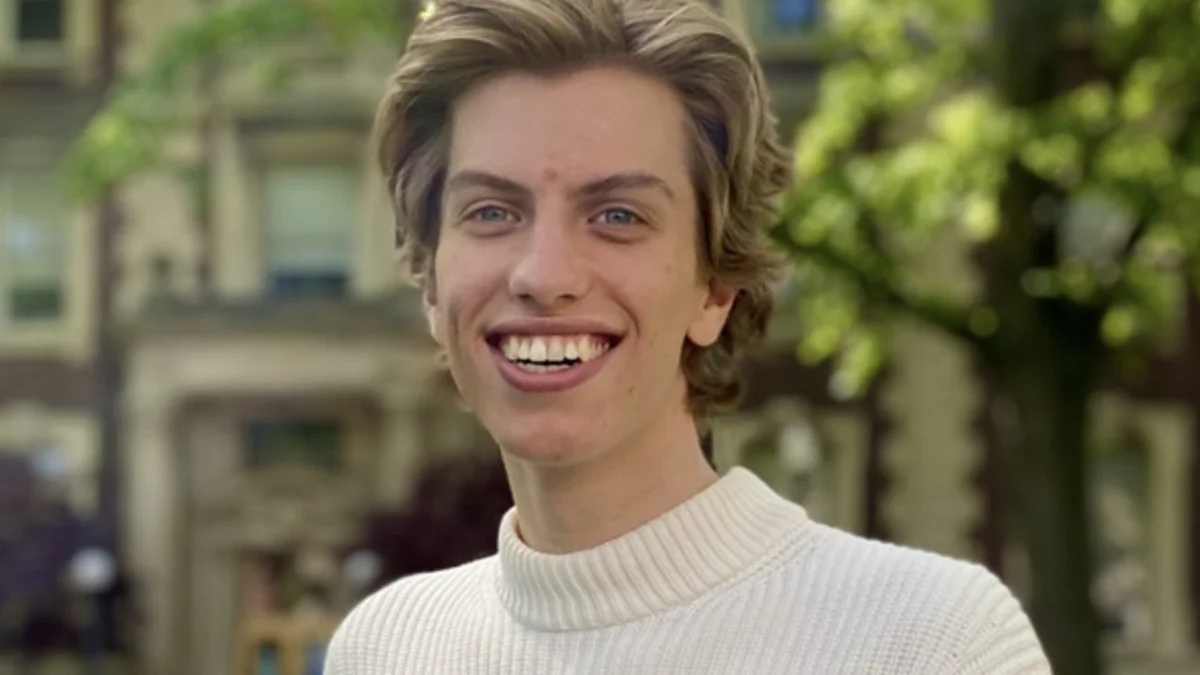
The last time the Wall Street Journal wrote about Leopold Aschenbrenner, it was August 2025 and he was 23 years-old. Aschenbrenner had no professional investing experience and yet he had raised $1.5bn from investors to commit to stocks benefiting from AI technology. 10 months later, Aschenbrenner is aged 24 and his assets under management are $20bn.
💥Follow us on WhatsApp for news alerts.💥
Aschenbrenner’s fund is now comparable in size to Dan Loeb’s Third Point. It is the same size as Rokos Capital Management. But Loeb and Chris Rokos have been managing money for over 30 years. Aschenbrenner has been managing money for two.
In those two years, the WSJ says Aschenbrenner has generated returns of more than 1,000%, after fees. Year to date 2026, his returns are 270%. Jane Street has invested money with him. Niki Webster, a former Goldman Sachs managing director, works for him. So does Sven Khatri, another Goldman MD, who spent four years at Citadel.
If you want to understand what makes Aschenbrenner special, you need to read his 165 page essay titled “Situational Awareness”, published in 2024. Here, Aschenbrenner, who is German but who graduated in mathematics, statistics and economics from Columbia University aged only 19, and who worked for OpenAI for a year, details his belief in “orders of magnitude” or OOMs. One OOM is a 10X order of magnitude. In 2024, Aschenbrenner said the OOMs relating to AI were going exponential. “The numbers indicate we should expect another ~100,000x effective compute scaleup—resulting in another GPT-2-to-GPT-4-sized qualitative jump—over four years,” he declared in 2024. Given Ken Griffin’s recent observation that AI has suddenly become “profoundly more powerful than it was just nine months ago,” Aschenbrenner’s observations look prescient.
His returns speak for themselves. Holdings for Aschenbrenner’s hedge fund, which he has also called Situational Awareness, are visible here and include NVIDIA, energy firms, and semiconductors. The WSJ notes that Aschenbrenner first invested in Anthropic when it was worth $61.bn; now it’s worth $965bn.
The most recently filed ADV form for Situational Awareness shows that Aschenbrenner employs eight people at the fund. Only four of them are in investment roles. The chances of finding yourself in a job interview with Aschenbrenner are miniscule. If you do, never say you watch Netflix. Aschenbrenner advocates TV temperance. “Too many great minds spend their time watching TV rather than thinking and inventing and creating,” he wrote in 2020.
Separately, 116,000 students want to work for electronic trading firm Citadel Securities, but it only employs 350 interns a year. That’s an acceptance rate of 0.3%, down from 0.4% in 2025 and 0.9% in the gentle days of 2022.
How do you get in? Your guess is as good as ours. Citadel Securities’ recruiters are saying generic things like STEM degrees help, as do soft skills, as does being a person who challenges themselves. We suggest that Netflix atrophy is probably unwise if you want to work here, too.
Meanwhile…
Point72 hired Ricky Nardis from Marshall Wace to find ways of collecting trading intelligence from other hedge funds. (Bloomberg)
JPMorgan hired Tahir Zafar, who was Nomura’s Singapore-based international head of AI strategy. (Bloomberg)
Schonfeld is suing Millennium portfolio manager Adam Grunfeld for $11m after Grunfeld didn’t come and work there after all. Grunfeld is asking for the case to be thrown out and says he didn’t even receive the signing bonus. (Bloomberg)
Sam Bankman Fried wants a presidential pardon but Trump said in January that he has no intention of this. (Bloomberg)
The SpaceX IPO is heavily oversubscribed but the order book will close today after the market closes. (Bloomberg)
Around $1tn of SpaceX’s IPO is based on the presumption that it can reach Mars with reusable rockets, put data centres into orbit and play a key role in developing AI. “There has never been a company with a bigger moat . . . You literally have to build rockets and figure out how to put them into space and then make them reusable to come anywhere close.” (Financial Times)
Now Open AI wants to go public too. It has also filed confidentially so there’s no prospectus yet. (WSJ)
Trump wanted to add a $100,000 fee to H-1B visa applications which previously cost $215 for registrants and $780 for employers. A federal judge ruled that this is unlawful. The Department of Justice is expected to appeal. (Financial Times)
Ana Botin, chief executive of Santander, says it makes no sense to tax banks heavily in the UK. “The question is, why single out the banks in particular and impose additional taxes? We already pay a corporate tax rate of around 30 per cent, our profit margins are nowhere near those of monopolistic players, and we’re not reaping windfall profits.” (Financial Times)
KPMG stopped giving people Friday afternoons off. (Telegraph)
Follow me on X. Follow me on LinkedIn.
Have a confidential story, tip, or comment you’d like to share? Contact: +44 7537 182250 (SMS, Whatsapp or voicemail). Telegram: @SarahButcher. Signal: sarahbutcher.22 Click here to fill in our anonymous form, or email editortips@efinancialcareers.com.
Bear with us if you leave a comment at the bottom of this article: comments are moderated intermittently by human beings. Sometimes these humans might be asleep, or away from their desks, so it may take a while for your comment to appear. You must take sole responsibility for comments you post on this site. We will take reasonable steps to weed out anything that we consider to be offensive or inappropriate.