

Average rent change among those tenants who saw their rent change 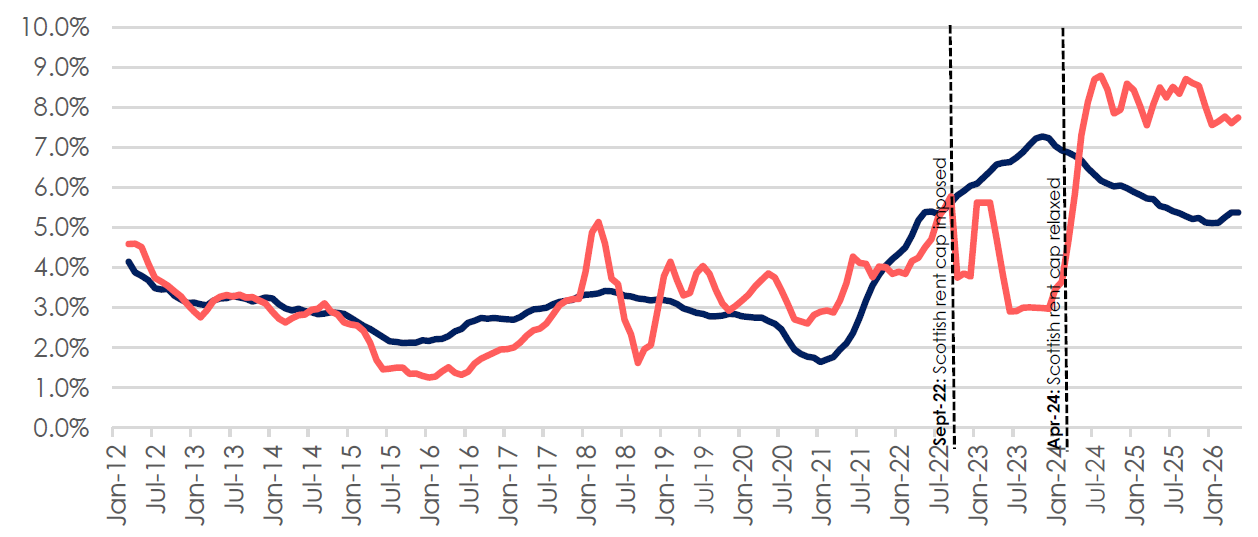 Source: Hamptons using Connells Group data
These figures remain above the 1.1% year-on-year growth recorded for newly agreed lets in Great Britain in May 2026, down from 1.2% in April. Hamptons attributed the divergence to catch-up adjustments, whereby landlords raise existing tenants’ rents to align with prevailing market rates after extended periods without revision. The average rent on a newly agreed let across Great Britain stood at £1,382 per month in May.
Regionally, average rents in the South East of England reached £1,500 per month in May — a 2% annual increase and the first time any region outside London has crossed that threshold. London rents currently stand at £2,294 per month; the capital last recorded £1,500 per month in June 2012.
 “One of the first impacts of the Renters’ Rights Act has been a reduction in the number of existing tenants seeing their rent rise,” said Aneisha Beveridge (pictured right), head of research at Hamptons. “While this partly reflects a backdrop of slower rental growth, falls suggests landlords have, at least initially, been less likely to increase rents than under the previous system where changes predominantly coincided with a tenant signing a new contract.
“If the pattern seen in Scotland plays out in England, tenants may see their rent rise less often going forward. However, the size of the increase may be larger, bridging the gap that can build up between what tenants are currently paying and the prevailing market rate. Last month, the average rent increase in Scotland was 7.7%, higher than in any other region in Great Britain.