
Guys, pay attention, you may no longer be able to take advantage of the telecom operators’ preferential offers.
Those ultra-low-cost data SIM cards that provide 200GB of data for only 10 yuan are likely to become a relic of the past.
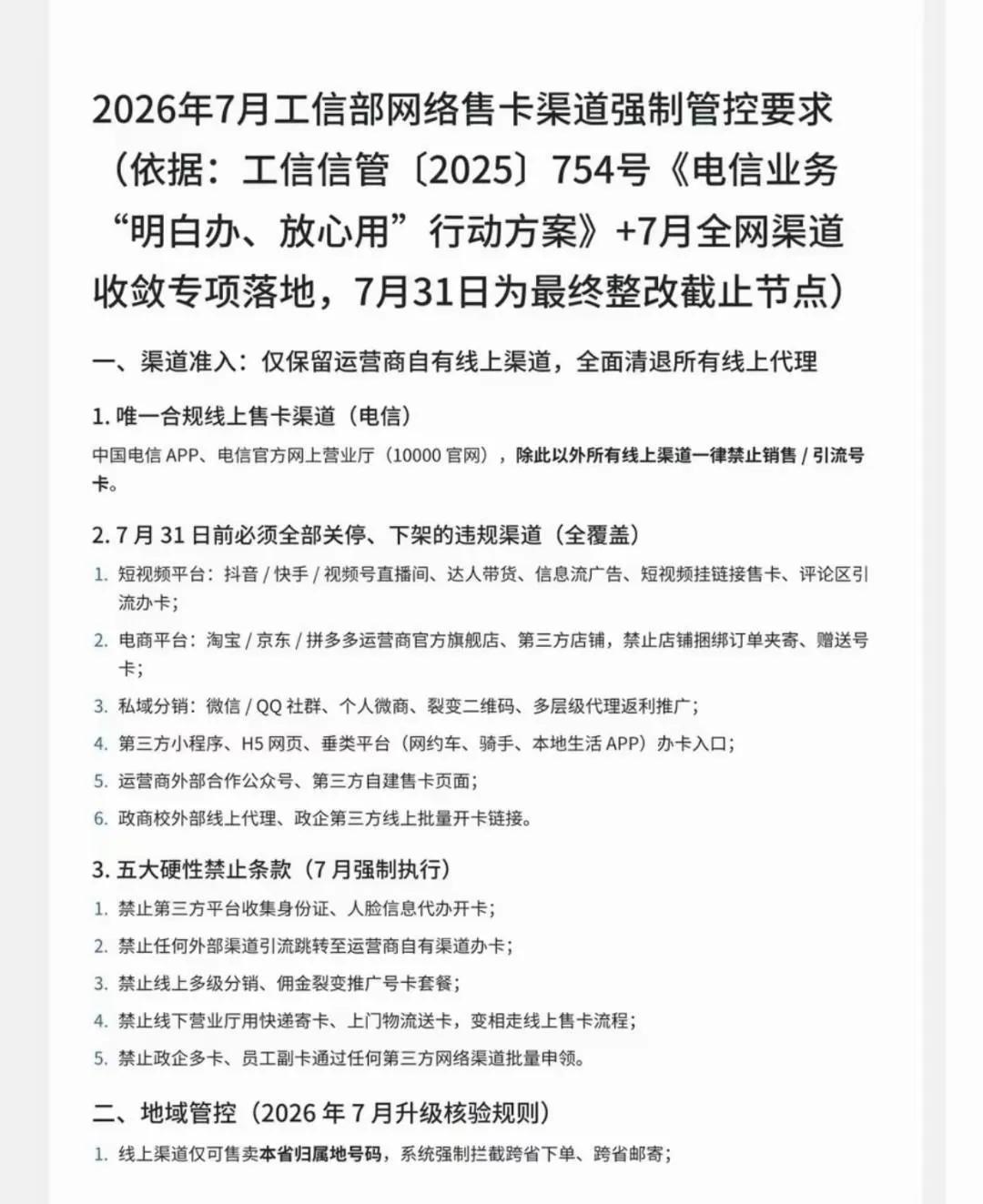
The whole story starts with a widely circulated screenshot of the rectification policy from the Ministry of Industry and Information Technology a couple of days ago.
It states that before July 31, the three major telecom operators must clear all online third-party sales channels, including e-commerce stores, mini-programs, and live streaming rooms.
Although the three operators all came out to dispel rumors at first, claiming that they had not received any such notice at all.
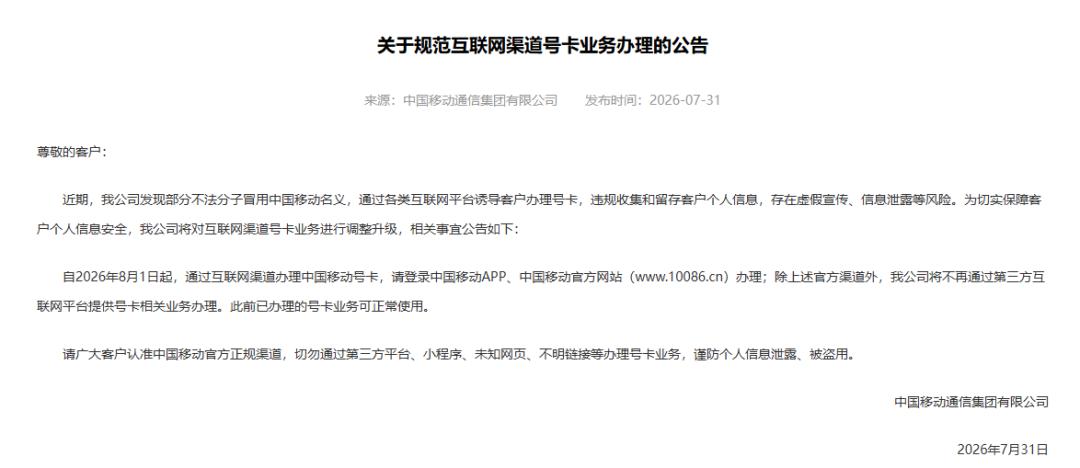
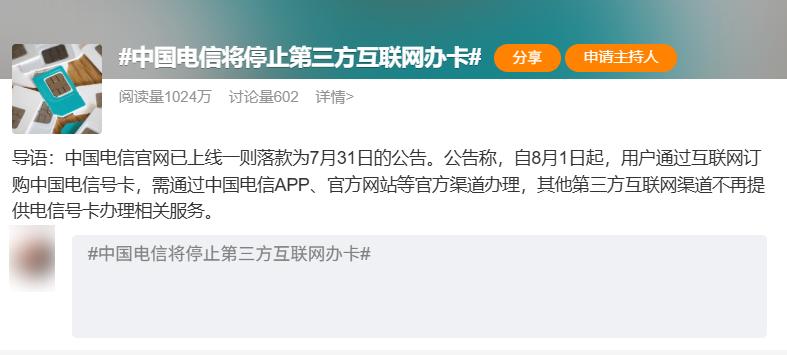
But the reversal came unexpectedly. On July 31, the three of them officially announced together that they would standardize and restrict the application for number cards, and all new cards must be ordered through official channels in the future.
The news immediately rushed to the top of the hot search list, and countless netizens were shocked.
“The sky is falling”, “My heart is broken”, “What should I do with my existing card?”
First, for friends with slower internet connections, let me explain why everyone has such strong objections to these cards being taken off the market.
Data SIM cards are actually regular mobile phone cards, but since they are positioned with low tariffs and large data allowances, people specifically apply for them as secondary cards dedicated to internet access.
How cheap can the tariffs be?
Plans like unlimited 200GB data for 19 yuan, 520GB of nationwide data for 21 yuan with 10 yuan monthly rebate, which can even be combined with the 8 yuan number-retaining package to cut costs further.
The primary card is for making and receiving calls, and the data SIM card is for internet use. You can save dozens of yuan on phone bills every month.
I don’t even connect to WiFi when staying in hotels now, that’s how confident I am with this cost-effective setup.
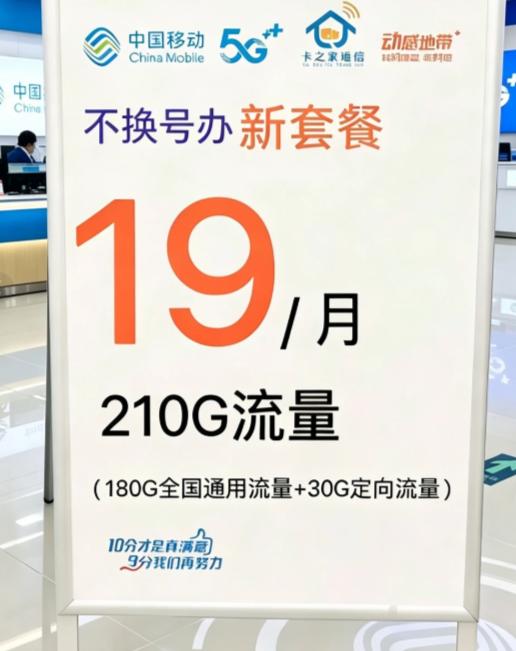
Some friends who just learned about this cost-saving trick may be anxious, wondering if there are still ways to apply for such cards now.
According to the information I collected, if you already have an activated data SIM card, you can continue to use it. Operators will not modify the packages that have already been processed.
But if you want to apply for a new card, you’d better do it as soon as possible. Multiple agents have clearly received internal notices of price adjustment.
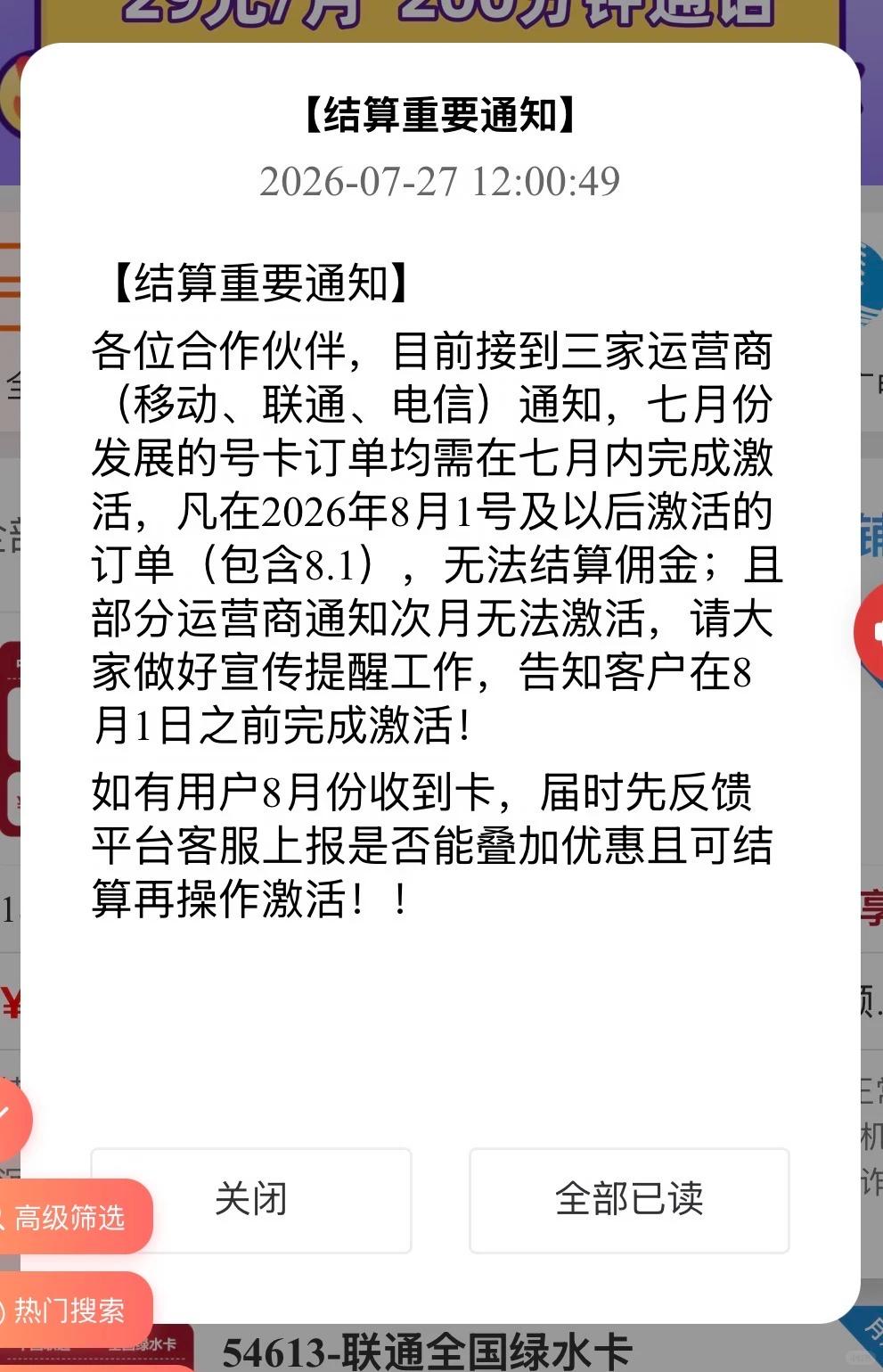
I also verified this with several card resellers, who either said the low-price packages have been removed from shelves, or that the internal preferential subsidies have been canceled.
A specialist at an offline business hall also confirmed to me that all low-tier packages have been taken down, and the tariffs of existing data plans have also been raised.
What’s more, some e-commerce platforms have already removed a large number of data SIM card listings.
Now on Pinduoduo, you can no longer find any large-data SIM card products at all. The platform has issued a notice requiring merchants to remove mobile phone card and broadband bundled card products on their own.
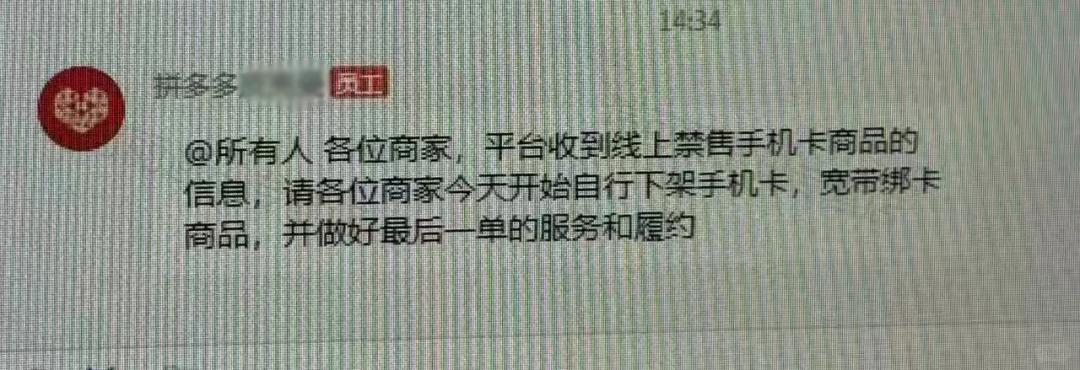
Douyin’s live streaming rooms moved even faster, and they were not allowed to sell these cards as early as April last year.
So why were these data SIM cards selling so well, only to be banned from sale right now?
Because if the prices stay this low, the telecom operators may not be able to sustain their operations.
In 2025, the total mobile internet access traffic reached 3958 billion GB, a year-on-year increase of 17.3%. However, the revenue from mobile data traffic was 609.7 billion yuan, a year-on-year decrease of 3.1%.
In plain terms, people are using more and more data, but the money the operators get is getting less and less. Starting from 2023, their revenue has been on a downward trend.
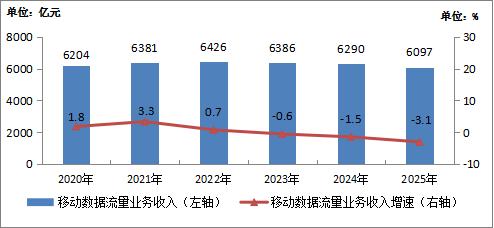
These data SIM cards can be said to have “made great contributions” to the current predicament of the operators.
As we all know, in the early days, the KPI of telecom operators was highly tied to acquiring new users. But as early as 2018, the average per capita ownership of SIM cards across the country reached 1.12.
Almost everyone has a SIM card, which put great pressure on the sales staff in charge of acquiring new users.
At the very beginning, when operators competed for users, they just launched some cheap packages exclusive for new users.
But this model has a fatal flaw: you can’t make the new packages too cheap, otherwise old users will feel betrayed and treated discriminatorily, and they will immediately file complaints and reports.

To break this deadlock, they came up with the idea of dedicated data SIM cards.
Since almost all mobile phones now support dual SIM dual standby, they simply launched a secondary card dedicated to internet access to acquire new users.
This not only allows them to set package specifications freely without making old users feel betrayed, but also attracts new customers and meets the new card activation KPI requirements.
Especially after the launch of 5G, the headquarters set KPIs for user acquisition and 5G promotion. A variety of data SIM cards with incredibly low, almost unbelievable pricing emerged.
Plans like 300GB for 10 yuan, 235GB for 8 yuan are everywhere.
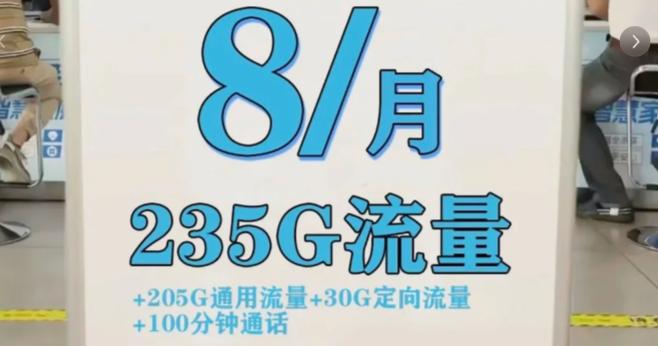
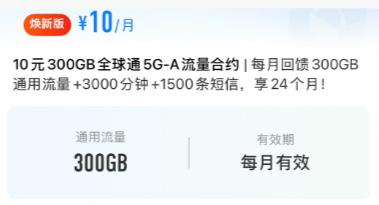
Moreover, you may have noticed that the low-price packages of these data SIM cards are mostly valid for 1 to 2 years. After the package expires, users have to apply for a new card, which counts as another new user acquisition.
If things had stopped here, even if the operators were comparing prices with each other, the situation would still be manageable.
It was not until some bold parties started cross-province card reselling that the entire market order was completely broken.
We might think that the internal operation of telecom operators is fully aligned, but in fact, each provincial subsidiary calculates its own user count, revenue and KPI separately, so all other provincial branches are their competitors.
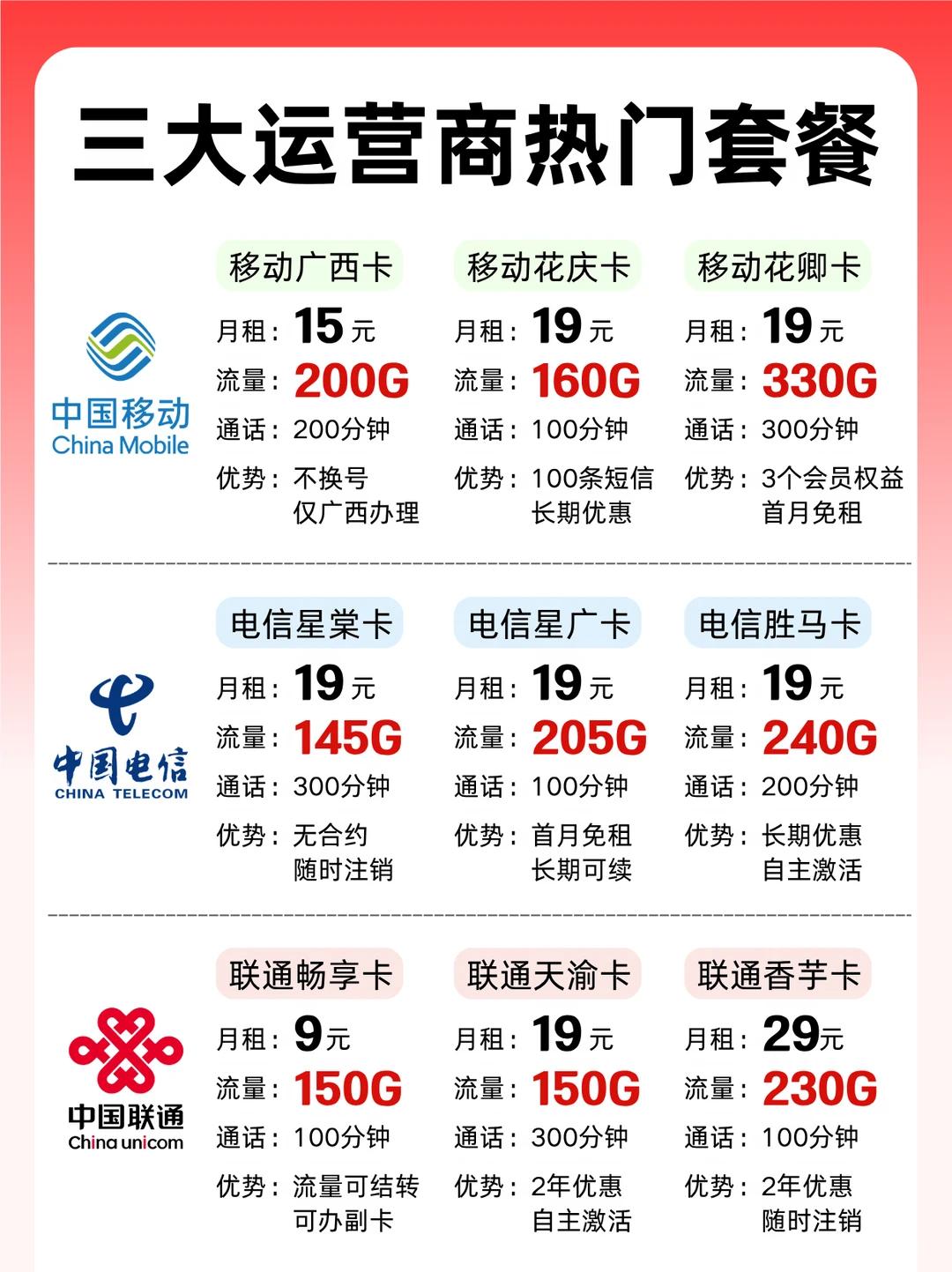
Therefore, to achieve higher KPI, some regions with small populations began to poach users from other cities.
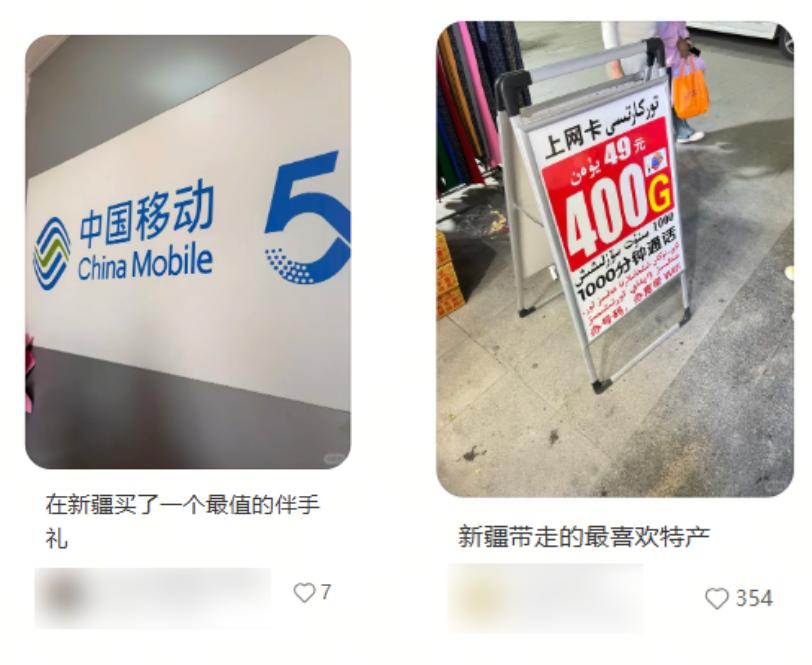
In the early days, regions like Xinjiang and Tibet launched some extremely low-tariff packages to attract users from first-tier cities. A place with only 400,000 permanent residents could achieve performance equivalent to 500,000 users.
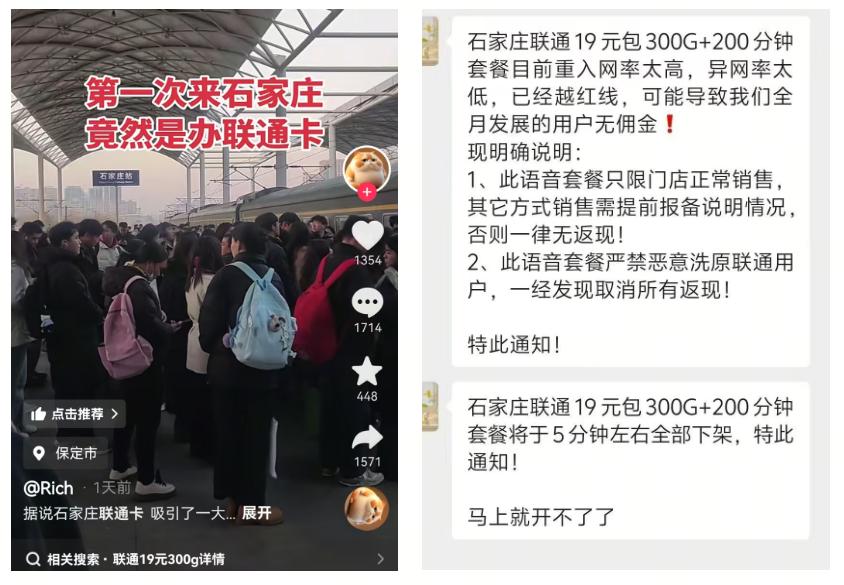
Last year, the Unicom SIM card in Shijiazhuang even triggered a massive cross-city user migration.
Countless users took the slow green train across provinces to Shijiazhuang just to snap up a “magic card” that offers 300GB of data and 200 minutes of calls for 19 yuan per month. At that time, the card was so popular that it was hard to get even with personal connections.
But this move made many operators in first-tier cities very unhappy.
Not only did their users get poached, but the users paid their data fees to operators in other provinces, while the local operators had to bear the base station costs and operation and maintenance pressure. If the signal is bad, users will even complain to the local operator.
I take all the costs, but you get all the performance. No one would be happy with that.
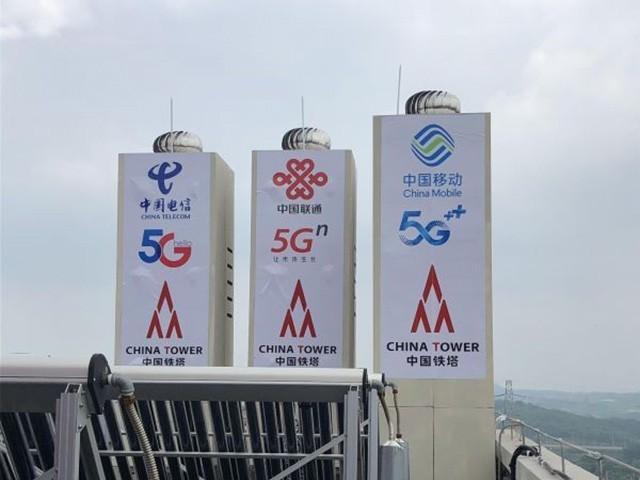
Then, to acquire new customers, operators in first- and second-tier cities had no choice but to launch low-price packages to poach users from other provinces.
In the end, the competition between the three major operators turned into a collective price war involving all provincial subsidiaries and agents.
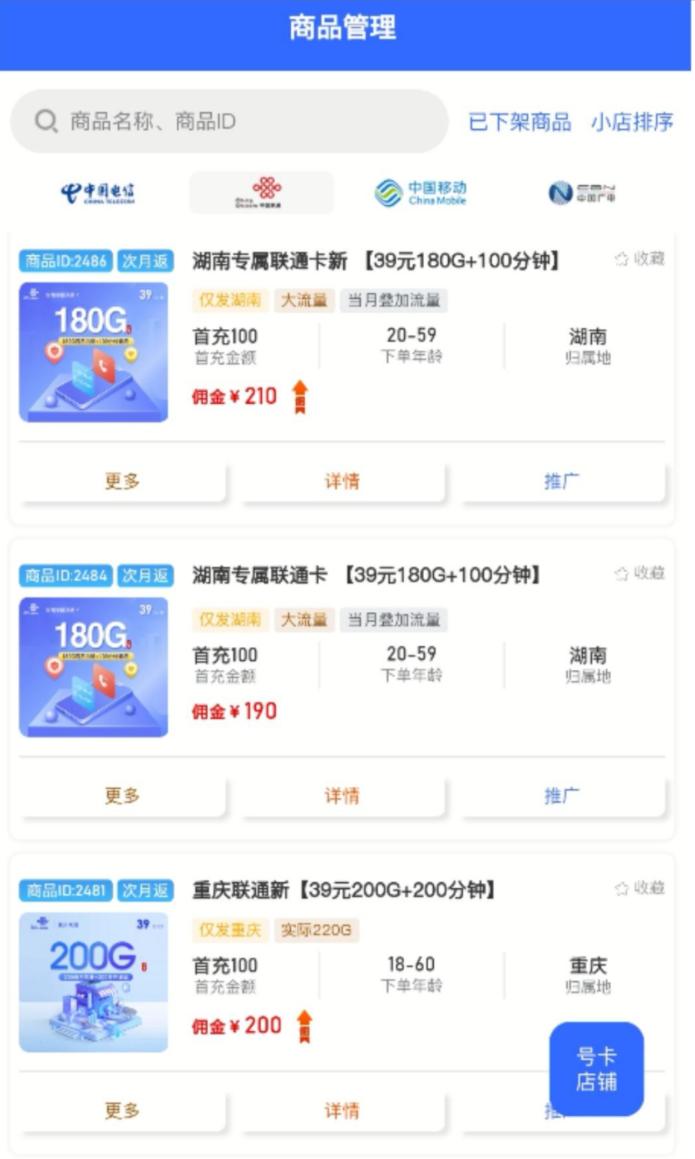
Moreover, cross-province card reselling seems like just internal resource transfer that does little harm to the headquarters. But during the large-scale card promotion process, a huge amount of commission was taken away by agents, the more cards they sold, the more commission they got.
This indirectly supported a large number of professional card-selling websites that rely on commission to recruit lower-tier distributors.
Some senior students who sell campus cards revealed that they can get at least 50 to 70 yuan commission for each completed order. If they can become a first-level agent, the commission for each order can even reach more than 200 yuan.
The official has tried to regulate this before, and they launched industry cooperation and price alignment campaigns every year.
No matter how strict the top management’s restrictions are, there are always people who take risks for profits. They say they will abide by the rules verbally, but once the regulatory storm passes, they start selling the cards loudly again.
So this time, the three major operators are cooperating fully, which is estimated to be driven by a strong external reason.
In an internal notice screenshot