
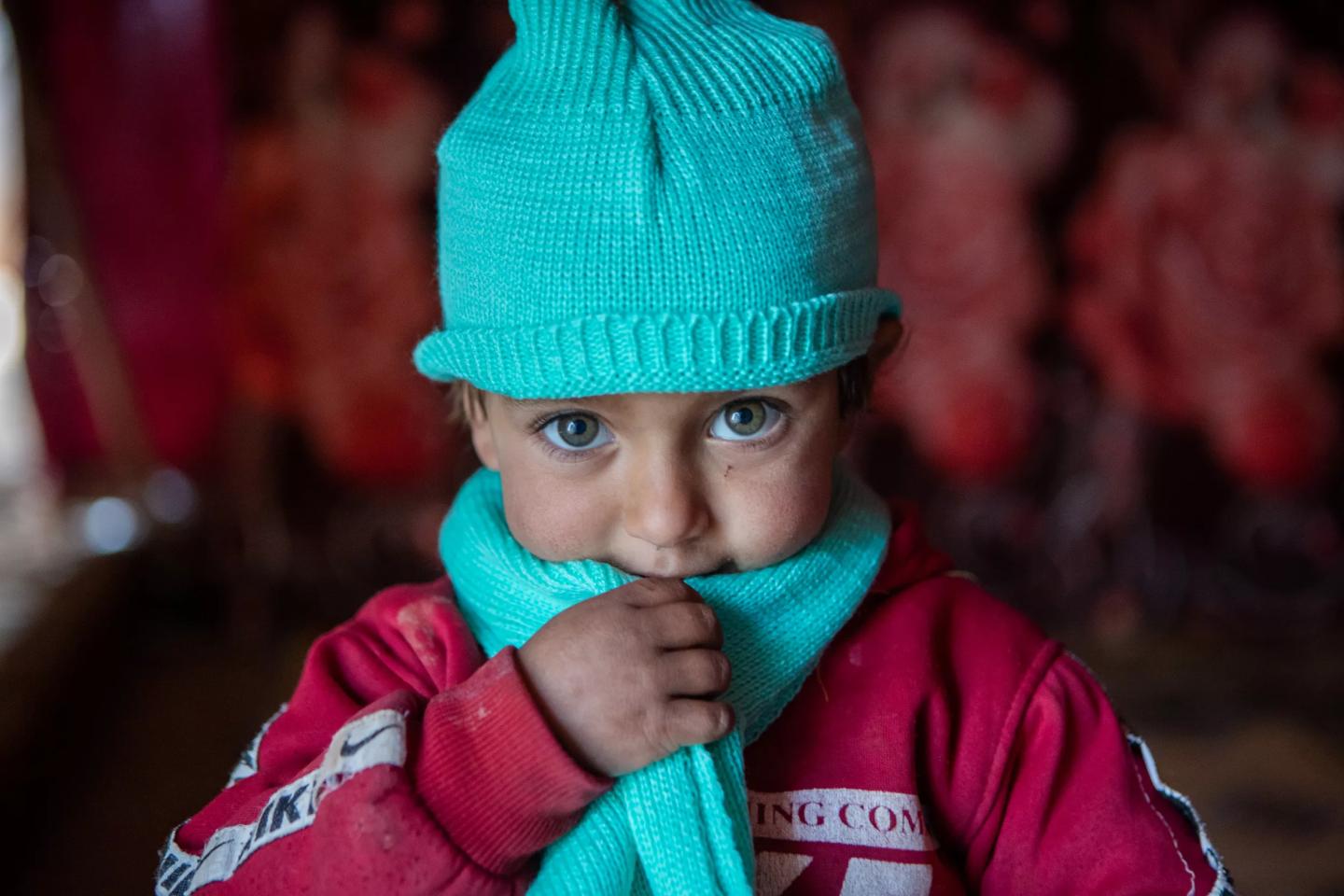
More than half of the world’s population live in urban areas. And as millions more make the move, many end up in slums or informal settlements. An estimated 350 – 500 million children live in slums, with limited access to essential services like healthcare, education and sanitation.
Opportunities stemming from cities’ abundant resources and strong infrastructure – the “urban advantage” – are often denied to the most vulnerable. The poorest urban children are twice as likely to die before their fifth birthday compared to their rich peers. In some countries, poor urban children are also worse off than their rural peers.
Various factors are to blame. Families who end up in slums often live in overcrowded settings, without adequate housing and open public spaces, and under the constant threat of eviction. They’re increasingly exposed to disease outbreaks and environmental hazards like toxic chemicals and air, water and soil pollutants.
Children’s safety may be compromised in other ways unique to urban living. Road traffic perils, exploitative labour, trafficking, and exposure to violence and criminal activity all put young people in harm’s way.
And as humanitarian crises increasingly affect urban areas – directly, through civil conflict, natural disasters and disease outbreaks; or indirectly, as more refugees settle there – inequalities worsen. In cities, refugees and displaced families tend to fall outside the reach of traditional humanitarian operations, often leaving them to fend for themselves.
Our response
By 2050, an estimated 70% of the world’s population will live in urban settings, with most population growth occurring in low- and lower-middle-income countries. Without a stronger focus on children in cities, humanitarian organizations will fail to reach the most vulnerable with the protections set out under the Convention on the Rights of the Child and the Sustainable Development Goals.
In response, UNICEF is stepping up its programming in urban areas with a special focus on slums and informal settlements. We prioritize:
Evidence and data
A critical first step towards reducing urban inequality is identifying patterns of poverty. UNICEF is strengthening our intra-urban data collection and analysis to monitor the situation of children who tend to fall outside the reach of traditional humanitarian operations.
Local planning, financing and budgeting
UNICEF adapts programming strategies for various territorial contexts, including cities and towns. We support the development of systems, capacities and resources for evidence-based local planning and budgeting, to help build solutions that reach children in slums and informal settlements.
Community engagement
People in informal settlements are not always recognized by governments. In response, UNICEF is working to establish effective child-participatory mechanisms in cities, with special attention to disadvantaged groups.
Quality and equitable services for children
UNICEF’s strategy for reaching urban children with quality, equitable social services accounts for country contexts. In lower- and middle-income countries, we’re exploring ways to introduce integrated models for coordinating quality services with local governments. We focus on reducing urban marginalization, reaching excluded and underserved children, and lowering barriers to access, especially by improving equity in public spending.
Child-responsive urban planning
UNICEF is working with partners to ensure that national planning standards set for urban land use take children’s need for healthy environments and play into consideration. This includes all public spaces central to children’s well-being, like housing, parks, roads and public transportation, in addition to other infrastructure for child-related services.