

Many state finance secretaries inherit crumbling public finances. Most states experience extreme fiscal stress—an inadequacy of resources to cover routine operational costs, let alone crucial investments in education, healthcare, agriculture, and rural infrastructure.
Typical symptoms of near-insolvency include a high debt-to-GDP ratio, expanding year-on-year revenue deficits, and unsustainable borrowings that deepen the crisis. When states lack resources for capital expenditure, they fall into a vicious economic trap.
When I took over as Finance Secretary of Odisha in November 2003, the state faced all of these seemingly insurmountable challenges. The situation was so grave that we lacked funds for the following month’s payroll. A state forced onto a Reserve Bank of India (RBI) overdraft almost every day of the year cannot perform basic functions.
Yet, within a year, we turned the situation around—securing a healthy revenue surplus and stable income streams for both regulatory and developmental priorities.
Step-by-Step Strategy for Fiscal Turnaround
1. Political Realignment & Honest Communication
Brief Leadership in Plain Language: Your first move must be to brief the Chief Minister and Finance Minister in non-technical terms.
Frame the Choice clearly: A state in deep fiscal distress is like an airplane out of fuel mid-air—the pilot can either crash-land or execute a soft landing.
Establish That Good Finance is Good Politics: Make clear that fiscal solvency is the bedrock of lasting development. Realizing this requires a Chief Minister with long-term vision—a true statesman.
2. Transparency & Strategic Borrowing
Publish a Comprehensive White Paper: Odisha became one of the few states to publish a White Paper detailing its structural financial weaknesses. Crucially, it outlined a clear recovery strategy, which was debated openly in the State Assembly.
Negotiate Structural Adjustment Facilities: Odisha became the first sub-national entity to negotiate a structural adjustment facility with the World Bank. Because we designed the reform strategy ourselves, we could secure funding without compromising key developmental investments in health, education, and rural infrastructure.
Secure Untied Grants: We also successfully negotiated an untied financial grant from the UK government to help address immediate budgetary shortfalls.
3. Structural Reform & Operational Controls
Enact Fiscal Discipline Legislation: Odisha was an early mover in enacting the Fiscal Responsibility and Budget Management (FRBM) Act to enforce legal boundaries on borrowing and deficits.
Digitize Treasury Operations: We computerized all treasury operations, giving the Finance Department real-time visibility into daily receipts and expenditures. This helped maintain a comfortable Ways and Means position and eliminated unnecessary overdrafts.
Modernize Tax Systems & Encourage Investment: Moving to a Value Added Tax (VAT) boosted revenues without raising tax rates. Concurrently, we drove private business investment by leveraging our rich mineral resources and port facilities.
Lead by Example in Expenditure Control: To set a frugal tone across all departments, I chose to drive a small Maruti car for official business. This simple step discouraged other departments from requesting expensive new vehicles and fostered a culture of austerity.
4. Debt Management & Budgetary Accountability,
Implement a Sustainable Debt Model: Enforce the cardinal fiscal rule: borrow only for capital investment over the economic cycle.
Create RBI Sinking Fund Accounts: Setting up a consolidated sinking fund with the RBI protected the state against future repayment shocks while generating steady annual interest income.
Enforce Strict Budgetary Scrutiny: Every unit of proposed expenditure must be thoroughly vetted before entering the budget, with mandatory project evaluations for all major schemes.
Devolve Financial Powers to Department Secretaries: Once the budget was passed, department secretaries were given complete autonomy to disburse funds. Eliminating routine financial referrals empowered departments, but also held them accountable for project delays and cost overruns.
The Outcome and Wider Lessons
Odisha restored its financial health within two years. During a visit by a UK parliamentary delegation, the delegation leader noted that while they had provided similar budgetary support to other countries with poor outcomes, Odisha’s self-designed strategy delivered a complete turnaround.
Subsequently, Odisha’s model was cited as a benchmark for other states at the annual RBI Conference of State Finance Secretaries and by the World Bank.
A stronger financial position changes a state’s political standing: Leverage with the Central Government: A fiscally sound state—and its Chief Minister—can negotiate far more effectively with the Union Government for its rightful share of devolved funds.
Rewarding Efficiency: When the 12th Finance Commission (headed by Dr. C. Rangarajan) visited, Odisha was the only state to propose that fiscal management efficiency be included as a criterion for fund devolution.
While Odisha benefited from a forward-looking Chief Minister who brought the Cabinet together around reforms, the core principles remain universal. While sub-national structural adjustment loans from global bodies may be harder to access today, states can request similar soft-lending facilities from the Government of India for the well thought out structural reforms.
Good luck to all state finance secretaries navigating these challenges. Financial discipline is hard work, but with clear strategy and political courage, a complete turnaround is always within reach.
✍️ About the Author
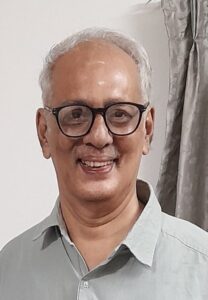
Dr. U. Sarat Chandran is a retired IAS officer, former Additional Chief Secretary to the Govt. of Odisha, former Advisor to the IMF, former Secretary-General of the Colombo Plan (Sri Lanka), and former Private Secretary to Dr Manmohan Singh during his tenure as Deputy Chairman of the Planning Commission.
⚖️ Disclaimer
The views and opinions expressed in this article are solely those of the author and do not necessarily reflect the editorial stance of Pragativadi.com. Pragativadi remains committed to providing a platform for diverse perspectives while upholding its editorial independence and integrity.