
Regional co-operation in Islamic social finance is seen as key to strengthening halal communities.
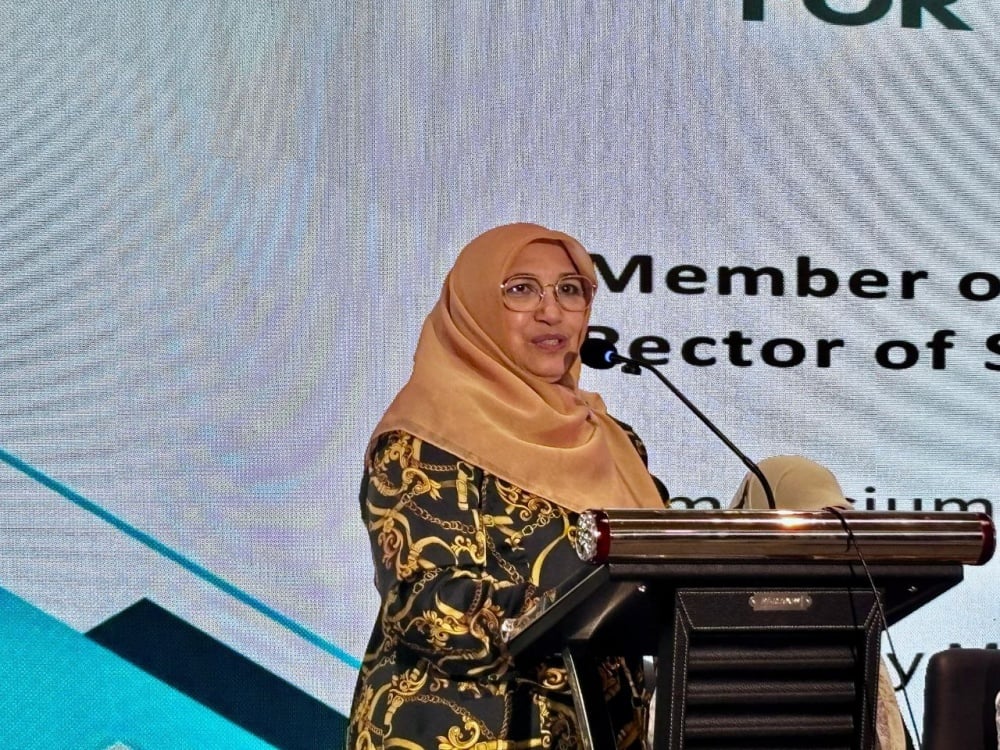
JAKARTA — Amany Lubis, a member of the advisory council of the Ikatan Ahli Ekonomi Islam (IAEI), has stressed that regional integration of Islamic social finance is crucial to strengthening engagement and welfare within halal communities across south-east Asia.
Amany made the remarks at a collaborative seminar organised by Menara Syariah and the International Islamic University Malaysia (IIUM), titled Bilateral and regional Islamic social finance integration for halal community engagement, supported by IAEI and the National Committee for Islamic Economy and Finance (KNEKS), at Menara Syariah PIK 2, Banten, on Tuesday (16/12).
According to Amany, Indonesia and Malaysia share many best practices that can be mutually learned from, particularly in the management of Islamic social finance instruments such as zakat, waqf and alms.
However, she said the biggest challenge at present lies in how to integrate this potential more strongly at the regional level.
“Indonesia and Malaysia have valuable experience in Islamic social finance. The challenge is to understand both the potential and the obstacles, and then to build a more solid regional integration,” she said.
She noted that developments in the global halal economy point to a highly promising trend.
Islamic social finance, she said, not only serves as a redistribution mechanism but also forms the foundation of sustainable development and inclusive economic growth, particularly amid geopolitical pressures and rising global social challenges.
Amany also highlighted the strategic role of universities as agents of change in expanding the application of Islamic social finance principles.
According to her, higher education institutions must take a more active role in integrating Islamic social finance into curricula, research and collaboration with the halal industry, in order to produce graduates who are innovative, competitive and able to contribute to social stability.
In addition, she underscored the importance of leadership and community participation, including the contribution of women in maintaining economic resilience.
Indonesia’s experience during the Covid-19 pandemic, she said, demonstrated the significant role of women in strengthening micro, small and medium-sized enterprises and developing e-commerce across various regions.
Furthermore, Amany stressed the need for harmonisation of halal standards across countries, stronger institutional capacity and digital integration to enhance transparency and accountability within the regional halal ecosystem.
Challenges related to literacy, regulation and technology adoption, she said, must be addressed through joint innovation.
She also cautioned that the development of Islamic social finance must not detach itself from authentic sharia values and education.
“Innovation must not separate itself from values. Strong sharia-based education is the foundation to ensure that Islamic social finance truly brings benefit to all of humanity,” she said.
At the same event, a Datin and professor at the Institute of Islamic Banking and Finance (IIiBF), IIUM, encouraged broader engagement from other ASEAN countries such as Singapore, the Philippines, Brunei and Thailand.
She argued that Islamic social finance, through waqf, zakat and alms, represents an inclusive common platform because it embodies universal values and can be utilised by both Muslims and non-Muslims.
According to her, despite differences in practices and standards of Islamic finance across countries, Islamic social finance serves as a meeting point that unites the region.
She emphasised that genuine education grounded in sharia values must remain the primary foundation, rising above political and structural interests. (DK/ZH)