
Commercial real estate lenders are done pretending. After years of waiting and hoping that the market would improve, they’re selling off debt on struggling US assets, sometimes writing down as much as 85% of the loan’s payoff amount.
Lenders including Goldman Sachs Group Inc. and Deutsche Bank AG, as well as smaller companies, are showing more willingness to foreclose on troubled properties or offload non-performing loans, even if means booking steep losses. It’s painful, but they say it’s necessary to chip away at more than $130 billion in distressed commercial-property debt.
It signals the end of the extend-and-pretend era, when lenders cited a murky outlook on interest rates and limited comparable transactions as reasons to give struggling borrowers more time — and to hold on to asset valuations that seemed, even then, optimistic. Selling troubled loans also helps free up cash to invest in new opportunities that arise from the upheaval.
“If you’re on the wrong side of one of those transactions, it can feel catastrophic if you have to report to investors you’ve lost their money,” said Xander Snyder, senior commercial real estate economist for title insurer First American Financial Corp. “But generally for the commercial real estate market, it’s good we’re working through this distress.”
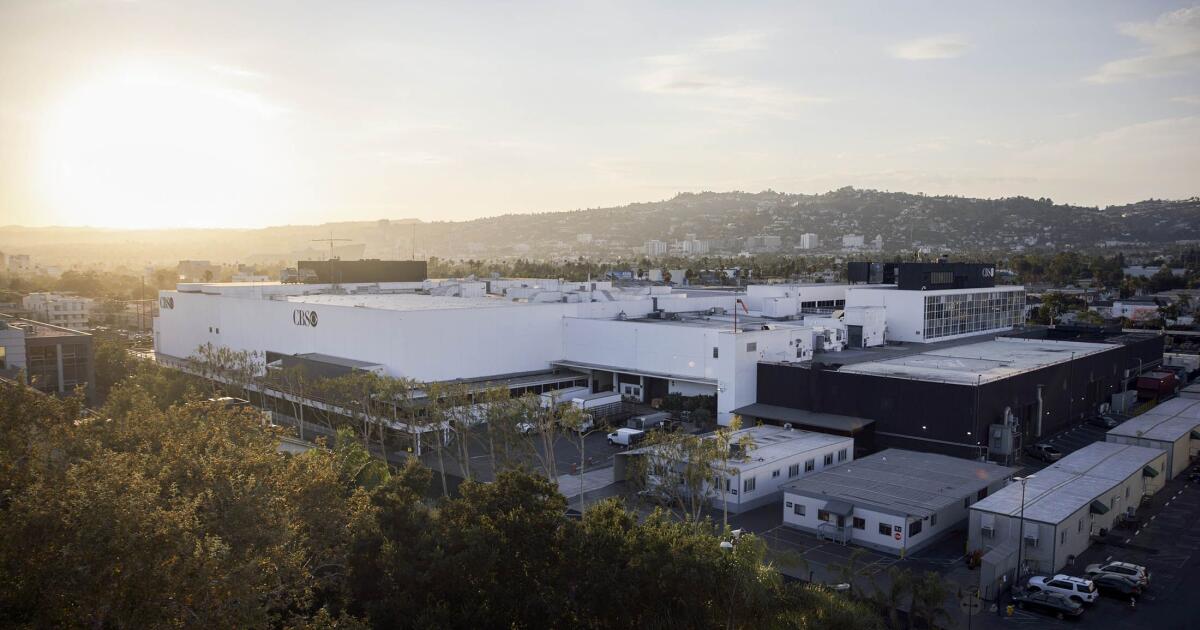
This year, Shanghai Commercial Bank sold its loan on a stalled Manhattan condo conversion at an 85% discount to the debt’s payoff amount. Netflix Inc. is in talks to buy a historic Los Angeles movie studio for a fraction of its $1.85 billion 2021 sale price after lenders led by Goldman Sachs took over the property. Money managers who bought into a $240 million commercial-mortgage bond backed by a San Francisco office building suffered losses after the underlying loan’s sale left just $101 million to distribute to investors.
Lender Ready Capital Corp. offloaded a pool of loans backed by apartments in the Sunbelt at a roughly 30% discount, reducing its exposure to an overbuilt market, according to a person familiar with the matter.
Ready Capital said in February that it aimed to dump 60% of its legacy commercial-property loan book. It told investors it’s seeking buyers for $1.5 billion of loans, with a focus on clearing non-performing and sub-yielding debt.
The company is “putting some pressure on borrowers and some of these assets, where they will pivot ultimately to either seeking alternative financing or potentially selling the underlying assets,” Chief Credit Officer Dominick Scali said on the call.
A spokesperson for Ready Capital didn’t immediately respond to a request for comment.
Increasingly, lenders are forcing sales or foreclosing on properties that are backing soured loans. Earlier this year, Deutsche Bank filed to foreclose on Hackman Capital Partners’ Kaufman Astoria Studios in New York, which had a $340 million mortgage. A group led by Deutsche Bank is recruiting real estate brokers to market some of Hackman’s entertainment properties around Los Angeles, as their values plunge and demand stays soft after the Covid shutdown and 2023 Hollywood writers’ strike.
Representatives for Deutsche Bank and Hackman didn’t immediately respond to requests for comment. Goldman Sachs, part of the group that seized the Radford Studio Center that Netflix is negotiating to buy, declined to comment.
A spokesperson for Shanghai Commercial Bank, which sold the loan on the Manhattan condo site, declined to comment on individual transactions, but noted the firm has “well‑established procedures and adhere to due process to prudently manage our loan portfolio.”
Even among offices, which were especially hit hard by the pandemic, sales of distressed properties jumped 45% in the first quarter from a year earlier, MSCI said.
Companies in the market for new office space mainly have been seeking new or recently overhauled buildings in bustling city centers. That means landlords who can’t afford to renovate older properties, especially in sleepier markets, will continue to have a hard time.
“If a property has been struggling now for three to four-plus years, the odds of it coming back are very slim,” said Lonnie Hendry, chief product officer at Trepp, a commercial real estate data provider. “Lenders have been able to quantify how much of their book is potentially exposed to bad loans and they’re ready to move these loans out of their book and take the loss.”
In the first quarter, workouts of troubled loans exceeded new additions to the distressed pile for the first time since 2022, according to MSCI Inc. But the market is still laden with distress, totaling nearly $132 billion across all commercial-property sectors, the analytics firm’s data show.
While some lenders are selling off troubled loans, others are moving faster to foreclose. In March, the balance of loans in commercial mortgage-backed securities tied to buildings in foreclosure reached $17 billion, up from $7 billion in 2024 and the highest level since the post-Great Financial Crisis resolution period, according to Trepp.
Parkview Financial recently foreclosed on a pair of apartment towers in Baltimore after the company that converted the former hotel buildings defaulted on its $45 million loan.
“You bring in a new property manager, you rebrand the building, maybe renovate the lobbies or the elevators and wait 12 to 24 months and I think you’ll see value creation,” said Parkview Chief Executive Officer Paul Rahimian.
Such moves are becoming more common for the Los Angeles-based lender.
“We did extend for a certain amount of time and tried to help our borrowers get through the cycle,” Rahimian said. “But as the cycle continued, it became more difficult.”
Counteracting some of the losses is an increase in originations. The MBA expects roughly $805 billion in commercial mortgages to be issued this year, up 27% from 2025. “Opportunities are on the rise,” JPMorgan Chase & Co. said in its 2026 commercial-property outlook. “Multifamily, industrial and retail remain resilient, and office usage and rents are up in several markets.”
Even activity by banks, which have been treading cautiously on real estate loans, is picking up. Lending by banks for income-producing commercial properties grew 3.6% in the fourth quarter from a year earlier, according to Trepp.
This is a good sign, said First American’s Snyder. “I think we’re in the very early stages of the upswing across the broader business cycle.”
Wong writes for Bloomberg.