
Columns
Korea needs durable, consensus-based real estate institutions rather than housing policies that swing with each administration.
Lee Hyun-sang
The author is a columnist at the JoongAng Ilbo.
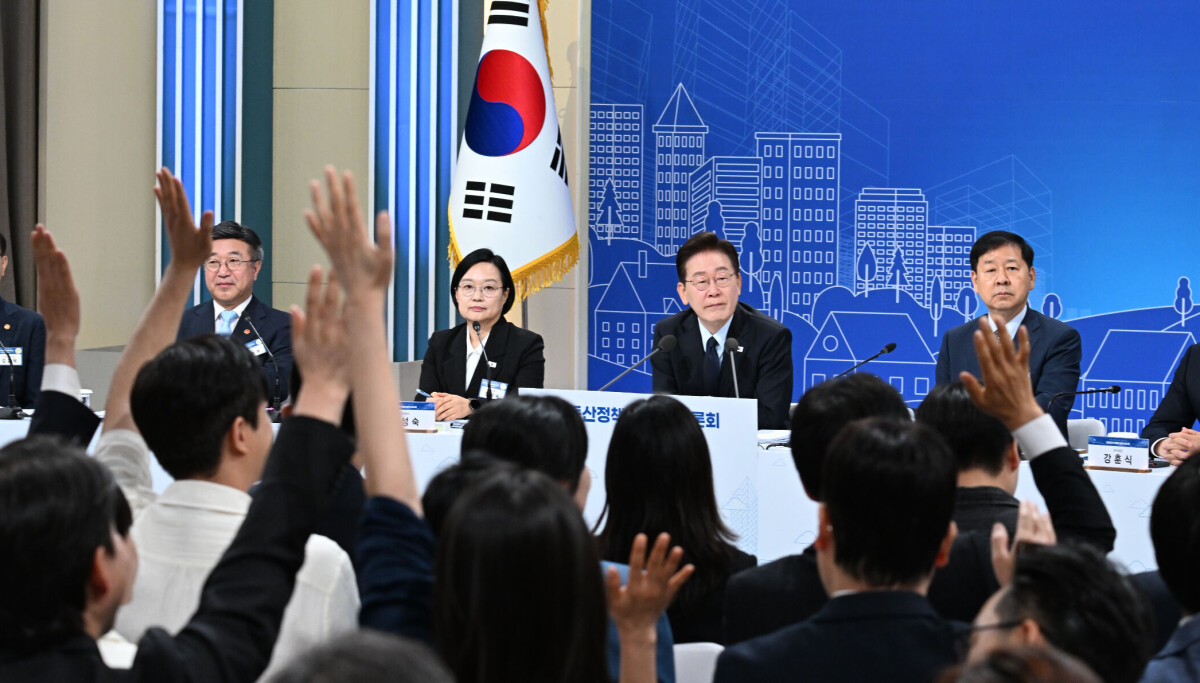
President Lee Jae Myung made a striking declaration during last week’s national forum on housing policy.
“I am prepared to accept political resistance,” he said while reaffirming his willingness to raise property holding taxes.
It was a forceful statement. Yet his explanation immediately revealed the practical constraints behind it. Raising Korea’s property taxes to levels common in advanced economies, he noted, would require roughly tripling them, a move that could provoke something resembling public unrest. Policymaking inevitably requires compromise with political reality. The real question is what principles should guide those compromises when political determination collides with public resistance.
The forum offered another revealing moment. An attendee told the president that tightened mortgage regulations had prevented the final payment on a newly purchased home, leaving the buyer unable to move in. President Lee ordered officials to review the case on the spot, and the problem was reportedly resolved later that day.
The episode was heartwarming, but also unsettling.
What about countless other homebuyers whose situations never reach the president’s attention? Every regulation inevitably produces unintended hardships. Yet if governments grant exceptions whenever problems arise, policy effectiveness quickly erodes. Such issues cannot depend on a leader’s personal intervention or goodwill. A functioning system is one in which the public does not need to appeal directly to the president.
Ultimately, the balance between political resolve and political reality depends on social consensus. Without broadly accepted principles, durable institutions are difficult to build. In their absence, political force repeatedly stands in for institutional stability.
Unfortunately, Korean politics has devoted far more energy to partisan conflict than to building lasting consensus. Depending on the ideology of the governing party, tax policy, redevelopment rules and regulations on owners of multiple homes have repeatedly swung from one extreme to another. Because each administration has reversed the direction of its predecessor, the housing market has come to anticipate elections more than government policy itself.
Homeowners have learned that simply waiting often proves profitable because another administration may eventually reverse unfavorable policies. Those without homes, meanwhile, continue hoping that a political change will dramatically reshape the market in their favor. Neither expectation encourages stability.
Perhaps the clearest example of ideological policymaking producing unintended consequences is the phenomenon known as “one premium home.” During the Moon Jae-in administration, punitive taxes on owners of multiple homes were combined with generous benefits for single-home owners. Rather than cooling demand, the measures concentrated buying into high-value homes in Seoul and the surrounding metropolitan area. The policy failed while the market adapted quickly. Even after those distortions became evident, political debate focused on slogans such as “tax punishment” versus “taxes don’t work” instead of careful policy adjustments.
Korea needs to end the cycle in which every change of government brings an entirely new housing strategy. Greater policy consistency should be embedded in institutions rather than depending on whichever party holds power.
One possible approach would be an independent real estate policy body modeled after the Bank of Korea’s Monetary Policy Board, insulated from day-to-day political pressures. Korea could also benefit from an independent review and evaluation system similar to Britain’s Office for Budget Responsibility, providing objective assessments of long-term housing policies.
This does not mean freezing specific tax rates, lending regulations or housing supply measures. Rather, the country needs a lasting social consensus on the fundamental principles that should guide housing policy across administrations.
New Zealand has established a 30-year vision for housing and urban development that provides continuity for future policies. Singapore likewise maintains a long-term national land-use plan looking 50 years ahead and reviews it every decade. Individual policies may evolve, but the strategic compass should not change every time political power changes hands.
Ending Korea’s long history of housing instability requires more than the determination of a single administration. President Lee’s leadership should be measured not only by his willingness to withstand political opposition but also by his willingness to treat the opposition as a governing partner in building enduring institutions.
The opposition also bears responsibility. Rather than simply criticizing government failures or repeating the argument that taxes cannot stabilize housing prices, it should present credible alternatives worthy of a party seeking to govern.
What Koreans need is neither unilateral policymaking nor reflexive obstruction. They need political leadership capable of creating institutions that can endure for generations.