
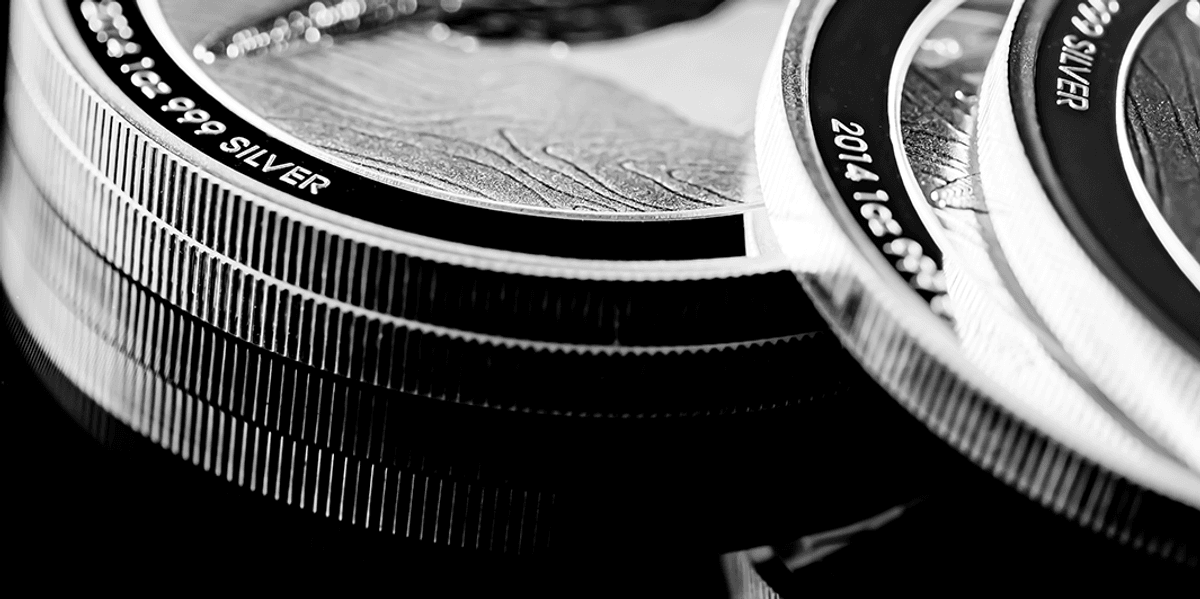
It’s time for silver mining investment to shine.
As one of the world’s most prominent precious metals, silver presents as a key element in both the industrial and financial sectors. Its usage in powering electronics, solar panels and even medical devices makes it a compelling investment.
Amidst inflation, rising demand for technology and artificial intelligence (AI), resource depletion and other geopolitical factors, silver shines as an opportunity due to its unique characteristics and growing role in various landscapes.
Companies like Brixton Metals (TSXV:BBB,OTCQX:BBBXF) with assets such as the Langis silver project fit into the picture by providing exposure and a growth opportunity.
What makes silver a safe-haven investment?
Silver earns its safe-haven status for a few concrete reasons. It is negatively correlated with stocks and bonds, giving it the ability to preserve purchasing power, along with broad global acceptance and trust. Unlike currency, its supply can’t be inflated away, which shields it from devaluation.
What also separates silver from gold and other commodities is its dual identity. Besides being a universally accepted precious monetary asset, it is a critical material used in manufacturing.
“Silver’s superior conductivity is critical to circuit boards, solder, switches and conductive pastes, enabling fast, efficient power flow in everything from smartphones and laptops to electric vehicles and industrial automation,” SFA Oxford said.
These properties make the shiny white metal a strong choice for investors, offering stability when traditional markets falter.
Silver and the energy industry
The International Energy Agency projects that electricity demand will rise to roughly 70 percent by 2035 and triple by 2050, reaching around 4,000 terawatt-hours annually.
Silver holds the highest conductivity across all metals, recorded at 6.2×10⁷ siemens per meter. This makes it a vital factor in the rising electricity demand, given its ideal use for precise measurement systems, microelectronics and high-current components.
Electronics also rely on silver for circuit boards and connectors, which are especially in demand due to developing technology and AI applications. Solar panels also require silver paste to conduct electricity, while medical devices harness its antimicrobial qualities.
Renewable energy is slowly coming into the light as well, allowing silver’s role to expand. Total silver industrial demand accounts for approximately 56 percent of annual consumption, with solar PV alone responsible for roughly 19 percent of total demand and 34 percent of all industrial silver consumption. This ties silver not only to actual applications, but to overall global industrial and technology trends.
At present, supply is derived from primary silver mines and as a by-product of lead, zinc, copper and gold extraction. Among the major producers are Mexico, Peru, China and Russia, inviting other countries such as the US and Canada to step up their game.
Brixton Metals’ Langis project in Ontario
Brixton Metals is a clear example of that dual role in action. The Canadian company holds the Langis silver project, a past-producing site in Ontario’s historic Cobalt camp.
Langis is located within the Timiskaming First Nation traditional territory, with promising silver-cobalt recoveries ranging from 88 to 98 percent. Assays have shown values of up to 18 percent silver and 16 percent cobalt.
Brixton Metals reports that the project holds the highest drill intercepts reported globally, with results including 20 meters of 5,015 grams per ton (g/t) silver from 165 meters depth, including 14 meters of 7,150 g/t silver and including 0.65 meters of 89,125 g/t silver. Langis also benefits from existing infrastructure, from roads to power and rail access.
The company has completed 261.35 meters of drilling as of July 2026, with samples now at the laboratory for assaying. It is progressing toward a maiden mineral resource estimate.
As a junior explorer, Brixton sits at the intersection of silver’s dual identity: a project based in a historic camp with existing infrastructure, which helps reduce some of the risk typical of early stage exploration. It’s a company relevant to both the energy and technology sectors, and one that could ultimately help supply the silver both depend on.
Ways to invest in silver
Physical silver coins and bars remain the most traditional option for investors, offering direct ownership and tangible security, but that route isn’t always the simplest. Storage and insurance costs can add complexity.
Exchange-traded funds and mutual funds offer another path, providing liquidity and ease of access. These vehicles track silver prices or baskets of mining companies, letting investors gain exposure without handling physical metal. The tradeoff is that they may not always capture the full upside of silver’s industrial demand.
Royalty and streaming companies represent another avenue. These firms trade project funding for a share of future production, offering exposure to silver prices with potentially lower operational risk. However, these depend on the success of partner mines.
Then there’s direct equity exposure through mining stocks. Junior companies in particular offer leveraged exposure: when silver prices rise, miners can see outsized gains. This route still carries exploration and operational risk, but it offers early exposure to the very metal powering the industries shaping the future.
Investor takeaway
Exposure to silver can take many forms, each with its own balance of risk and reward.
Junior mining companies like Brixton Metals stand out as a way to gain speculative upside tied to exploration in regions with proven history and infrastructure already in place.
Global inflation and uncertainty are likely to persist, and demand for energy will keep accelerating as new technologies emerge. In that environment, silver offers investors a way to diversify their portfolios while pairing stability with growth. The silver lining is clear: this overlooked metal may be one of the most versatile tools in the modern investor’s kit.
This INNspired article is sponsored by Brixton Metals (TSXV:BBB,OTCQX:BBBXF,FWB:8BX1). This INNspired article provides information which was sourced by the Investing News Network (INN) and approved by Brixton Metals in order to help investors learn more about the company. Brixton Metals is a client of INN. The company’s campaign fees pay for INN to create and update this INNspired article.
This INNspired article was written according to INN editorial standards to educate investors.
INN does not provide investment advice and the information on this profile should not be considered a recommendation to buy or sell any security. INN does not endorse or recommend the business, products, services or securities of any company profiled.
This INNspired article contains forward-looking information, including statements regarding planned activities, timelines, business objectives, and market conditions. Forward-looking information is based on assumptions and is subject to known and unknown risks and uncertainties that may cause actual results to differ materially from those anticipated. Readers should not place undue reliance on forward-looking information, which reflects the views of the profiled company as of the date of this profile and is not updated by INN.
The information contained here is for information purposes only and is not to be construed as an offer or solicitation for the sale or purchase of securities. Readers should conduct their own research for all information publicly available concerning the company. Prior to making any investment decision, it is recommended that readers consult directly with Brixton Metals and seek advice from a qualified investment advisor.