
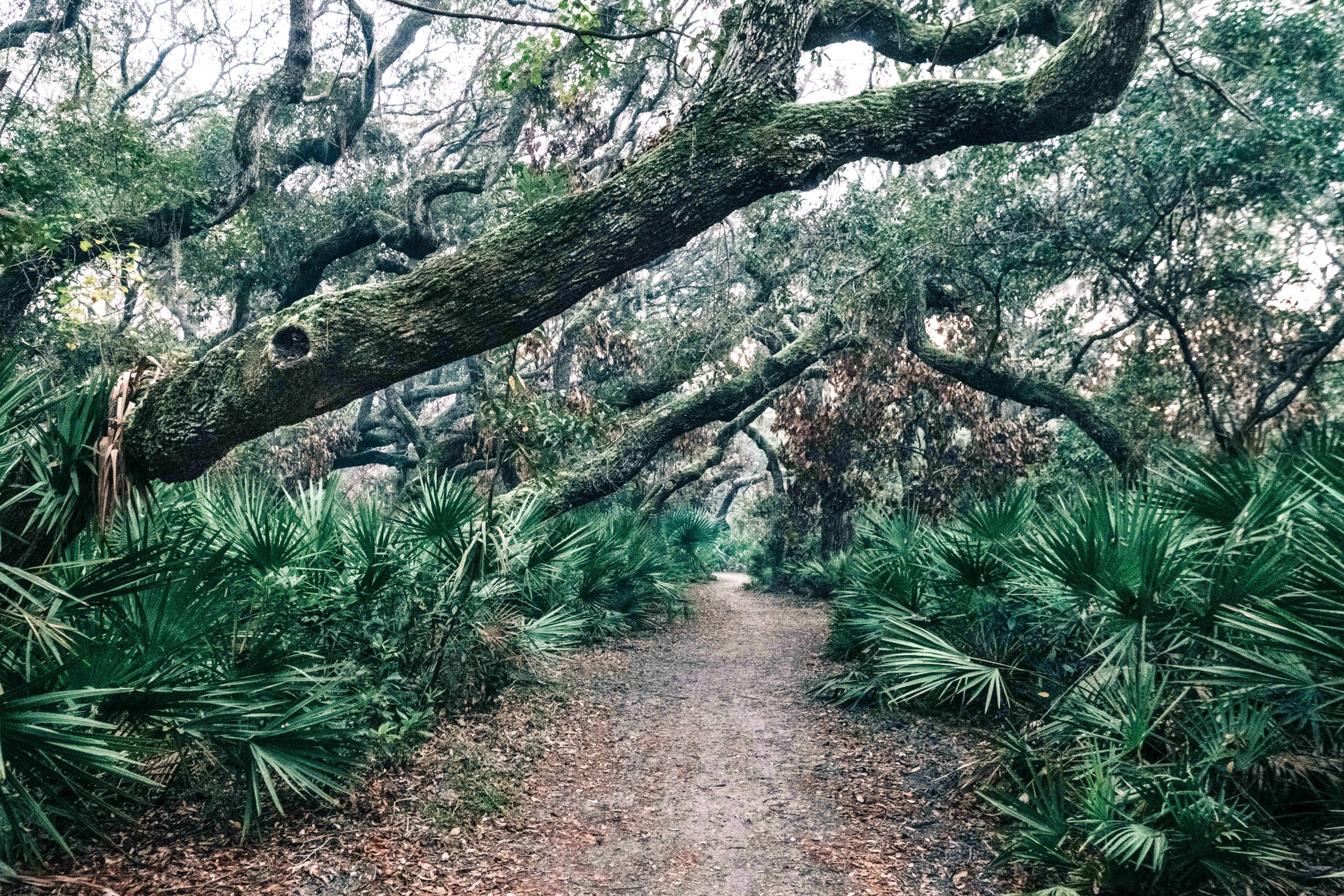
Under agreements with the National Park Service, two families of private land owners on Cumberland Island would be allowed to build single-family homes with footprints up to 15,000-square-feet. That’s larger than Greyfield Inn, the Gilded Age mansion that serves as the island’s only hotel.
“It does seem a little concerning, the notion that these exchanges would allow multiple, 15,000 square foot houses on each of the newly privatized properties,” said Southern Environmental Law Center staff attorney Zachary Hennessee. “I think it does rankle a lot of people.”
That’s a detail that stands out in the proposed swaps, though the families involved say they didn’t ask for that size and don’t intend to build that large. Advocacy groups are also worried about a lack of communication and transparency, as well as the deals’ cost to taxpayers. The agreements aren’t finalized, but nevertheless provide a glimpse into how the public and private parties might fare as the federal government advances land swaps first publicly proposed in 2024.
Renewed scrutiny on the swaps
Cumberland Island National Seashore superintendent Melissa Trenchik appeared before the Camden County Commission in March to request its support for the planned land swaps on the island. But at that time, Trenchik was light on the deals’ details, not revealing the number of acres of federal land involved or the house sizes. Those were specifics that couldn’t be shared until both parties had signed the documents, a spokesperson for the National Park Service said.
The commission declined to offer a support letter after residents and conservation groups criticized the park service for lack of transparency. Its decision didn’t directly block the swaps from moving forward. But the county commission’s approval is needed for the NPS to tap into the federal Land and Water Conservation Fund Cumberland intends to use to help finance the swaps.
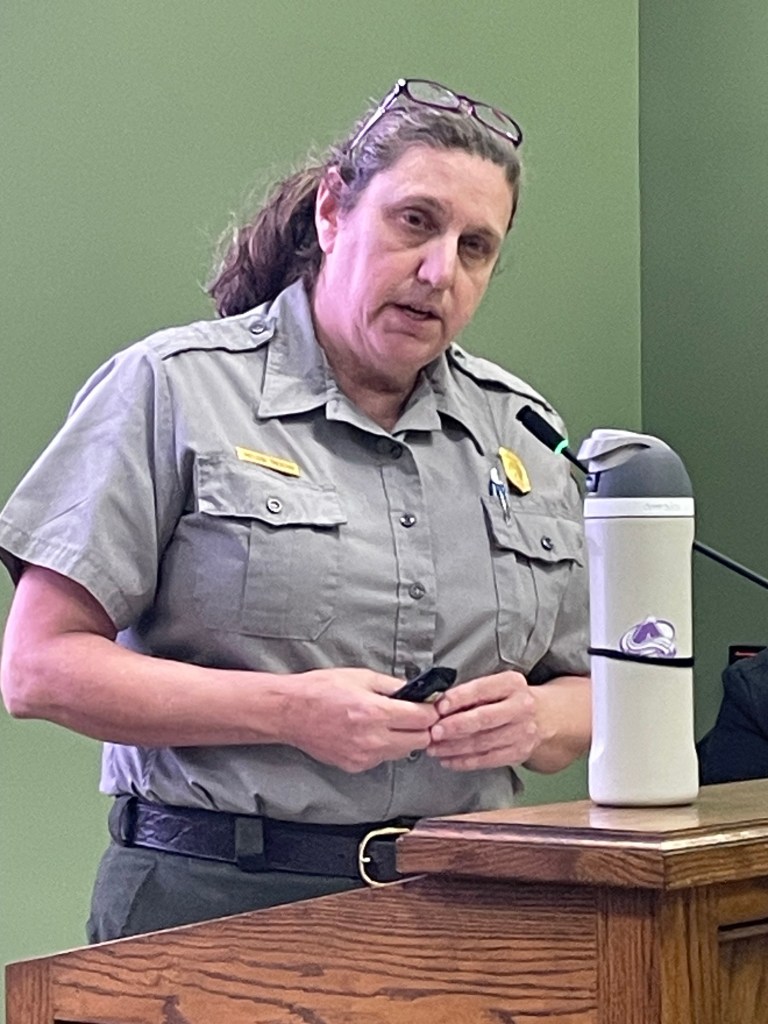
Since that March 17 meeting, documents obtained from the National Park Service show the first two land swap deals on Cumberland Island appear to be near completion, with preliminary agreements executed and draft deeds produced.
Conservationists fear the progress behind closed doors means public opinion and the required environmental assessments may be afterthoughts.
“The concern here is that we’re seeing executed preliminary agreements and detailed draft deeds, which suggests the terms of these exchanges may already be largely set,” said Kelly Cox, Senior Policy and Planning Specialist for the National Wildlife Refuges and Parks Program at Defenders of Wildlife. “That raises the question of whether the environmental review and public input can still meaningfully influence the outcome of the land exchanges.”
Defenders of Wildlife received the documents through a Freedom of Information Act request and shared the results with The Current GA.
Cumberland history
The largest and southernmost of Georgia’s barrier islands, Cumberland was designated a national seashore in 1972. But even with that designation, some of the island remained in private hands, with owners including descendants of the Gilded Age Carnegie family that shaped the modern history of Cumberland.
The national seashore’s 37,000 acres include 11 privately-owned properties totaling approximately 712 acres, the NPS indicates on its website. Some parcels on the island are held in life estates that revert to federal ownership at a designated time, but no current life estates are considered in the land exchanges.
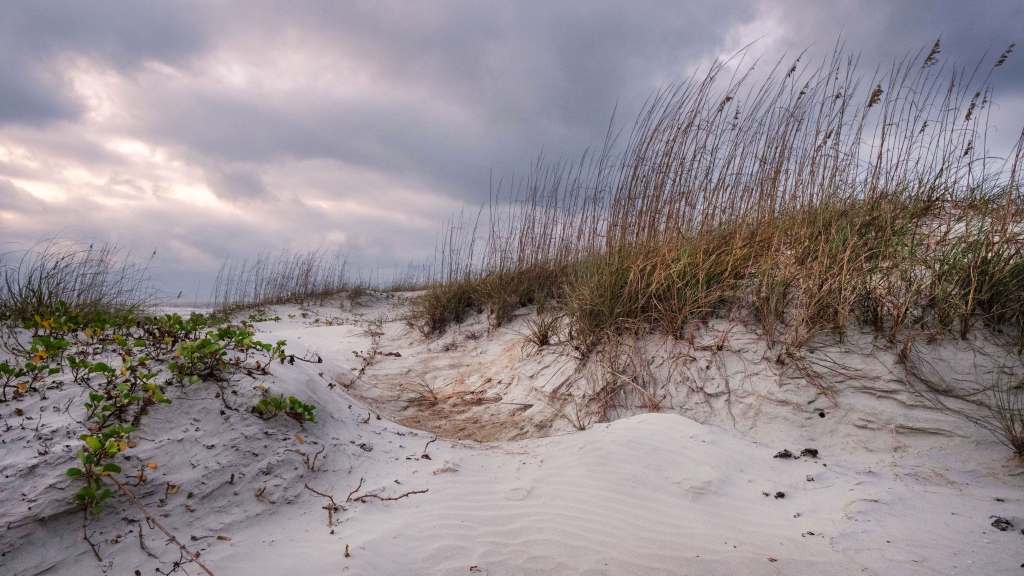
Ten years ago, one of the private landowners, Lumar LLC, requested and was granted by the county planning commission a hardship variance to allow them to divide a nearly 90-acre tract of their land into 10 parcels. Conservation organizations and concerned citizens quickly appealed the variance, fearing the future construction of multiple buildings on the Lumar tract, owned by descendants of Coca-Cola founder Asa Candler. The county commission then stepped in, as Trenchik reminded the commissioners in March.
Most of Cumberland Island is owned by the federal government, but a few private landowners remain.
“The county tabled the motion to change the zoning and encouraged the National Park Service to work with those private land owners to come up with something that was a win, win, right?” she said in her March 17 presentation.
“Again, they’re private lands held in fee simple (ownership) that would be exchanged to help us maintain a thorough corridor through the park, to preserve the natural and cultural resources, to improve the manageability.”
Not all of the private property owners are interested in an exchange. The NPS is working only with those willing to make a swap. None were interested in selling their land outright, according to the Park Service.
What’s being proposed and why
The first swap involves 10 acres owned by a wilderness trust whose trustees are Nancy McFadden Cannon and Ledyard H. McFadden. The preliminary agreement and draft deed suggests swapping the McFadden’s property for 20 acres of NPS land.
NPS proposes privatizing about 20 acres along Old House Road in exchange for 10 private acres now held by the McFadden family further north.
Boundaries are approximate
The second swap involves 60 acres of NPS land and about 90 acres of land owned by the Foster family, though which acres the Fosters will give up is not precisely delineated in the draft exchange agreement and draft deed. The values of the parcels have not yet been assessed and it’s possible the Park Service would have to provide not only land but also money to make an even exchange.
The NPS proposes swapping about 60 acres of public land along Old House road for about 90 acres of land held by the Foster family.
Public to receive from Fosters
Fosters to receive from public
Boundaries are approximate
The National Park Service has stressed that the swaps are needed to place key visitor-use trails and portions of the main road fully onto NPS managed land, improving protection of wilderness and other core resources.
“They also create a more continuous corridor of federally managed property, which enhances the park’s ability to conserve scenic, scientific, and historical values,” a National Park Service spokesperson wrote in an e-mail response to The Current. “By concentrating any remaining private use in locations where impacts can be minimized, the exchanges help maintain the island’s primitive character and long-term ecological integrity.”
Both draft deeds allow the construction of one single family residence with a footprint of up to 15,000 square feet for every 10 acres of buildable area. Given existing restrictions, the McFaddens could build two houses and the Fosters could build six. The houses can be no taller than 35 feet.
Advocacy groups wary
That potential house size raises eyebrows.
“This has all been done behind closed doors, and from what we have received, it’s clear that there are going to be impacts to the park, like a 15,000-square-foot home is an impact,” Cox said.
And conservation easements, which are also listed in the documents, don’t necessarily eliminate impacts.
“You have the residential structures, you have the access roads, you have private use, you’re not continuing public access, and you could have impacts to wildlife in the ecosystem as well, right? So it’s just, it’s a very sticky wicket,” Cox said.
The National Park Service spokesperson wrote that the house footprint restrictions of 35 feet tall and 15,000 square feet were “designed to significantly restrict development, maintain the island’s natural character, and protect key visitor use areas and sensitive resources.”
“The 15,000-square-foot figure represents the combined footprint for all allowable structures on a parcel, including a home and any small outbuildings. The height limits apply regardless of the number of stories,” the NPS spokesperson wrote in an email.
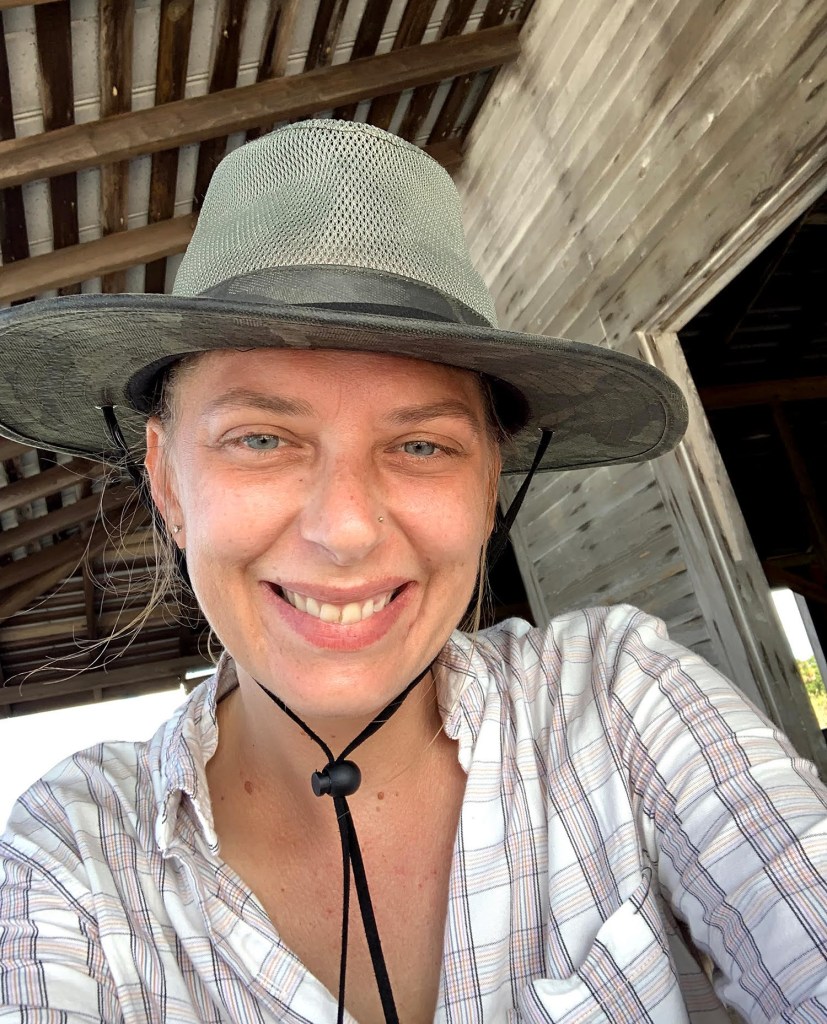
But at the nonprofit Wild Cumberland, Executive Director Jessica Howell-Edwards notes that large homes could lead to significantly more recreational boat and motor vehicle traffic, beach traffic, and air traffic at the island’s small air strip. She also sees a possible connection between the big new residences on the island and the increased tourist activity proposed in the Visitor Use Management Plan, which could more than double the existing cap of 300 visitors a day. “Think about what we saw in VUMP. You know, all of these proposals for kayak rentals, contractors to give tours, right? You can’t viably do that and have to take a boat 45 minutes each way, every day.”
Beyond residential footprint
Potential mansions aside, environmental groups are wary at best of the deals in general.
Hennessee said his group, SELC, isn’t “categorically opposed to land exchanges on Cumberland.” But he thinks this one could be better.
“There could be an exchange that could benefit the private land owners and be in the public interest, create a more continuous stretch of publicly owned land, and not have the public corridors going up to the wilderness be bisected by these privately owned tracks.”
But Howell-Edwards points to the park’s mandate to be “permanently preserved in its primitive state,” as stated in the park’s enabling legislation.
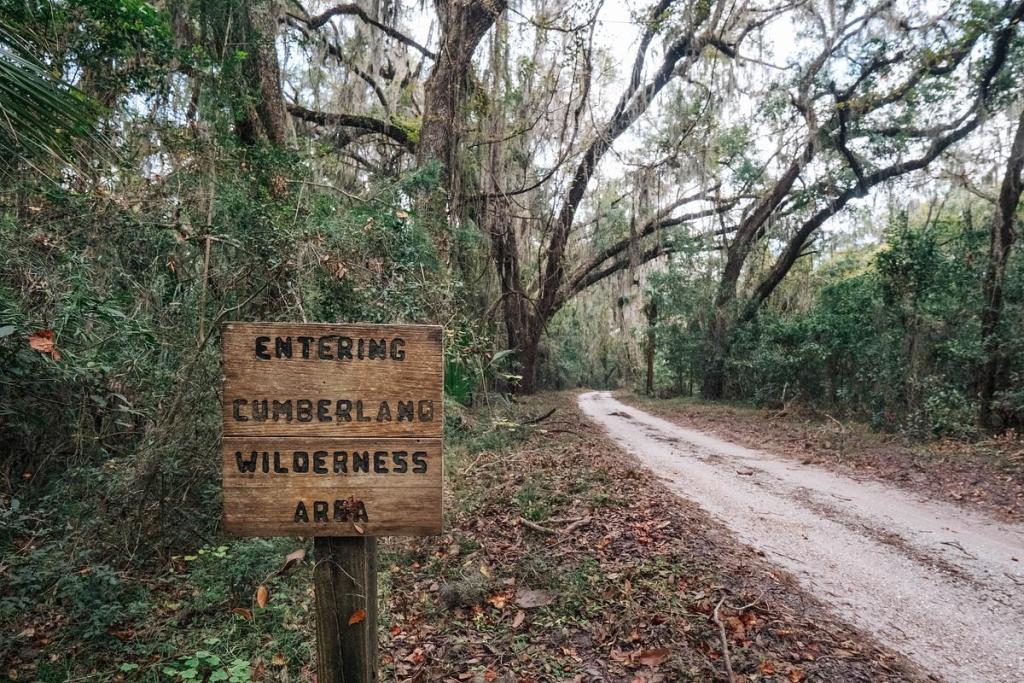
The swaps are not furthering that objective, she said. And they’re costing money the park could put to use elsewhere. Last year, the National Park Service did not fund the monitoring and documenting of sea turtle nests on Cumberland, a 18-mile beach that accommodated 522 turtle nests last year, the most of any Georgia island.
“I understand they don’t have sea turtle money again this year and the state’s picking up the tab,” Howell-Edwards said. “But we have line item funding to move forward a plan that the public largely has opposed and that may not even be legally viable; it makes so little sense to me.”
The opposition she cites was on display when Trenchik appeared before the Camden County Commission. The county received more than 500 emails urging the board to at least postpone its decision, Commissioner Jim Goodman told his colleagues at that meeting. The board also received feedback from prominent environmental groups saying there are too many unknowns in the NPS proposal for Camden to back it.
Howell-Edwards is also suspicious of the park’s process.
“The lack of transparency, particularly given the public opposition to this proposal, is just sort of mind boggling,” she said.
Advocates like the Defenders of Wildlife’s Cox say the process has been backward. She’d like to see results of a thorough environmental review and more details on the swaps themselves before negotiations go any further.
“There should be better communication with the public about what the exchanges entail, what the environmental impacts will be,” she said. “There’s just a lot of outstanding questions about the exchanges, like, what is the exact acreage, what are the values of the parcels, what are the appraisal assumptions, what are the road and utility plans, the development envelopes, lighting impacts, species impacts. I mean, I could go on and on.
“Those are the details that we don’t have in front of us that we think we should if the Park Service and the county are going to make a well-informed decision.”
Owners weigh in
The three Cumberland private landowners who spoke with The Current emphasized their deep roots on the island and love for it.
Barclay McFadden, a great-great grandson of Thomas Carnegie, has been visiting the island since he was a child in the 1950s. His grandmother grew up there at Stafford House, which is now in the hands of his cousin. Three generations of his family are buried on Cumberland, he told The Current by phone as he arrived at beach on Cumberland at the start of Memorial Day weekend.
“It is as dear to our heart as anything a family has grown up with,” he said. “We’ll all be buried here, too.”
McFadden is the oldest of six siblings, two of whom are the named trustees. His family has been a good steward of the island, he said.
“I think we’ve had a pretty productive, constructive coexistence for the last over 60 years,” McFadden said.
His cousin is Lucy Foster Flight, who’s involved in the other swap and who cares for Stafford House as part of her life estate. Stafford, built in 1901 by Lucy Carnegie, will become NPS-owned when Flight dies. It’s not part of the swap, but Flight points to it as proof of her goodwill.
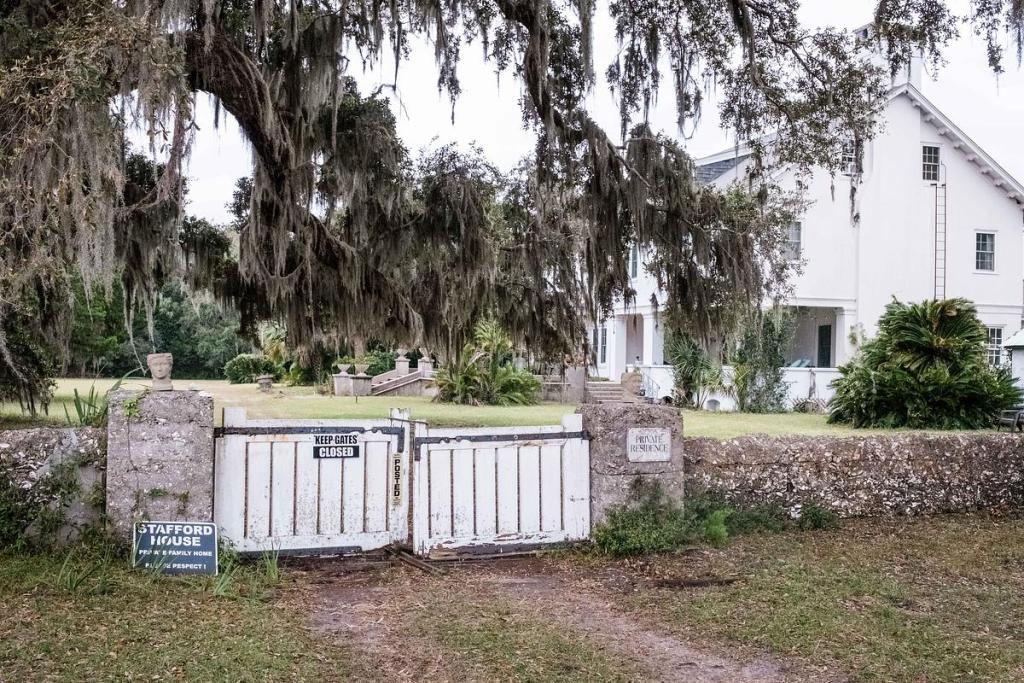
Flight calls it “utter bullshit” to suggest the Carnegie descendants want to develop Cumberland.
“We fought to have the island not developed,” she said.
And she’s sacrificed to improve Stafford even though she can’t pass it down to the next generation.
“Stafford was falling apart, literally falling apart, and I started working on it to get in the condition it’s in now,” she said. “Otherwise, when the park got it, it would be just a bunch of rubble.” Flight rents Stafford out to help cover its expenses.
McFadden as well as his Foster cousin, Flight’s brother Whit Foster, each said they did not know how NPS came to include the 15,000 square foot residential footprint. It wasn’t with their input, both Foster and McFadden said.
“The size of the houses was something that was never discussed,” McFadden said, noting that homes the family has built on Cumberland are under 5,000 square feet.
Such a large house would be impractical on Cumberland, said Whit Foster, though tax records indicate he lives in an 13,000 square foot home in Maryland, which is listed for sale for $10 million.
“Fifteen thousand feet is more than anybody could possibly afford,” he said. “If you think about that, 2,500 square feet is the most logical size you would build down there.”
Acreage is also an issue in the McFadden exchange. SELC’s Hennessee pointed to the McFadden swap as a possible sweetheart deal for the private landowner.
“It’s a 10-acre tract that the private landowner would be giving up that’s surrounded by wilderness,” Hennessee said. “And in exchange, they would be receiving a 20-acre tract on sort of the middle section on the west side of the island.”
But McFadden said the details matter.
“On the surface that sounds totally inappropriate,” McFadden said. “Why would we get 20 and the park only get 10? But if you read the fine print, the conditions of that swap include that those 20 acres have an easement on 16 (acres).”
McFadden, who has served on land trust boards, said it’s “as strict an easement as you could ever imagine.”
“The only right we have on our 16 acres is to gather firewood from fallen trees, so in essence, we own it, but as far as using it, it is of no consequence whatsoever,” he said.
As to the 10 acres being surrounded by wilderness, McFadden said his mother bought the land before the federal wilderness area was designated in 1982. A few years ago, the NPS approached his family about selling the parcel. They negotiated an exchange instead.
“So that is what we’ve been working from, is that the park wants a pure wilderness area,” McFadden said.
The cousins emphasize what they’re giving up and how it serves the public good.
“The Fosters are going to relinquish all of their beach front, except for the beach pavilion down there, which can’t have any construction,” Foster said.
Foster also owns land around the Chimneys, a group of historic ruins of the homes of enslaved people. The ruins themselves sit on land that Foster controls as a life estate so it will be deeded to the Park Service when he dies. He has the right to build on the land around the Chimneys but said it’s better for his family’s privacy and for visitors’ experience that he makes the exchange.
“It makes much more sense to take those four houses and go down to Old House Creek,” Foster said. “It’s not in the typical visitor’s path. It’s way over on the west side. It just is not a logical place for you as a visitor to go, so it makes perfect sense to as I always say, put the Fosters down there on the reservation like they did the Indians. Poor Melissa (Trenchik) just cringes.”
This <a target=”_blank” href=”https://thecurrentga.org/2026/06/09/cumberland-island-land-swaps-allow-large-houses-consolidate-private-parcels/”>article</a> first appeared on <a target=”_blank” href=”https://thecurrentga.org”>The Current</a> and is republished here under a <a target=”_blank” href=”https://creativecommons.org/licenses/by-nd/4.0/”>Creative Commons Attribution-NoDerivatives 4.0 International License</a>.<img src=”https://i0.wp.com/thecurrentga.org/wp-content/uploads/2020/07/cropped-TheCurrent_site-icon.png?resize=150%2C150&ssl=1″ style=”width:1em;height:1em;margin-left:10px;”>
<img id=”republication-tracker-tool-source” src=”https://thecurrentga.org/?republication-pixel=true&post=103950&ga4=G-L05EDNCRHK” style=”width:1px;height:1px;”><script> PARSELY = { autotrack: false, onload: function() { PARSELY.beacon.trackPageView({ url: “https://thecurrentga.org/2026/06/09/cumberland-island-land-swaps-allow-large-houses-consolidate-private-parcels/”, urlref: window.location.href }); } } </script> <script id=”parsely-cfg” src=”//cdn.parsely.com/keys/thecurrentga.org/p.js”></script>