

Key Takeaway
The S&P 500 has achieved something remarkable in May 2026—eight consecutive weeks of gains, the longest winning streak since December 2023. This milestone isn’t just a statistical curiosity; it represents a powerful confluence of factors driving sustained bullish momentum across U.S. equity markets. From artificial intelligence breakthroughs to resilient corporate earnings and retreating Treasury yields, multiple catalysts are converging to push the benchmark index toward fresh all-time highs near 7,517.
For investors navigating this extended rally, the key question isn’t whether to participate—it’s how to position intelligently as market dynamics evolve. While the 8-week streak signals strong underlying momentum, understanding the drivers behind this move and the risks that could interrupt it becomes essential for making informed decisions in today’s environment.
The current rally has demonstrated unusual breadth compared to earlier 2026 advances, with participation expanding beyond the mega-cap technology names that dominated headlines in previous months. This broadening market participation suggests a healthier, more sustainable uptrend rather than a narrow, fragile advance dependent on just a handful of stocks.
What’s Driving the 8-Week Rally
Several powerful forces have converged to sustain this historic market advance. Understanding these drivers helps investors distinguish between cyclical momentum and structural shifts that could define market performance through the remainder of 2026.
Artificial Intelligence Infrastructure Boom
Artificial intelligence continues to serve as the primary engine of market enthusiasm, but the narrative has evolved significantly from the initial ChatGPT-fueled excitement of 2023. Today, we’re witnessing the actual deployment of massive AI infrastructure across enterprises, cloud providers, and consumer applications. This transition from hype to tangible investment has created a more sustainable foundation for technology valuations.
Leading semiconductor companies like Nvidia and AMD have reported strong demand for AI accelerators, with data center revenue growth exceeding 30% year-over-year. The infrastructure build-out extends beyond chips to networking equipment, memory solutions, and power systems—all creating ripple effects throughout the technology supply chain. Companies across the semiconductor sector are experiencing renewed investor interest as the AI capital expenditure cycle shows no signs of slowing.
The evolution toward AI inference and agentic AI applications represents the next frontier. While the training phase of large language models drove initial demand, the inference phase—where AI models actually process requests and generate outputs—promises to create even larger addressable markets. This shift benefits not just semiconductor manufacturers but also cloud infrastructure providers and enterprise software companies building AI-powered applications.
Strong Corporate Earnings Momentum
First-quarter 2026 earnings season delivered results that significantly exceeded diminished expectations. As of mid-May, 84% of S&P 500 companies reporting had beaten their profit estimates—a remarkably high beat rate that demonstrates corporate America’s ability to navigate economic uncertainty while maintaining profitability.
This earnings resilience has been particularly notable given concerns about economic slowdown and margin pressure from persistent inflation. Companies have demonstrated operational discipline, leveraging productivity improvements and strategic pricing to protect margins even as wage costs and input prices remain elevated. Technology companies have led this charge, with many reporting record operating margins driven by AI-related revenue streams.
The earnings surprise factor has provided fundamental justification for multiple expansion across the market. When companies consistently exceed expectations, investors become willing to pay higher valuations, creating a virtuous cycle of rising prices and improving sentiment. This dynamic has been especially pronounced in the technology sector, where AI-related commentary during earnings calls has consistently sparked positive stock price reactions.
Want to identify the next earnings beat before it happens? Intellectia’s AI-powered stock screener analyzes historical patterns, analyst revisions, and fundamental metrics to highlight companies positioned for positive surprises. Stay ahead of the market with intelligent screening tools that process thousands of data points in seconds.

Retreating Treasury Yields and Fed Policy Optimism
The bond market has provided crucial support for equity valuations as Treasury yields have retreated from their 2025 highs. The 10-year Treasury yield, which topped 4.5% last year, has settled back toward the 4.0% range, reducing the competitive pressure on stock valuations and making dividend-paying equities more attractive on a relative basis.
This yield compression reflects growing confidence that the Federal Reserve has successfully navigated the post-pandemic inflation surge without triggering a severe recession. While the Fed has maintained a cautious stance on rate cuts, markets are increasingly pricing in the possibility of monetary easing later in 2026 as inflation continues its gradual descent toward the 2% target.
The relationship between bond yields and stock prices has been particularly favorable for growth stocks and smaller companies. Lower discount rates increase the present value of future earnings, benefiting companies whose profits are expected to grow rapidly in coming years. This dynamic helps explain why the rally has broadened beyond mega-cap names to include mid-cap and small-cap stocks.
Easing Geopolitical Tensions
Progress in Middle East peace talks has contributed to improved risk appetite among investors. Geopolitical uncertainty, which frequently triggers market volatility through oil price spikes and safe-haven flows, has diminished as diplomatic efforts yield tangible results. This reduction in tail risk has encouraged capital to flow back into risk assets from the sidelines.
Oil prices have remained relatively subdued despite ongoing regional tensions, with Brent crude trading in a manageable range that doesn’t threaten to reignite inflationary pressures. This stable energy price environment supports both consumer spending power and corporate margin stability—two critical factors for sustaining economic growth.
Key Stocks Leading the Charge
While the rally’s breadth has improved, certain stocks have played outsized roles in driving index performance. Understanding these leaders provides insight into market positioning and potential future direction.
Nvidia: The AI Infrastructure King
Nvidia remains the undisputed leader in AI semiconductor technology, with its GPUs powering the majority of large language model training and inference workloads worldwide. The company’s data center revenue has exploded as cloud providers and enterprises race to build AI capabilities, with growth rates exceeding 50% year-over-year in recent quarters.
Nvidia’s competitive moat extends beyond hardware to encompass software ecosystems like CUDA, which has become the industry standard for AI development. This ecosystem lock-in creates powerful network effects that make it difficult for competitors to gain meaningful market share, even as AMD and Intel intensify their AI chip efforts.
The company’s forward guidance has consistently exceeded analyst expectations, with management expressing confidence that AI infrastructure spending will continue accelerating through 2026 and beyond. With cumulative Bitcoin ETF inflows reaching $58 billion and institutional adoption of digital assets growing, Nvidia’s chips are also finding applications in cryptocurrency mining and blockchain infrastructure.
AMD: The Challenger Gaining Ground
Advanced Micro Devices has emerged as a credible competitor to Nvidia in the AI accelerator market, with its MI300 series chips gaining traction among cloud providers looking to diversify their supplier base. AMD’s stock has outperformed Nvidia year-to-date in 2026, rising approximately 114% as investors recognize the company’s improved competitive positioning.
The company’s partnership strategy has proven particularly effective, with AMD chips being adopted by major cloud platforms including Microsoft Azure and Amazon Web Services. This diversification reduces customer concentration risk while providing multiple avenues for revenue growth. AMD’s CPU business continues to gain market share from Intel in both data center and consumer segments, creating a dual-engine growth story.
Valuation considerations favor AMD relative to its larger competitor, with shares trading at a more modest multiple of forward earnings despite comparable growth prospects. For investors seeking AI exposure without paying premium valuations, AMD offers a compelling alternative with significant upside potential.
Tesla: EV Recovery and AI Ambitions
Tesla has surged alongside the broader AI rally as investors refocus on the company’s autonomous driving and robotics initiatives. While electric vehicle sales growth has moderated from the torrid pace of 2021-2022, Tesla’s Full Self-Driving technology represents a potentially transformative opportunity that could dwarf the automotive business in scale.
Recent gains of 3.5% in a single session demonstrate the stock’s continued ability to capture investor imagination when sentiment shifts positive. The company’s Dojo supercomputer project and Optimus humanoid robot program position Tesla as more than just an automaker—it’s increasingly viewed as an AI and robotics company with multiple shots at massive market opportunities.
However, Tesla’s valuation remains a subject of debate, with the stock trading at a significant premium to traditional automakers. Success in autonomous driving or robotics could justify these multiples, but execution risk remains elevated as the company juggles multiple ambitious projects simultaneously.
Technical Analysis: What the Charts Tell Us
From a technical perspective, the S&P 500’s 8-week winning streak has created a powerful bullish structure with strong momentum indicators supporting continued upside.
Breakout to New All-Time Highs
The index’s push above 7,500 represents a decisive breakout from the consolidation range that persisted through much of early 2026. This breakout has been accompanied by expanding trading volume, confirming that institutional participation supports the advance rather than just retail speculation. The previous resistance level around 7,400 now serves as support, providing a cushion against minor pullbacks.
The Dow Jones Industrial Average has joined the party, setting fresh records above 50,500 as cyclical and industrial stocks participate in the rally. This confirmation from the price-weighted index strengthens the bull case by demonstrating that the advance isn’t solely dependent on technology sector strength.
Low Volatility Signals Confidence
The VIX volatility index has remained subdued below 17 throughout the rally, indicating that investors aren’t hedging aggressively against potential downside. This low fear gauge reading reflects genuine confidence in the rally’s sustainability rather than nervous complacency. When the VIX stays low during advancing markets, it typically signals that institutional money is comfortable maintaining long positions.
However, extended periods of low volatility can precede sharp corrections when unexpected events trigger sudden risk-off sentiment. While the current VIX reading doesn’t indicate immediate danger, prudent investors should maintain awareness that volatility can spike rapidly when market narratives shift.
Moving Average Support
All major moving averages—the 20-day, 50-day, and 200-day—are trending higher and properly aligned in bullish formation. The S&P 500 trades comfortably above all three averages, with the 20-day acting as dynamic support during the recent advance. This technical structure provides multiple layers of defense against deeper corrections and suggests that any pullbacks are likely to be shallow and short-lived.
The 200-day moving average, which currently sits near 7,000, has been decisively left behind by the rally. This separation from long-term support demonstrates the strength of the current uptrend while also creating the potential for mean reversion if momentum fades.
Market Breadth: A Healthier Rally
One of the most encouraging aspects of the current rally is its broadening participation. Earlier in 2026, market gains were heavily concentrated in the “Magnificent Seven” mega-cap technology stocks, creating a narrow advance that left many investors behind. The current 8-week streak has seen much broader participation across sectors and market capitalizations.
Advance-Decline Line Improvement
The NYSE advance-decline line has moved to new highs alongside the major indexes, confirming that the rally has substance beyond just a few large-cap names. This broad participation reduces the risk of a sharp reversal when leadership stocks eventually pause or correct. When more stocks are rising than falling on any given day, it indicates healthy market dynamics driven by genuine capital inflows rather than just index arbitrage or sector rotation.
Small-cap stocks, as measured by the Russell 2000 index, have begun to outperform their large-cap counterparts in recent weeks. This rotation into smaller companies typically occurs when investors grow more confident about economic growth and are willing to accept higher risk in pursuit of greater returns. Small-cap outperformance also suggests that the rally has further room to run, as these stocks usually lead in the latter stages of bull markets.
Sector Rotation Dynamics
Leadership has rotated through multiple sectors during the 8-week advance. Technology remains the primary driver, but financials, industrials, and healthcare have all contributed meaningfully to index gains. This sector diversification creates a more stable foundation for the rally and reduces vulnerability to single-industry shocks.
Energy stocks have lagged despite rising crude oil prices earlier in the year, as investors focus on growth sectors rather than value plays. However, if inflation concerns resurface, energy and materials stocks could reassert leadership and provide a counterbalance to technology sector volatility.
Risks and Considerations
While the 8-week winning streak demonstrates impressive momentum, prudent investors must remain aware of risks that could interrupt the advance. No rally lasts forever, and extended winning streaks often create conditions for corrective pullbacks.
Valuation Concerns
The S&P 500’s forward price-to-earnings ratio has expanded to approximately 21x, above the long-term historical average of around 16x. While elevated valuations can persist during periods of strong earnings growth and low interest rates, they leave less room for disappointment if economic conditions deteriorate or corporate guidance weakens.
Technology sector valuations are particularly stretched, with many AI-related stocks trading at multiples that assume years of perfect execution. Any slowdown in AI infrastructure spending or competitive disruption could trigger sharp multiple compression in these names.
Inflation and Fed Policy Uncertainty
While Treasury yields have retreated, inflation remains above the Federal Reserve’s 2% target. If price pressures reaccelerate, the Fed could be forced to maintain higher interest rates for longer than currently anticipated, potentially choking off economic growth and pressuring stock valuations.
The market’s current pricing assumes some degree of monetary easing in late 2026. If the Fed disappoints these expectations due to persistent inflation, the resulting repricing could trigger a significant market correction.
Geopolitical and Economic Risks
Despite recent progress, Middle East tensions could flare again, disrupting oil markets and reigniting inflation fears. Additionally, China’s economic slowdown poses risks for global growth and commodity demand, while European political instability creates uncertainty for international markets.
Domestically, the upcoming U.S. election cycle could introduce volatility as markets assess potential policy changes under different administrative scenarios. Tax policy, regulatory approach, and trade strategy could all shift significantly depending on election outcomes.
What Should Investors Do Now?
Navigating an extended rally requires discipline and strategic thinking. While momentum favors continued upside, the risk-reward calculus evolves as prices rise and valuations stretch.
Maintain Diversification
The broadening market participation observed in recent weeks reinforces the importance of maintaining diversified exposure across sectors and market capitalizations. While technology remains attractive, investors should ensure portfolios include representation from financials, healthcare, industrials, and other sectors that could lead if leadership rotates.
International diversification also merits attention, as non-U.S. markets have lagged the American rally and may offer better value for long-term investors. Emerging markets, in particular, could benefit if the dollar weakens as Fed rate cuts approach.
Consider Dollar-Cost Averaging
For investors with significant cash positions, the fear of missing out on continued gains must be balanced against the risk of buying at short-term peaks. Dollar-cost averaging—gradually deploying capital over time—provides exposure to potential upside while reducing the risk of poor timing.
This approach is particularly appropriate given the extended nature of the current rally. While momentum could carry prices higher, the probability of a pullback increases with each passing week of gains.
Use Tools to Identify Opportunities
Identifying the best stocks to buy during a rally requires analyzing vast amounts of data quickly. Intellectia’s AI stock picker leverages machine learning to identify companies with strong momentum, improving fundamentals, and technical setups conducive to continued outperformance. Don’t rely on guesswork when data-driven insights can guide your decisions.

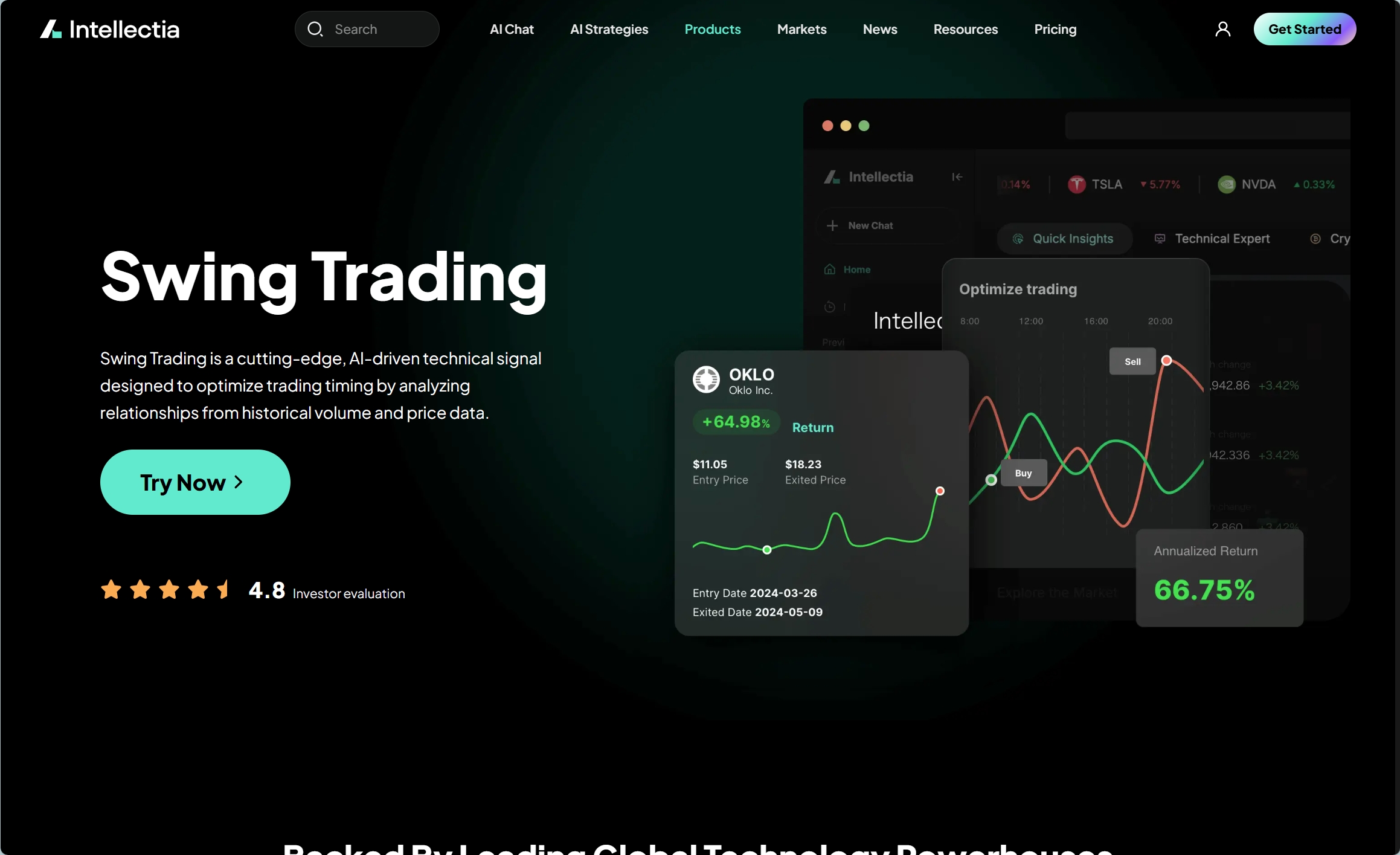
For active traders, understanding swing trading opportunities within the broader uptrend can enhance returns while managing risk. The current market environment offers numerous setups for technical traders who know where to look.
Maintain Risk Management
Even in strong bull markets, risk management remains essential. Position sizing, stop-loss orders, and portfolio hedging through options or inverse ETFs can protect gains during inevitable pullbacks. No investor should risk capital they cannot afford to lose, regardless of how strong the current trend appears.
Consider taking partial profits in positions that have appreciated significantly, especially if valuations have become stretched. This doesn’t require exiting winners entirely, but rather rebalancing to maintain appropriate risk exposure as positions grow in size.
Conclusion
The S&P 500’s 8-week winning streak represents a significant technical and psychological achievement that underscores the resilience of the current bull market. Supported by strong corporate fundamentals, AI-driven technological transformation, retreating Treasury yields, and broadening market participation, this rally has demonstrated staying power that few expected at its outset.
For investors, the current environment offers both opportunity and challenge. The momentum behind this advance suggests further gains are possible, with JPMorgan’s bull case calling for a 22% rally that could push the index above 9,000 over the next year. However, stretched valuations and extended technical conditions require careful navigation to avoid buying at short-term peaks.
The key takeaway is that this rally has substance beyond mere speculation. Real earnings growth, tangible AI infrastructure deployment, and improving economic data support current valuations in ways that previous bubble periods lacked. While risks remain—including inflation persistence, Fed policy uncertainty, and geopolitical flare-ups—the fundamental backdrop appears solid enough to sustain the uptrend through 2026.
Ready to take advantage of this bull market? Sign up for Intellectia today and access AI-powered tools that help you identify winning stocks, time your entries, and manage risk like a professional. Whether you’re a long-term investor or active trader, our platform provides the insights you need to navigate these markets with confidence. View our pricing plans to find the option that fits your investment style and start making smarter decisions today.
The bull market is calling—make sure you have the right tools to answer.