

Even when a business is losing money, it’s possible for shareholders to make money if they buy a good business at the right price. For example, although Amazon.com made losses for many years after listing, if you had bought and held the shares since 1999, you would have made a fortune. But while the successes are well known, investors should not ignore the very many unprofitable companies that simply burn through all their cash and collapse.
So, the natural question for Demae-CanLtd (TSE:2484) shareholders is whether they should be concerned by its rate of cash burn. In this article, we define cash burn as its annual (negative) free cash flow, which is the amount of money a company spends each year to fund its growth. The first step is to compare its cash burn with its cash reserves, to give us its ‘cash runway’.
When Might Demae-CanLtd Run Out Of Money?
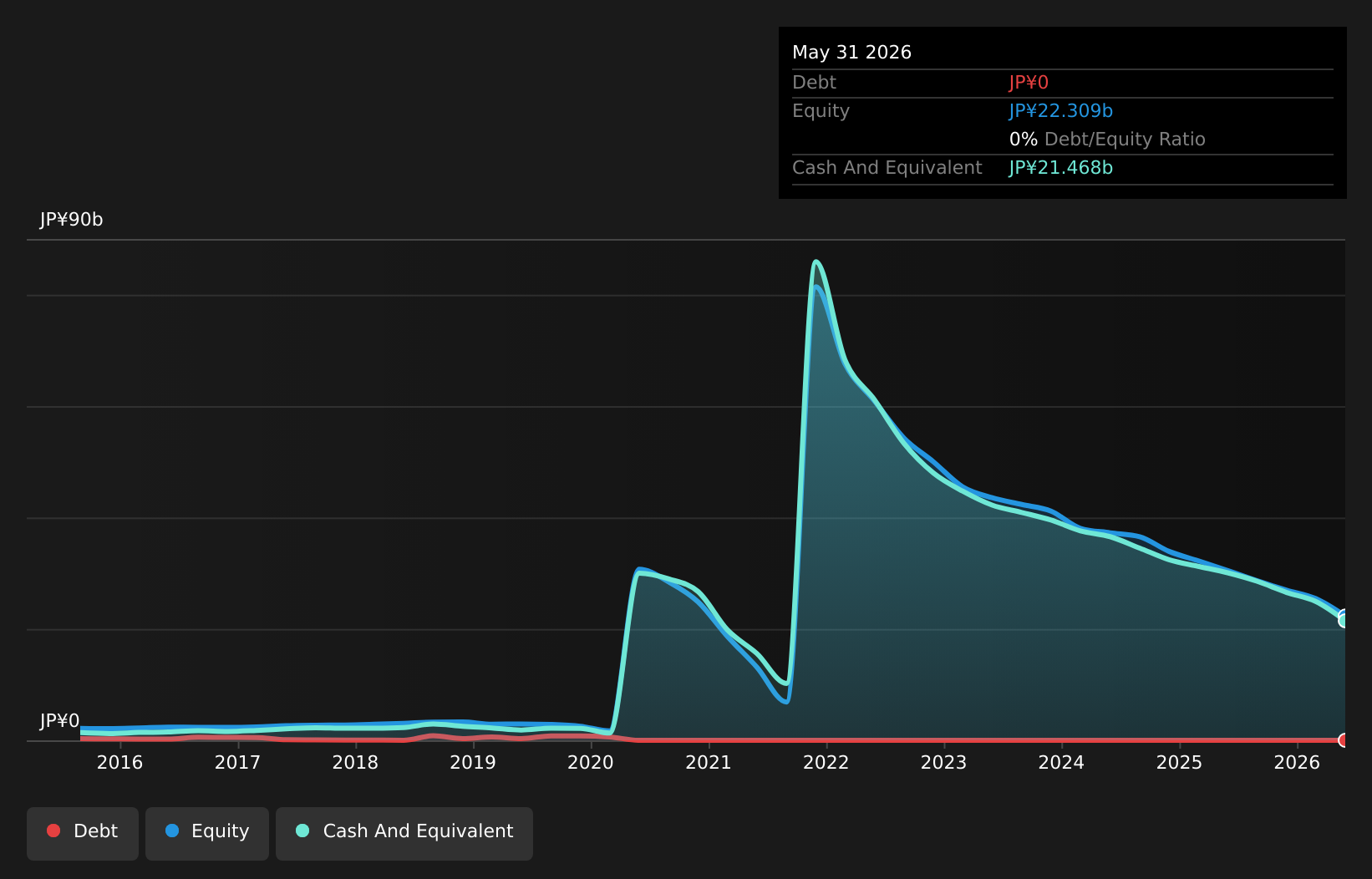
A cash runway is defined as the length of time it would take a company to run out of money if it kept spending at its current rate of cash burn. In May 2026, Demae-CanLtd had JP¥21b in cash, and was debt-free. Importantly, its cash burn was JP¥6.3b over the trailing twelve months. That means it had a cash runway of about 3.4 years as of May 2026. A runway of this length affords the company the time and space it needs to develop the business. Depicted below, you can see how its cash holdings have changed over time.
See our latest analysis for Demae-CanLtd
How Well Is Demae-CanLtd Growing?
Some investors might find it troubling that Demae-CanLtd is actually increasing its cash burn, which is up 49% in the last year. And we must say we find it concerning that operating revenue dropped 11% over the same period. Considering both these metrics, we’re a little concerned about how the company is developing. Of course, we’ve only taken a quick look at the stock’s growth metrics, here. This graph of historic earnings and revenue shows how Demae-CanLtd is building its business over time.
Can Demae-CanLtd Raise More Cash Easily?
Even though it seems like Demae-CanLtd is developing its business nicely, we still like to consider how easily it could raise more money to accelerate growth. Companies can raise capital through either debt or equity. One of the main advantages held by publicly listed companies is that they can sell shares to investors to raise cash and fund growth. By comparing a company’s annual cash burn to its total market capitalisation, we can estimate roughly how many shares it would have to issue in order to run the company for another year (at the same burn rate).
Since it has a market capitalisation of JP¥15b, Demae-CanLtd’s JP¥6.3b in cash burn equates to about 42% of its market value. That’s high expenditure relative to the value of the entire company, so if it does have to issue shares to fund more growth, that could end up really hurting shareholders returns (through significant dilution).
Is Demae-CanLtd’s Cash Burn A Worry?
On this analysis of Demae-CanLtd’s cash burn, we think its cash runway was reassuring, while its cash burn relative to its market cap has us a bit worried. Even though we don’t think it has a problem with its cash burn, the analysis we’ve done in this article does suggest that shareholders should give some careful thought to the potential cost of raising more money in the future. An in-depth examination of risks revealed 1 warning sign for Demae-CanLtd that readers should think about before committing capital to this stock.
Of course, you might find a fantastic investment by looking elsewhere. So take a peek at this free list of companies with significant insider holdings, and this list of stocks growth stocks (according to analyst forecasts)
New: Manage All Your Stock Portfolios in One Place
We’ve created the ultimate portfolio companion for stock investors, and it’s free.
• Connect an unlimited number of Portfolios and see your total in one currency
• Be alerted to new Warning Signs or Risks via email or mobile
• Track the Fair Value of your stocks
Have feedback on this article? Concerned about the content? Get in touch with us directly. Alternatively, email editorial-team (at) simplywallst.com.
This article by Simply Wall St is general in nature. We provide commentary based on historical data and analyst forecasts only using an unbiased methodology and our articles are not intended to be financial advice. It does not constitute a recommendation to buy or sell any stock, and does not take account of your objectives, or your financial situation. We aim to bring you long-term focused analysis driven by fundamental data. Note that our analysis may not factor in the latest price-sensitive company announcements or qualitative material. Simply Wall St has no position in any stocks mentioned.