
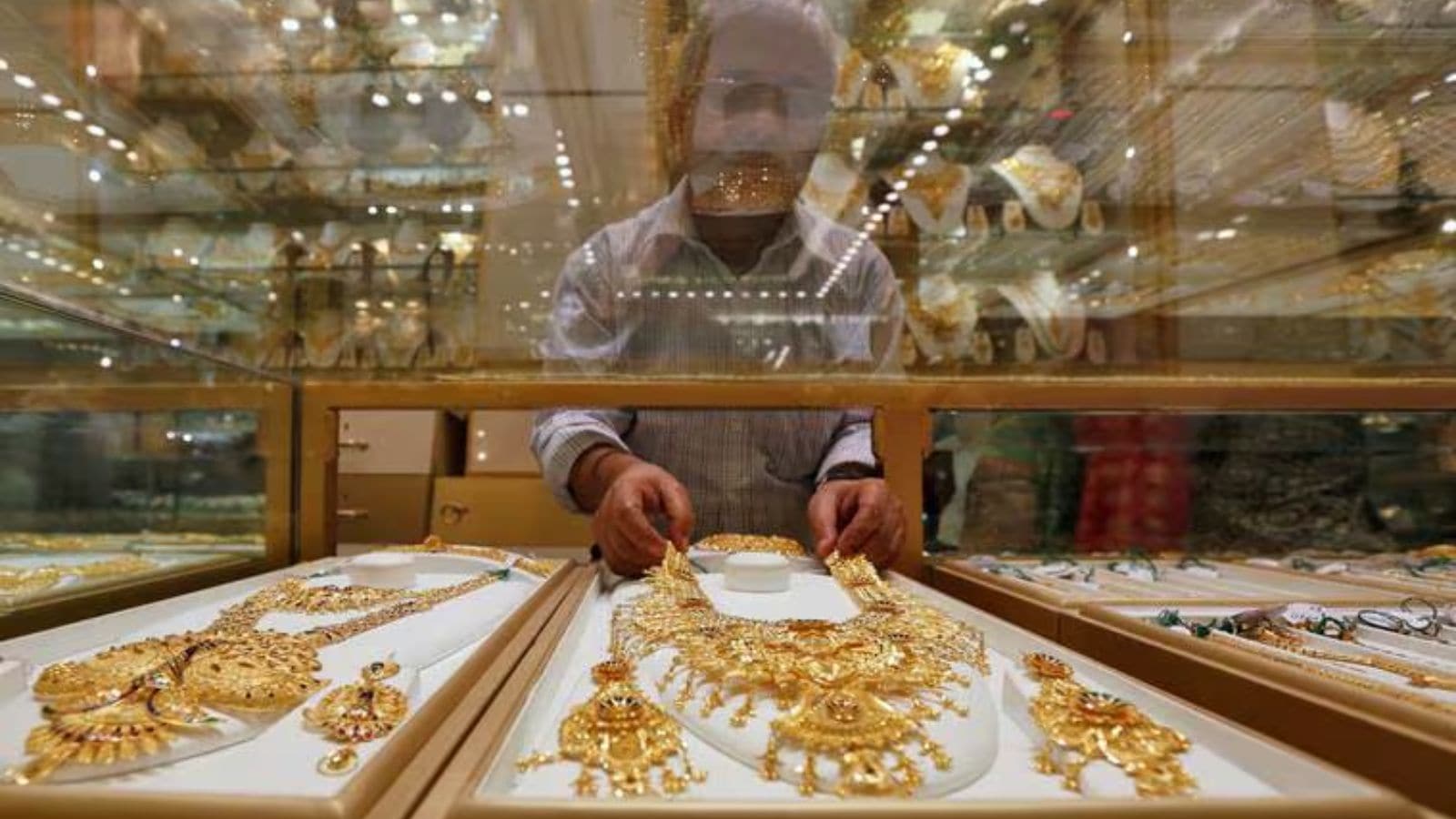
The south Indian region has played a dominant role in a gold loan market that surged 50.4% year-on-year, logging significant growth over the past two years, said a report. Five states in the region account for nearly 75% of the country’s total gold loan outstanding.
Out of the total Rs 18.6 lakh crore gold loan outstanding (including banks and NBFCs), five southern states — Tamil Nadu, Andhra Pradesh, Karnataka, Telangana and Kerala — account for Rs 13.94 lakh crore as of March 2026, according to the data by CRIF High Mark, a credit information company.
Tamil Nadu leads with Rs 5.96 lakh crore outstanding, Andhra Pradesh follows with Rs 3.08 lakh crore, Karnataka Rs 1.81 lakh crore, Telangana Rs 1.60 lakh crore and Kerala Rs 1.45 lakh crore as of March 2026, it said.
The segment expanded rapidly on the back of rising gold prices, high credit demand, and the preference for secured borrowing. Southern India remains its stronghold due to its cultural affinity for gold and a robust lending network.
Despite being the most populous state, Uttar Pradesh accounts for gold loans outstanding of only Rs 42,300 crore. Other large states also report modest figures, with West Bengal at Rs 35,000 crore, Rajasthan at Rs 41,700 crore and Gujarat at Rs 57,100 crore. These numbers highlight the uneven regional penetration of the market, with several economically significant and densely populated states lagging behind south India in terms of gold-backed borrowing.
Growth in March 2026 was topped by southern states — Karnataka (10.5%), Telangana (12.8%), followed by UP (11.2%).
Portfolio expansion
Gold loans sustained robust portfolio expansion, rising 50.4% year-on-year (y-o-y) and 15.0% quarter-on-quarter (q-o-q), led by higher collateral values and partly driven by the reclassification of agri-gold loans into retail, it said. The sharp rise in gold prices pushed people towards gold loans, helping them get more finance for expenses.
Story continues below this ad
“It has now emerged as the second-largest product in retail lending after home loans, underscoring its growing relevance in customer credit portfolios. We are also witnessing a shift toward higher ticket sizes, and more income-generating end uses, reflecting evolving borrower needs and increased comfort with loans against gold,” said Mohit Jain, Group Head, (Co Lending, Gold, Micro Loans, Distribution, Financial Inclusion), Axis Bank.
PSU banks still dominate originations by value, though their position has softened. Their share fell from 51.1% in Q4 FY24 to 44.6% in Q4 FY26, even as they remain the largest category. Non-banking finance companies (NBFCs) emerged as the clear growth driver, with originations value rising from 20.7% in Q4 FY24 to 31.6% in Q4 FY26.
In volumes, NBFCs lead with 49% share in originations volume as of Q4 FY26, underscoring NBFC-led market expansion driven by faster growth and wider distribution. PSUs dominate higher ticket size loans while NBFCs are growing stronger in lower ticket size loans (as indicated in their value vs volume shifts), according to the report.
Gold loans surge on strong demand
Gold loans emerged as the fastest-growing segment in the lending market, with portfolio outstanding surging 50.4% y-o-y, reflecting strong consumer demand and increased reliance on secured borrowing.
Story continues below this ad
The gold loan segment showed improved asset quality, reinforcing its role as a key engine of retail credit growth in FY26. “Early-stage delinquency declined across all ticket sizes between March 2025 and March 2026, with larger loans improving the most — Rs 2.5 lakh-5 lakh bucket fell from 1.42% to 0.76% and Rs 5 lakh plus bucket from 1.43% to 0.73%, reflecting stronger collateral coverage in higher-ticket segments,” CRIF High Mark said.
Personal loans recorded a healthy growth of 12.9% y-o-y, underscoring sustained demand for unsecured retail credit despite tighter lending norms, it said.
Among other categories, consumer durable loans expanded by 20.8%, led by electronics and household appliances purchases. Vehicle financing saw steady momentum, clocking growth between 13.9% and 15.1% y-o-y.
Meanwhile, home loans maintained stable growth at 9.4%, driven by housing demand and property market activity, according to the report.