
Municipal staff say thinning will stay off private property and focus on removing understory along the Highway 99 corridor to maintain evacuation routes
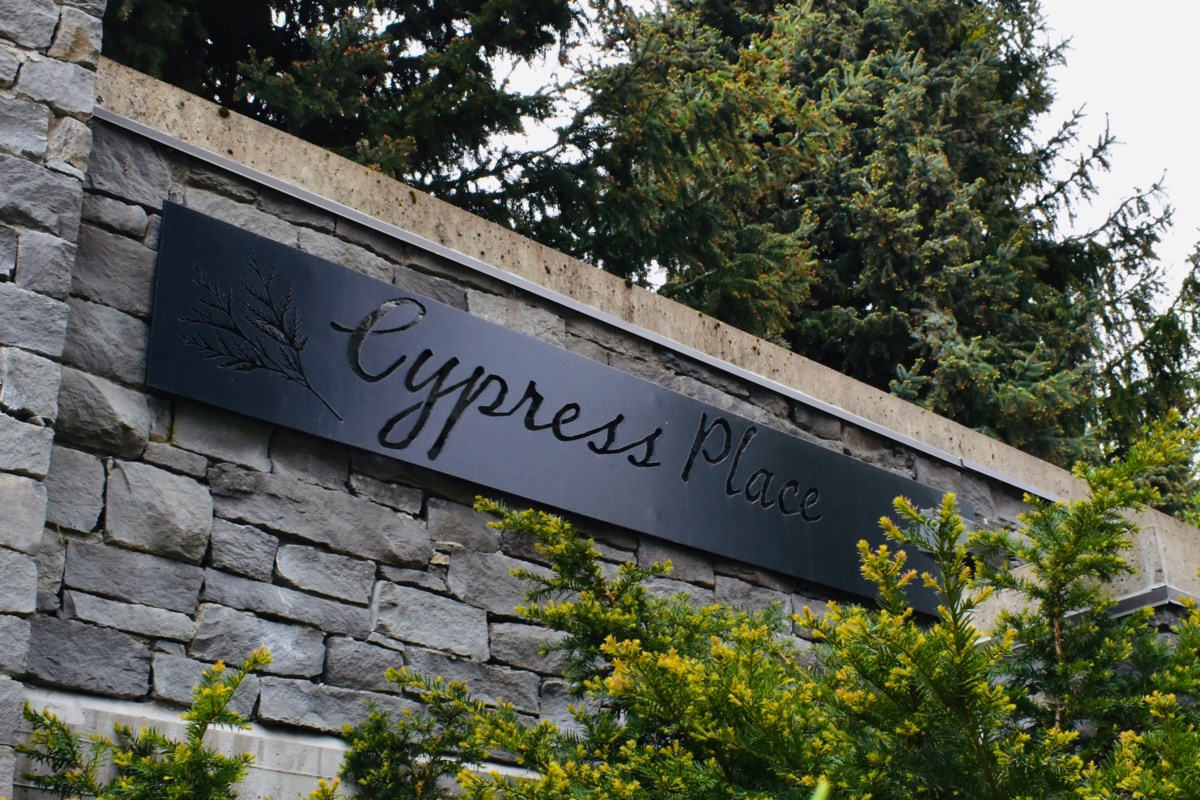
Some Whistler residents are asking the Resort Municipality of Whistler (RMOW) for an on-site meeting before planned fuel management work begins near their Cypress Place homes in June, warning the project could remove too much vegetation from a narrow corridor between the Valley Trail and Highway 99.
In a letter to Mayor Jack Crompton and councillors Arthur De Jong and Jen Ford, Johanna Waterous wrote that residents only learned of the planned work on May 5.
“We all recognize the critical importance of preventative measures against the growing threat of wildfires, and securing routes for emergency vehicles and evacuations for the entire Whistler community,” the letter reads. “We appreciate that appropriate, balanced tree-thinning is an important part of these measures.”
But Waterous said residents are concerned about the “proposed extent and approach” to the work, arguing it could have an “immediate and potentially catastrophic impact” on their properties, as well as a negative impact for Valley Trail users.
The letter asks council to support “an immediate meeting on-site to understand exactly the extent and approach to any tree-thinning and clearance and agree what mitigations will be taken to address our concerns.”
According to the RMOW’s project page, the fuel-thinning in question will run from Nicklaus North Boulevard/Cypress Place to Mons Crossing, is scheduled to begin June 1 and will run approximately two weeks.
‘Too much is being taken’
The issue also came up during the public comment period at council’s May 12 meeting, when Alpine resident Marcia Meszaros, a property manager for one Cypress homeowner, spoke to council about her concerns tied to fuel management along Highway 99 and the Cypress Place area.
Meszaros said residents are looking for clarity on “what’s going to be removed” and whether anything will be planted afterward. She also told council some residents are seeking legal advice.
“There is concern based on fuel management that has happened in other neighbourhoods along the highway, that too much is being done, too much is being taken and that’s basically where we’re at right now,” she said. “So all we’re asking for is the ability to have communication with whomever is in charge that is doing this.”
The residents’ written concerns go beyond privacy and visual impacts. The letter argues mature coniferous and deciduous trees in the area are a “precious and irreplaceable natural resource,” while vegetation between the trail and highway acts as a buffer against noise, headlights and air pollution.
Residents also raised concerns about invasive species, flooding and the lack of a replanting plan, suggesting the municipality consider “green fire breaks” using semi-mature deciduous trees and shrubs.
“We reiterate that we understand the importance of the planned fuel-management work for Whistler and the broader community,” the letter reads. “We are asking for an approach that acknowledges and balances our concerns as property owners versus what may otherwise be an expedient but ultimately more destructive course.”
Staff say work will stay on municipal land
RMOW general manager of climate action, planning and development services Dale Mikkelsen said Whistler’s fuel-thinning program is federally funded, prescribed annually and already underway in other parts of the community. Cypress Place work is planned to begin June 1.
“We only do that on municipal lands. We do not touch privately owned lands,” Mikkelsen said.
He noted the Valley Trail sits within a statutory right-of-way on private property, with another buffer of trees on private property beyond that. The municipal work, he said, is planned for the buffer between the property line and Highway 99.
“We continue to learn year over year from the work that we do,” Mikkelsen said. “We know we had some concerns raised last year, particularly in the Emerald community, and so we are working to ensure that we manage more sensitively [to] try to leave as much deciduous material as we can for privacy screens.”
Mikkelsen said crews do not remove large trees or covenanted trees, and the work is focused on removing understory, “primarily coniferous trees,” that can help fire move into the canopy.
“There is an immediate visual impact, 100 per cent, we can’t we can’t duck that reality,” he said. “But when we’re trying to protect our only north, south, emergency access and egress, we feel the work is important, and we do it as sensitively as we can. And we do not do it on private land.”
Councillor Cathy Jewett said she has also heard from residents concerned about habitat impacts. She added the highway corridor also presents a fire risk.
“As someone that joins Pitch-In Day and doesn’t join a crew in a neighbourhood, but instead, every year, I go on the highway, and I pick garbage on the highway, I am shocked by how many people are throwing cigarette butts out,” Jewett said. “So one of the things that this does is it creates a buffer between homes and the highway for people that haven’t figured out that that’s not the place to throw a lit cigarette.”
Council carried the motion to receive and refer the Cypress Place correspondence to staff.