
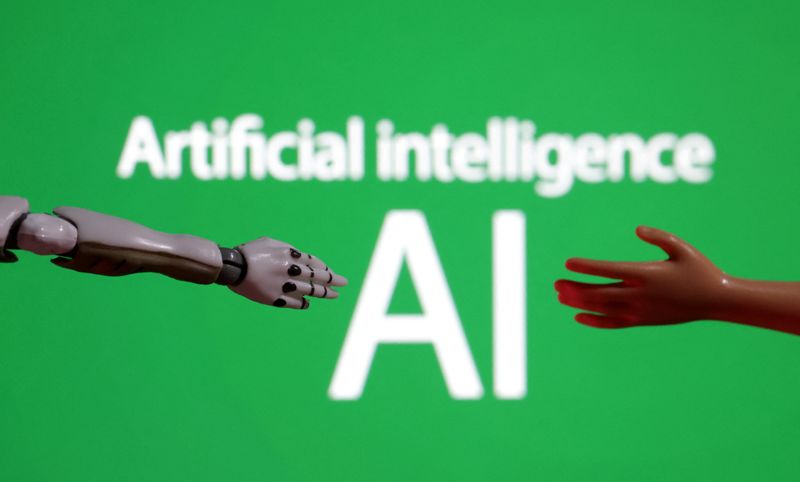
Investing.com — Embodied AI – artificial intelligence systems with a physical form like robots, vehicles and drones – is a controversial technology when it comes to the subject of displacement, and according to Barclays analysts, no other technology has been greeted with as much scepticism. But how will markets respond over time?
The investment bank is overall optimistic on the technology for several reasons, but notes that historically, equity markets can be delayed in recognising the potential for innovation to “create fresh addressable markets of large scope,” though eventually it does happen.
Of late, “markets have focussed heavily on assessing the displacement effects from anything related to AI,” the analysts went on, noting that had it been any other technology breakthrough, the verdict across markets in favour of it would have been “unequivocal”.
“There is substantial and inherent scepticism on whether the displacement effects of AI – the companies that will no longer be profitable, the professions that will disappear or decline in marginal contribution to labour income, etc – will derail the economy enough to bring asset prices lower,” the analysts explained.
According to them, this negativity we are seeing is misguided.
“Aside from winners and losers, the aggregate effects of physical AI on stocks are straightforward and bullish,” the analysts said, adding that the effects on bonds and currencies are likely to be less linear.
Displacement as a result of new technology tends to be political rather than economic, the firm said. For investors concerned that entire sectors will be eliminated or dislocated, the firm points to the example of Korea which grew richer despite lower production costs and export prices.
This is “reassuring and consistent with Ricardian economics,” the analysts said.
They also note that the “cornerstones” of wealth creation are output increases for given resources, efficiency improvements, and a reduction in opportunity costs, all of which AI and Embodied AI promises to bring. In fact, physical AI is already improving efficiency and ROI across sectors like logistics, manufacturing, recycling and agriculture.
In this sense, the current breakthrough is no different from the industrial revolution in terms of the broad based benefits it is set to bring, even if there are some companies and individuals that benefit more than others.
“Financial markets are set to transform accumulated wealth into financing for new companies or personal ventures. Historical analogues show that automation and technological progress are consistent with solid asset returns,” the analysts added.
Despite this optimism, they highlight some sectors that lag in adoption, like autos and insurance, where the technology poses a potential long-term risk, with autonomous vehicles for instance reducing car ownership.
Overall, though, Embodied AI is seen by the analysts as “driving a shift towards more efficient, automated and data-driven operation across both asset-heavy and service-oriented industries,” something the markets will have to recognise.