
Ms Goodlad said voters should judge her in a year’s time on whether she has helped deliver a Scottish Budget tied to public sector reform, and whether islanders can see progress on making Shetland’s transport links more affordable, reliable and accessible.
The SNP minister also said tolls are “absolutely not off the table” for future Shetland tunnels, arguing islanders already pay for inter-island ferries and would be getting a more reliable service in return.
Read More:
Shetland tunnel delivery
Asked when the first tunnel would be delivered, she said: “You are not going to get that from me, I’m afraid, because this is generational infrastructure.
“I think it’s very feasible, if we were to really push things and get the funding sorted, it’s feasible to get work starting before the end of this parliament.
“But it’s the first tunnel…it will take an awful lot and demand an awful lot. So, I think putting a date holds all of us up to probably a timeline that’s not helpful.”

The Yell link has been described as a “base case” and is looking at linking Yell to mainland Shetland. If successful, it could be replicated for tunnels to three other islands: Bressay, Unst and Whalsay.
However, the proposed Yell tunnel has been costed at around £402 million, while the Scottish Government is currently facing a multibillion-pound shortfall in the public finances.
Could tolls be introduced?
Asked whether tunnel financing could involve tolls, private finance or extra borrowing, Ms Goodlad replied: “Explore all, to be honest.
“Tolls are absolutely not off the table.
“And I think this is something that, again, the central belt mentality doesn’t understand, is that islanders pay for their ferries, as is.
“It’s not a toll, but we pay to use our inter-island ferries, unless you’re under 22 which is another Scottish government policy that enabled the inter-island ferries to be free, just like bus services, so islanders are already paying.
“You’d be paying for something more reliable and more dependable, so the question would be, you know, you’re getting more value for the money that you’re paying.”
Financing the tunnels
Ms Goodlad said financing future tunnel projects would require ambition and should not automatically be expected to come entirely from the Scottish public purse.
She added: “There’s a whole international market out there now. Scotland, again, is limited on what it can raise in terms of CapX and going out to the external banks and markets. There’s some fantastic Nordic banks out there, we can’t access that because we have the sort of reserved cap that’s put on us.
“I think there’s a conversation about not letting the UK Treasury off the hook here, because Shetland is part of the UK, Scotland is part of the UK for now, and it’s about saying, is the UK serious about making sure that the edges are protected.”
The UK Treasury told The Herald it is for the Scottish Government to fund transport projects “they choose”.
UK Government spokesperson said: “Transport is a devolved responsibility and it is for Scottish Government to fund the transport projects they choose.
“To meet the additional costs of delivering services in Scotland, the Scottish Government receives at least 20% more per person than equivalent UK Government spending in the rest of the UK.”
Ms Goodlad said the Scottish Government had committed to helping Shetland Islands Council [SIC] explore financing options, but said it was too early to say what the outcome of those discussions would be with the UK Government.
“I think they [SIC] were there [Westminster] just four weeks ago, and they’re really in this feasibility stage now, trying to assess kind of route forward on finance and understanding how they can get support from the various governments and what that would look like. So it’d be a bit premature to speculate what the conclusion of that would be.”
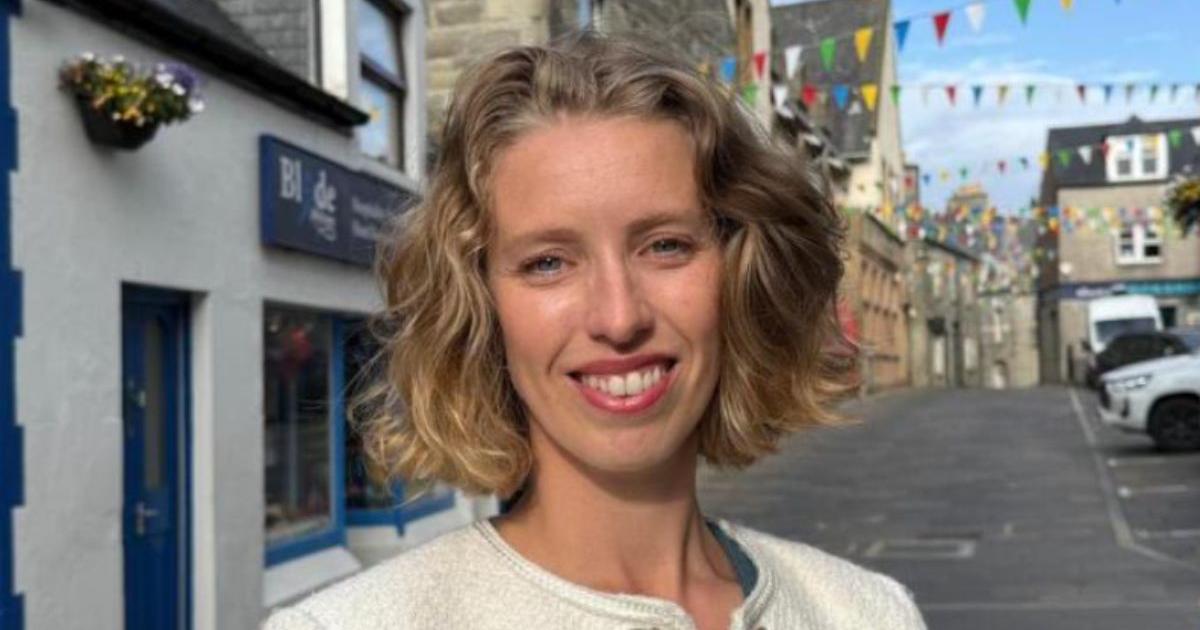
In her first major interview since becoming Shetland MSP and minister for Public Finance, Hannah Mary Goodlad tells The Herald she believes Shetland must now have a leadership role at the heart of the Scottish Government.
Full interview, where Ms Goodlad discusses Shetland… pic.twitter.com/WUd2609prd
— The Herald (@heraldscotland) June 19, 2026
Can tunnels prevent depopulation?
The new minister said Shetland’s case for tunnels was not simply about convenience, but about whether the islands can retain and grow the population needed to sustain communities, public services and major industries.
Asked if tunnels were critical to tackling population concerns, Ms Goodlad said: “Yes, I think they are.
“I think we’ve outgrown our ferry service. I think we have outgrown the population that that can sustain, and also the industry that that can incubate.
“If we really want to unlock more aquaculture, space industry, that strategic importance for Scotland at the centre of the North Atlantic, the gateway to the North, Shetland needs more people and it needs the right infrastructure, and that’s tunnels and its housing.”
Ms Goodlad said Shetland did not have an unemployment problem, but a population problem.
“There’s been periods in our past before, where we’ve had really low population, and then it’s peaked, and then it’s settled out at 23,000.
“I think we need more people. I think the stats are in Shetland, there’s 1.2 jobs for every one person, so we don’t have an unemployment issue at all. Shetlanders are busy, if you want a job done, ask a Shetlander, and they’re also probably doing several jobs at one time. What we do have is a population problem to grow our population.
“I think we should be growing our population to 30,000 but then it comes back to infrastructure again, and tunnels.”

Global examples
Ms Goodlad said the argument for tunnels also had to be understood in a wider geopolitical context.
“I think there’s ambition that we have to be serious about,” she said, “The Faroes have double the population of Shetland. I think they have just around 10 tunnels in their network, and you can see how that’s managed to stem depopulation.
“In a geopolitical context that we’re in, it is always the edges of countries that are targeted first.
“You look at Greenland, you look at Svalbard, you look at the Faroes, the high north picture is very dynamic and insecure. Shetland, from a security perspective and a space perspective, is the most strategic location that the UK has, and in order to protect edges, you need to make sure that you have people living, working, and contributing to those edge locations.
“Islands need people to survive, and people need business, and business needs infrastructure, and that is that is tunnels. It’s the reliability.”
The Yell link project is still in the planning and business case development phase, with a full council vote on the connectivity strategy scheduled for June 30.
Shetland’s ‘outgrown’ ferry service
Ms Goodlad also backed the idea of a local residents’ quota on Shetland’s lifeline ferry services during the summer months, saying islanders can struggle to secure cabins on the 14-hour overnight route between Shetland and Aberdeen.
She said transport had been the defining issue of her election campaign, and remained her top priority as Shetland MSP.
“I want to really be tackling now the availability of transport, mainly on the ferries. The ferries in the summer, tourism has boomed since 2019 and it’s very, very difficult to get a cabin or a berth now if you’re trying to get away from Shetland. Your viewers might not realise but it’s a 14 hour overnight ferry from Aberdeen. So, this is not a ferry that takes three or four hours.
“If you don’t have a bunk and a bed, it’s a fairly miserable journey, and if you’re an islander and you’re travelling for work, for family, or for medical reasons, you need somewhere to lie your head, so that’s my number one priority right now.”
Ms Goodlad said new freight flex ferries due in 2029 would provide an additional 100 beds every night, but warned that was still years away and the current pressure needed to be addressed now.
She said: “There’s a few ways to look at capacity, and I’m in close conversation with Northlink, the provider, and also looking at government colleagues as well to see how we could be introducing something that balances out the tourism and local demand on the ferries, because right now the balance is very much towards tourism, and that this is a lifeline ferry service.”
Asked whether that could mean residents-only ferries, Ms Goodlad said she did not believe demand would be sufficient, but said a quota for locals could work.
She said: “I think the demand for that wouldn’t suffice, but something like a local quota, for example, for the peak months between May and September, a local quota that balances out that distribution of cabins in the summer period, I think, would work really well”
‘Shetland will be at the heart of Government’
Ms Goodlad said her wider political mission was to put Shetland at the heart of national decision-making.

“I think that Shetland is the most strategic, most important and could have the potential to be one of the most influential constituencies in the whole of Scotland and at this current point in time, the whole of the UK.
“For example, we have the space industry there with Europe’s first vertical launch space rocket, we land more fish than England, Northern Ireland, and Wales combined, 25% of UK salmon comes from Shetland, 90% of UK mussel production comes from Shetland. It’s a really strategic seat and a really, really important constituency.
The 36-year-old, who worked in Norway in the energy industry before returning to Shetland last year, said she would bring “an islander mindset” into government.
“I think it is really important that folk realise that I have two jobs. I am the MSP for Shetland, and then I have this national job for Scotland.
“Now, I cannot take off my Shetland core – that is who I am. And so I’m going to approach national decisions with an islander mindset, and that is exactly the kind of seat at the table that I’m talking about, this islander mindset at the heart of government decisions.
“Shetland hasn’t had that for a very, very long time. Tavish Scott was the last person with a ministerial government position.”
‘Judge me on delivery of transport and the budget’
Asked what voters should judge her on a year from now, Ms Goodlad said: “There’s two things. There’s Scottish wide voters to judge me on, and I think that that’s making sure that we have a budget process linked up with public sector reform. That is the foundation for real change within this parliamentary term.
“And then I think the thing that Shetlander should judge me on in a year’s time as transport and making it more affordable, making it more reliable and more accessible.
“But the real test and real judgement will be in five years time, and for the people of Shetland to hopefully return me as their MSP.”
Ms Goodlad said her public finance brief included the “nuts and bolts” of budget negotiations, but also community wealth, community empowerment, the census and Scottish estates across the globe.
On public sector reform, Ms Goodlad said she would work closely with Ivan McKee, the minister seen as responsible for driving reform across Scotland’s public services, but argued the debate should not be framed simply as cuts.
“I think that we have to change the narrative on what this looks like. This is about making a public sector, which we all use, far more efficient, I think all of us can see exactly that there’s inefficiencies there.
“There’s going to be dilemmas along the way, and I think that we have to realise that we have a hole to fill, but it’s about trying to get more bang for our buck.”
Lessons from Norway and beyond
Ms Goodlad said her thinking had been shaped by her years working in Norway, including almost 15 years at Equinor, and by her view that Scotland could learn from Nordic models of public ownership, private investment and community wealth.
She said Scotland had “definitely missed the boat” on creating a company of Equinor’s scale, but argued there were still lessons to learn from Norway and the Faroe Islands.
“You don’t need to look too far away, the Faroe Islands, which is one of Shetland’s nearest neighbours, we are definitely their nearest neighbour.
“They are an island group of 50,000 people, and they’ve got more autonomy than Scotland does.
“They’re thriving, and they have a lot of that sort of Nordic model on public ownership. Not fully public ownership, but this divide between a bit of private equity injected in the state-controlled on their ferry line, on their airline, and they got so fed up of being the end of the line, a little bit back to our conversation at the start of Shetland is seen as the end of the line, our transport isn’t good enough.
“Faroe saw that and they said this isn’t good enough, we’re going to take our government, we’re going to build an airline of our own, Atlanta Airways, and you look at this tiny dot on the map of the Faroe Islands at 66 degrees north, 65 degrees north, and they fly direct to New York, to Paris, to Copenhagen, to Oslo, to Edinburgh.”
A Shetland homecoming
Ms Goodlad said her return to Shetland had been driven by what she described as a “home call” instinct after years away.
“I grew up in Shetland, and it’s the most special, amazing place, and I know that everybody says that about a constituent location, but, but I really feel it, and the people that I represent are just, just the most remarkable people in the whole of Scotland.
“I grew up in a family that was very political. Big topics were discussed at the kitchen table. No topic was off bounds, and that’s the way that my mom and dad brought my sister and I up to think laterally, to challenge the status quo, to try and put forward decency in our ideas and in our career paths that we chose.
“But something happens when you get into your 30s, I think there’s this sort of home call instinct that kicks in, and it certainly did for me and my sister. My sister was out in Hong Kong teaching for the last seven years, and last year she moved home, and indeed I moved home last year from Norway as well.”