
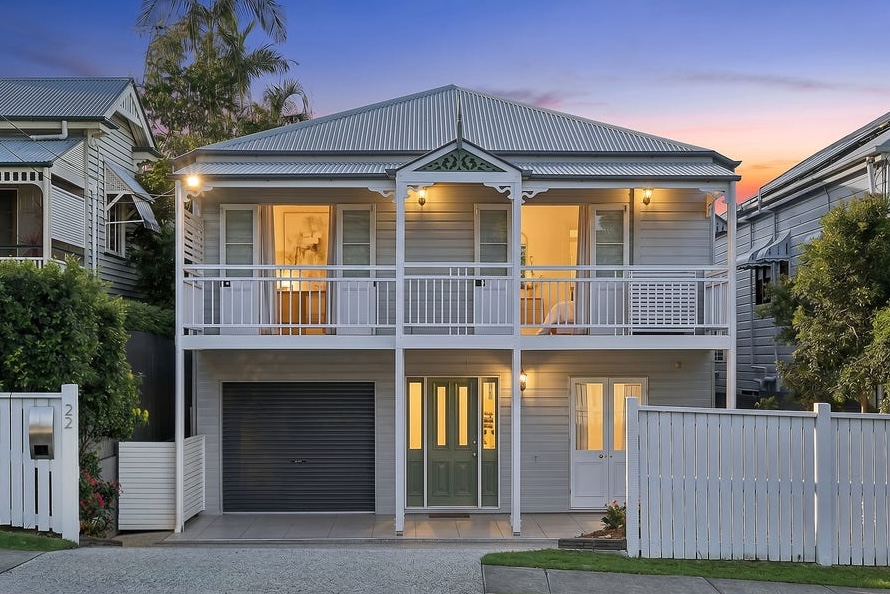
Property prices may have eased around the country, but values in these local markets are still heading higher.
While Australia’s median home value edged a little lower last month after price falls in several major cities, prices are still rising across most of the country despite headwinds in the property market.
Three rate rises from the Reserve Bank have slowed price growth over the past few months, with falls concentrated predominantly in inner regions of Sydney and Melbourne, which already had some of the highest home prices in the nation.
The softness has been compounded by uncertainty among investors, triggered by property tax changes to limit negative gearing to only new properties and a reduction in the capital gains tax discount.
But even though interest rate and tax changes have caused prices in some areas to come off the boil, values in many markets are still climbing higher.
PropTrack data examining property prices changes in the past three months reveals the areas where property prices have proven more resilient to rate rises.
The data shows that prices rose in almost two thirds of Australia’s SA3 regions in the past three months.
Top SA3 regions for house price growth – capital cities
| Region (SA3) | State | 3-month price growth | |
| 1 | Sherwood – Indooroopilly | QLD | 12.3% |
| 2 | Fremantle | WA | 6.0% |
| 3 | Gawler – Two Wells | SA | 5.5% |
| 4 | Brisbane Inner | QLD | 4.3% |
| 5 | Port Adelaide – West | SA | 3.8% |
| 6 | Kalamunda | WA | 3.4% |
| 7 | Brisbane Inner – North | QLD | 3.4% |
| 8 | Armadale | WA | 3.1% |
| 9 | Hobart – North West | TAS | 3.0% |
| 10 | Ipswich Hinterland | QLD | 2.9% |
| 11 | Melville | WA | 2.6% |
| 12 | Prospect – Walkerville | SA | 2.4% |
| 13 | Palmerston | NT | 2.3% |
| 14 | Playford | SA | 2.3% |
| 15 | Hobart – North East | TAS | 2.3% |
| 16 | Sorell – Dodges Ferry | TAS | 2.2% |
| 17 | Darwin City | NT | 2.2% |
| 18 | Onkaparinga | SA | 2.2% |
| 19 | Macedon Ranges | VIC | 2.2% |
| 20 | Salisbury | SA | 2.2% |
An SA3 region is a geographical area defined by the Australian Bureau of Statistics (ABS) which has a population between 30,000 and 130,000 people. SA3 regions vary in size, and may comprise a handful of city suburbs, an entire regional town or small city, or less densely-populated corner of a state.
These areas are useful for examining price movements over just a few months, given price movements at the suburb level can be volatile over shorter time periods.

This four-bedroom house in Indooroopilly sold for just over $2.6 million last month as values surged higher in pockets of Brisbane’s west. Picture: realestate.com.au/sold
The data shows that many parts of regional Queensland and New South Wales are holding up well, with values jumping significantly in just three months.
Prices in many of these regions have already been rising strongly, with strong demand and significant price momentum outweighing the effect of a handful of rate hikes and changes to tax settings.
Top SA3 regions for house price growth – regional areas
| Region (SA3) | State | 3-month price growth | |
| 1 | Wheat Belt – South | WA | 8.1% |
| 2 | Innisfail – Cassowary Coast | QLD | 7.5% |
| 3 | Noosa Hinterland | QLD | 7.4% |
| 4 | Port Douglas – Daintree | QLD | 7.2% |
| 5 | Broken Hill and Far West | NSW | 5.8% |
| 6 | Bourke – Cobar – Coonamble | NSW | 5.4% |
| 7 | Far North | QLD | 5.4% |
| 8 | Lithgow – Mudgee | NSW | 5.3% |
| 9 | Whitsunday | QLD | 4.9% |
| 10 | Upper Hunter | NSW | 4.6% |
| 11 | Central Highlands (Qld) | QLD | 4.6% |
| 12 | Charters Towers – Ayr – Ingham | QLD | 4.4% |
| 13 | Albury | NSW | 4.4% |
| 14 | Barwon – West | VIC | 4.2% |
| 15 | Mid North | SA | 4.1% |
| 16 | Wagga Wagga | NSW | 4.0% |
| 17 | Wangaratta – Benalla | VIC | 3.8% |
| 18 | Murray River – Swan Hill | VIC | 3.6% |
| 19 | Gold Coast – North | QLD | 3.5% |
| 20 | Eyre Peninsula and South West | SA | 3.4% |
House values jumped more than 7% in just three months in areas of north Queensland such as Innisfail, Port Douglas and the Noosa hinterland.
Meanwhile, parts of regional NSW towns such as Lithgow, Mudgee, Albury, Wagga Wagga and the Upper Hunter are outperforming the rest of the nation.
REA Group senior economist Anne Flaherty said the local drivers of property price growth in many booming regional markets outweighed the impact of higher interest rates and tax changes.
“It just comes down to supply and demand,” she said. “Even when we have headwinds to property market conditions like higher rates or a decrease in investor demand, in areas where more buyers are looking compared to the number of properties for sale, we can still see prices rise.”
Get your realEstimate™
Track your property’s value and unlock insights and data tailored for property owners.
Ms Flaherty said less expensive markets could draw more buyers at times when higher interest rates affected housing affordability.
“Affordability is ironically one of the things that can drive higher property price growth in certain areas,” she said
“If we are in a situation where rates are high and the cost of living is high, that can drive demand in those more affordable growth corridors and regional areas.”
Top SA3 regions for unit price growth – capital cities
| Region (SA3) | State | 3-month price growth | |
| 1 | Adelaide City | SA | 7.8% |
| 2 | Springfield – Redbank | QLD | 7.3% |
| 3 | Pittwater | NSW | 6.2% |
| 4 | Wanneroo | WA | 5.9% |
| 5 | Port Adelaide – West | SA | 5.7% |
| 6 | Rockingham | WA | 5.6% |
| 7 | Caboolture | QLD | 5.2% |
| 8 | Darwin City | NT | 4.9% |
| 9 | Unley | SA | 4.8% |
| 10 | Litchfield | NT | 4.8% |
| 11 | Prospect – Walkerville | SA | 4.6% |
| 12 | South Perth | WA | 4.5% |
| 13 | Belmont – Victoria Park | WA | 4.5% |
| 14 | Ipswich Hinterland | QLD | 4.2% |
| 15 | Hobart – North West | TAS | 4.2% |
| 16 | Redcliffe | QLD | 3.9% |
| 17 | Kwinana | WA | 3.9% |
| 18 | Joondalup | WA | 3.9% |
| 19 | Forest Lake – Oxley | QLD | 3.7% |
| 20 | Sunbury | VIC | 3.5% |
There were still standout results in the capitals, with pockets of Perth, Adelaide, Brisbane and Hobart recording strong rises in values as pricier parts of Sydney and Melbourne faced declines.
While many of the top regions for three-month house price growth were high-demand regional markets, a pocket of Brisbane’s west topped the list, with values in the Sherwood – Indooroopilly SA3 region rising 12.3% in just three months.
The area includes popular suburbs such as St Lucia, Taringa and Indooroopilly, which have recently been in demand among upgrading families relocating for proximity to top-ranked schools.
Other high growth markets included Fremantle in Perth, Hobart’s northwest, and several pockets of Adelaide’s north.
Real estate agent and White House Property Partners East Fremantle director Stephanie Dobro said the local market in Fremantle was driven by downsizing owner-occupiers buying for the coastal lifestyle, supported by demand from east coast buyers seeking a Perth base.
Fremantle house prices have jumped 6% in just three months. Picture: realestate.com.au/sold
Meanwhile, price growth in Hobart’s more affordable suburbs has been supported by competition between first-home buyers taking advantage of government incentives and investors seeking properties with high rental returns.
Unit prices were up 7.8% in the past three months in Adelaide’s CBD, which Ray White Adelaide City director Andrew Downing said shows the strength of the local market despite reduced investor numbers.
“Properties that are suitable for first home-buyers are still pretty strong,” he said. “There has definitely been investor drop-off, but that’s probably helped first-home buyers.”
Ms Flaherty said the data showed that prices were still increasing in markets beyond Sydney and Melbourne.
“Prices are still moving upwards in the majority of areas around the country,” she said.
Top SA3 regions for house price growth – regional areas
| Region (SA3) | State | 3-month price growth | |
| 1 | Upper Murray exc. Albury | NSW | 9.3% |
| 2 | Mackay | QLD | 7.8% |
| 3 | Bowen Basin – North | QLD | 7.7% |
| 4 | Armidale | NSW | 7.0% |
| 5 | Inverell – Tenterfield | NSW | 7.0% |
| 6 | Moree – Narrabri | NSW | 7.0% |
| 7 | Lower Murray | NSW | 6.7% |
| 8 | Innisfail – Cassowary Coast | QLD | 6.4% |
| 9 | Tablelands (East) – Kuranda | QLD | 6.4% |
| 10 | Campaspe | VIC | 5.6% |
| 11 | Moira | VIC | 5.6% |
| 12 | Burnett | QLD | 5.5% |
| 13 | Gympie – Cooloola | QLD | 5.5% |
| 14 | Maryborough | QLD | 5.5% |
| 15 | Baw Baw | VIC | 5.4% |
| 16 | Shepparton | VIC | 5.3% |
| 17 | Cairns – South | QLD | 5.1% |
| 18 | Clarence Valley | NSW | 4.8% |
| 19 | Lower Hunter | NSW | 4.5% |
| 20 | Rockhampton | QLD | 4.4% |
While it’s still too soon to see whether changes to tax settings have opened the door for a wave of new first-home buyers to enter the market, Ms Flaherty said the modified rules would likely influence on investor behaviour but wouldn’t scare off investors completely.
“We will see the composition of investors change,” she said. “Cashed up investors are still going to be active in the market, but investors who are more sensitive to what a bank is going to lend are less likely to enter the market.”
“If we look at the underlying drivers of Australian home prices, population growth is anticipated to outpace housing supply, rental vacancy rates are predicted to move lower and rents are expected to go up.
“For investors who aren’t sensitive to the amount we can borrow and aren’t relying on negative gearing in the first few years of property ownership, there’s still a lot of potential out there.”